Last updated October 31, 2026
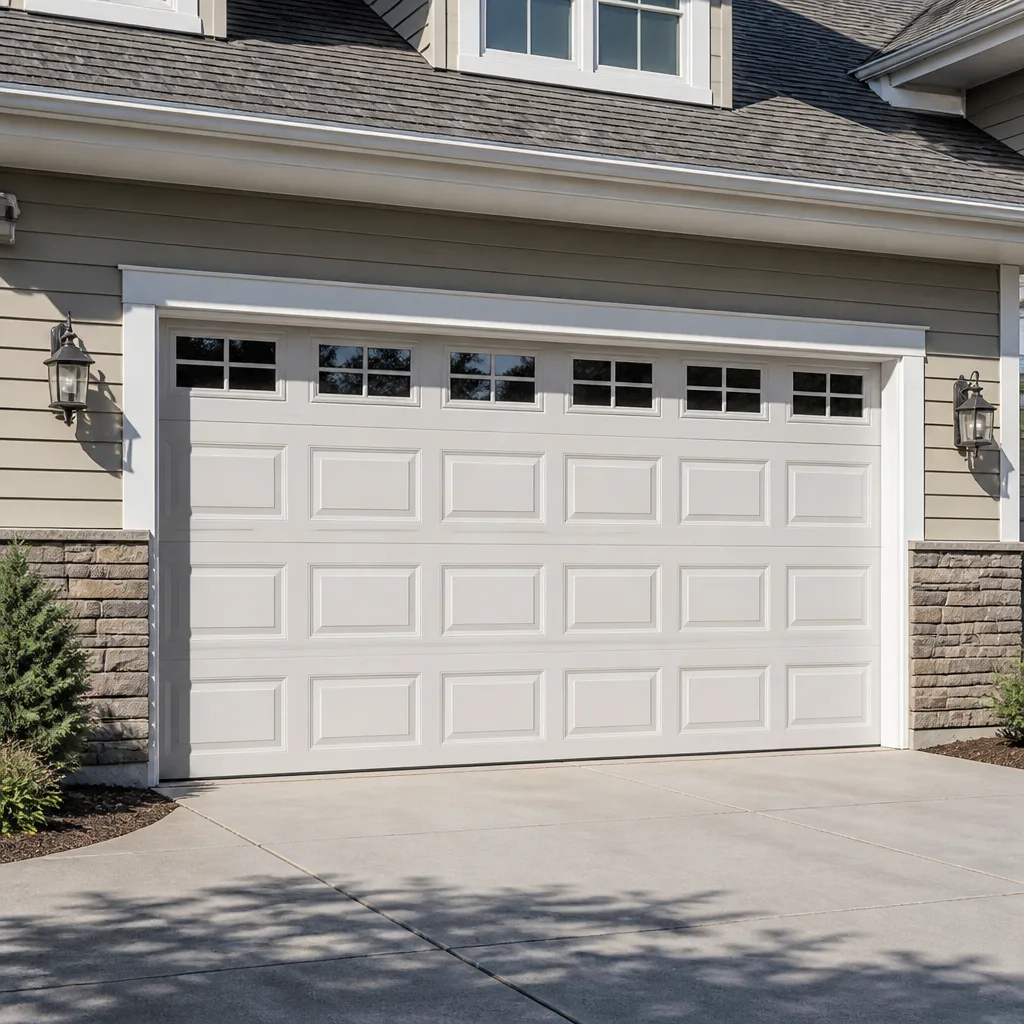 Raised-panel steel
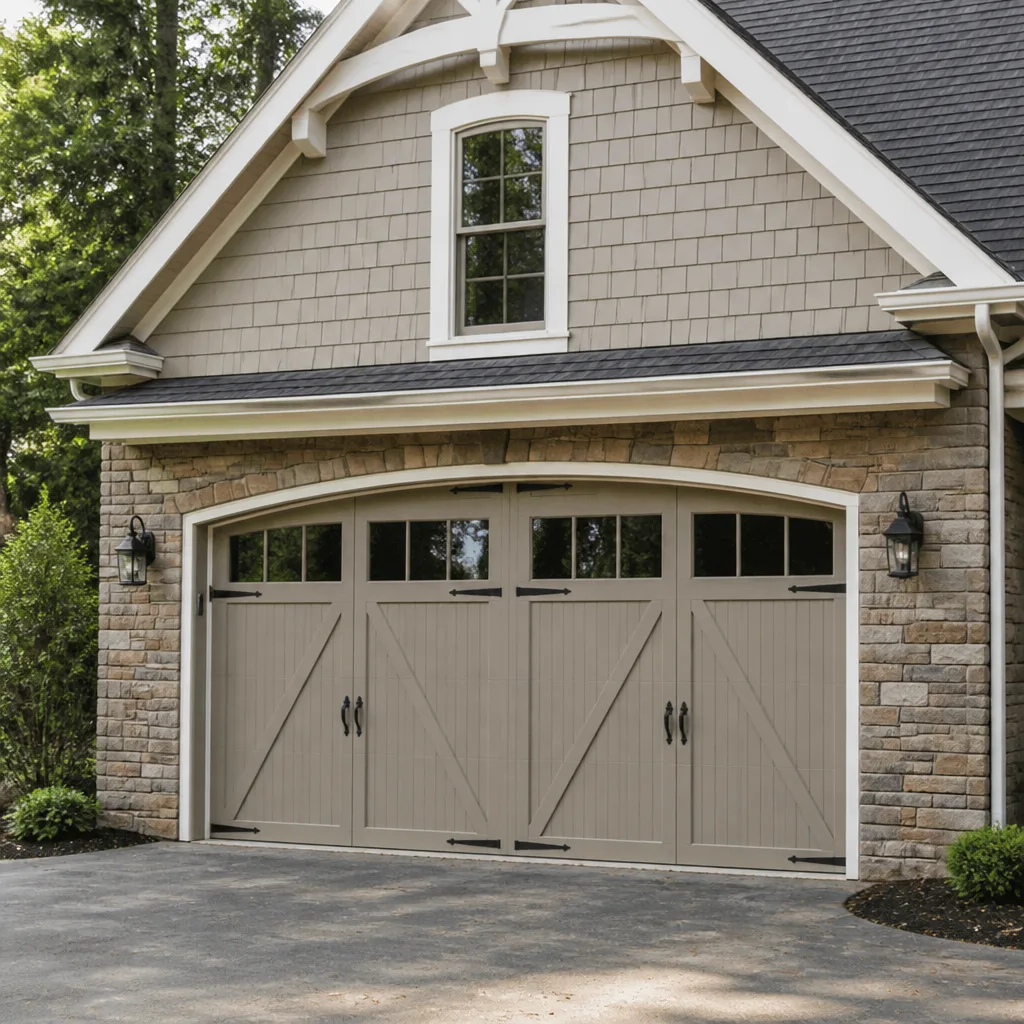 Carriage house
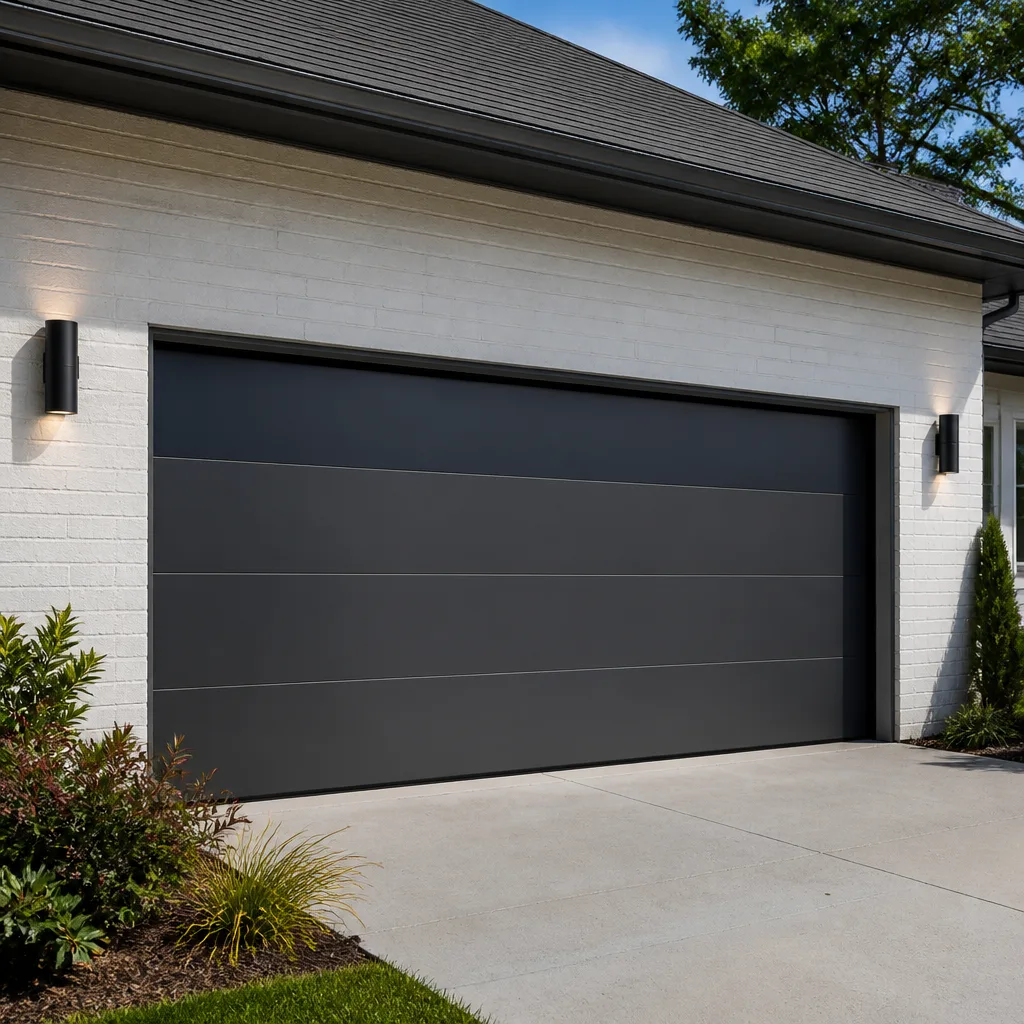 Modern flush
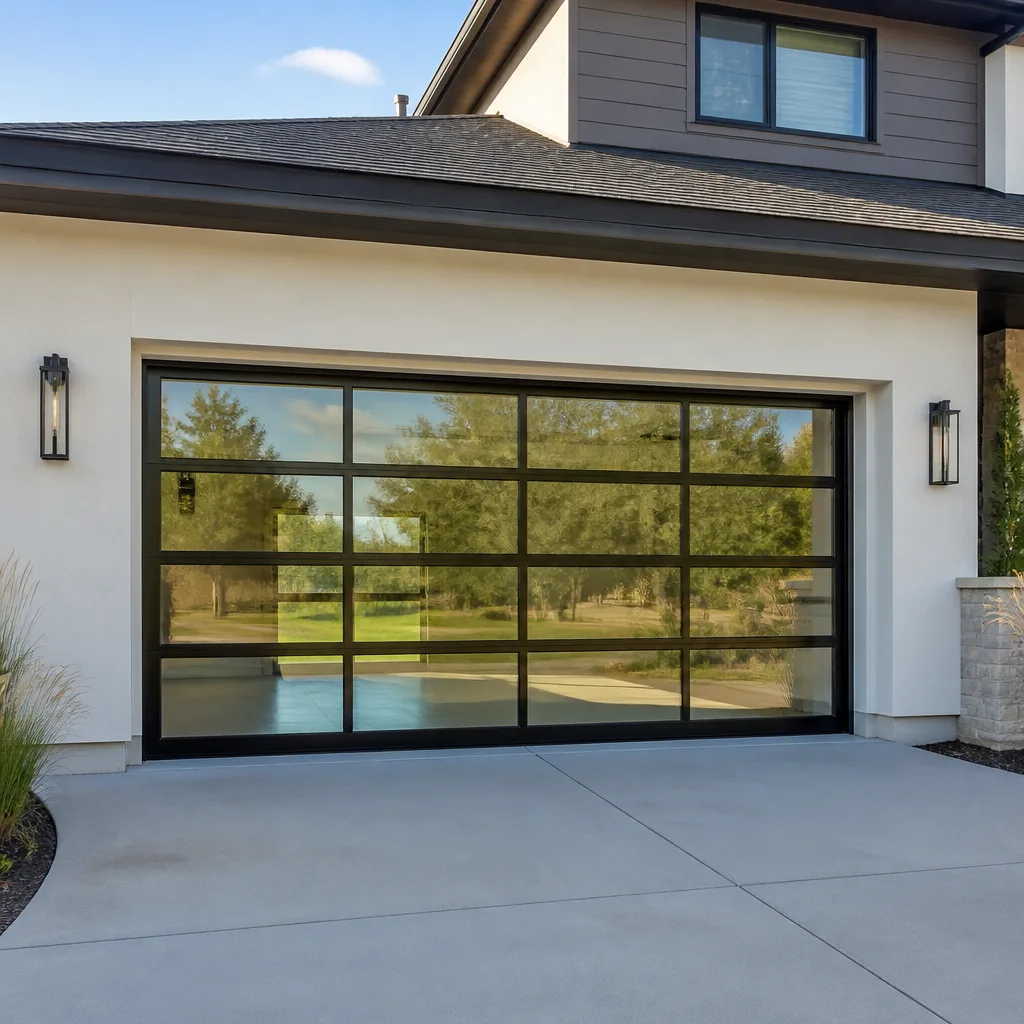 Full-view glass
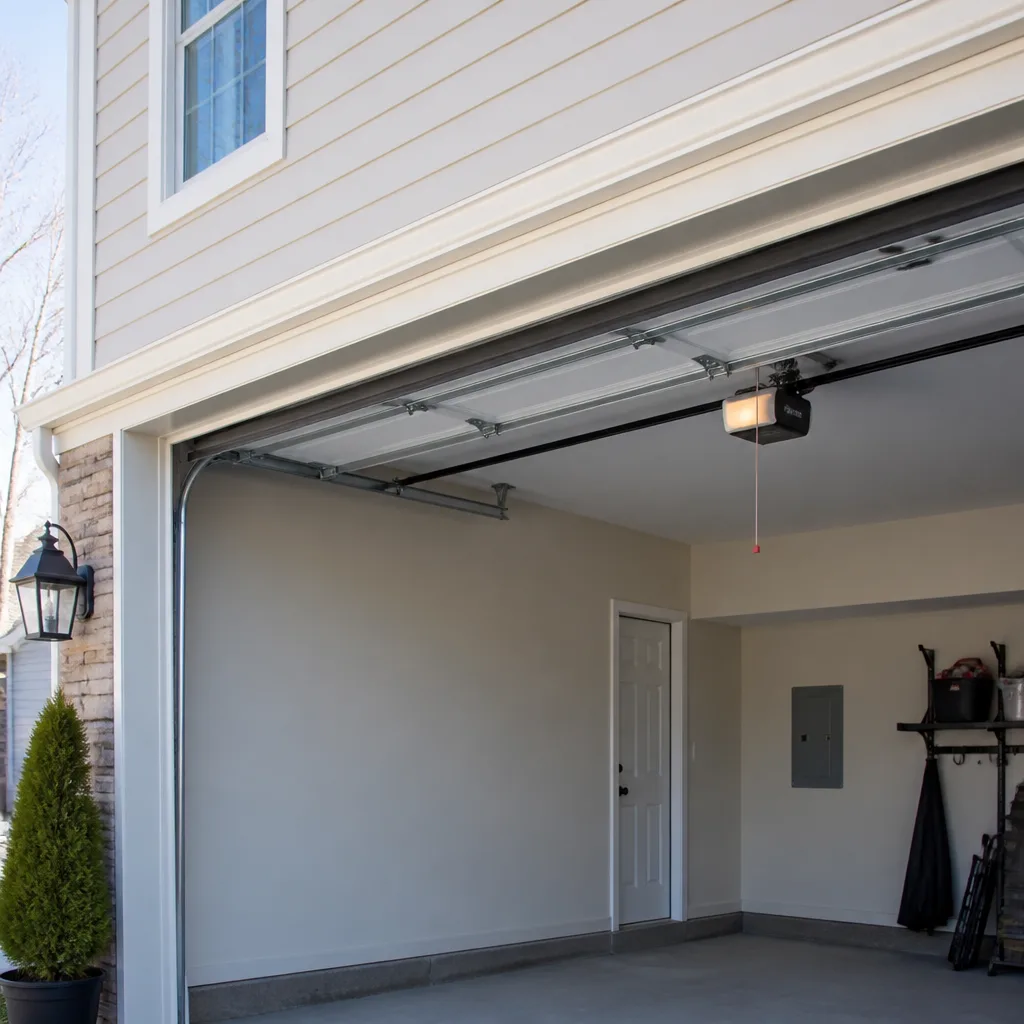 LiftMaster openers
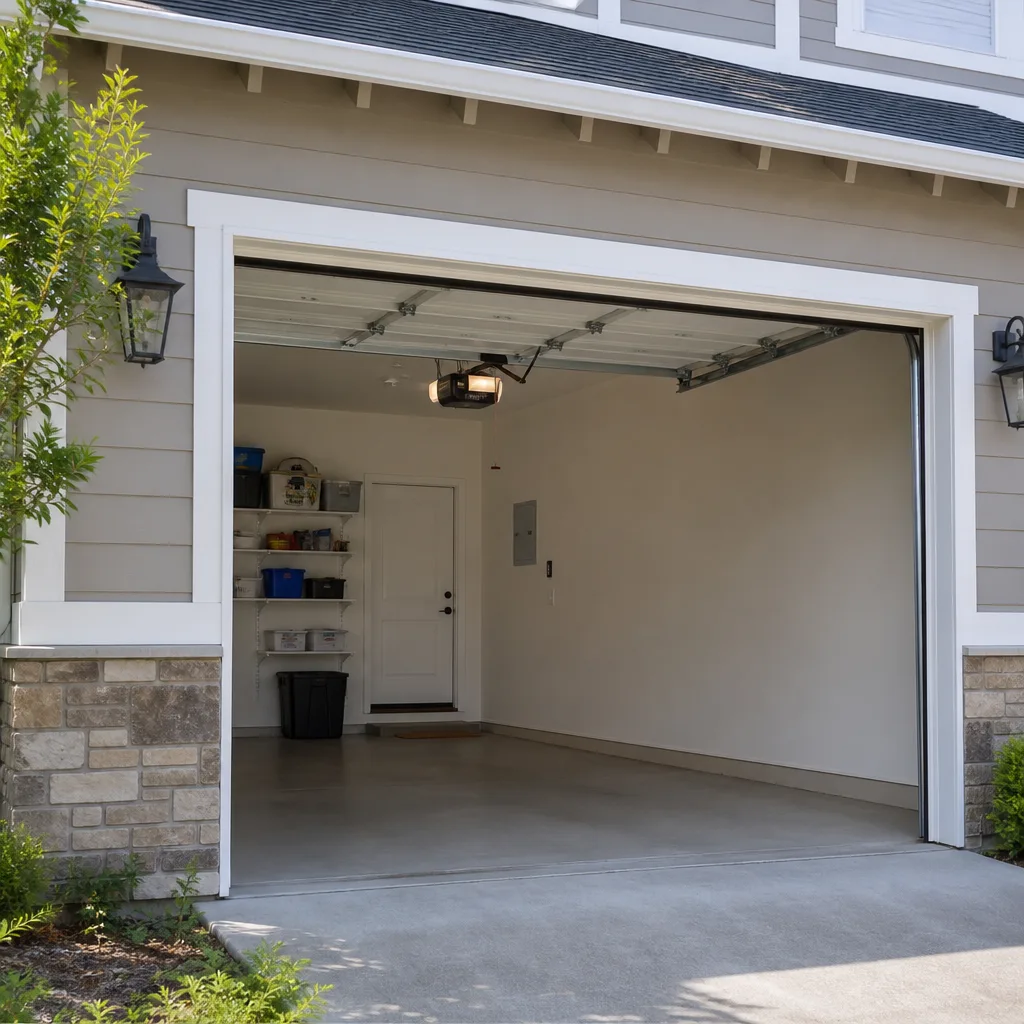 Chamberlain openers
Full 25-point door and opener safety check with every visit - springs, cables, rollers, tracks, and your LiftMaster or Chamberlain opener included
You get a price before we start. It does not change when the truck arrives.
Get your free estimateThe Complete Guide to Garage Door in Torrance
Your garage door cycles roughly 1,500 times a year. That’s more than your HVAC system kicks on, more than your front door opens, and more than most appliances in your home. It’s the largest moving object in your house, often weighing between 130 and 400 pounds depending on material and size. Yet most homeowners in Torrance don’t think about it until something snaps, bends, or refuses to open on a Monday morning. This guide walks through how the system actually works, what fails first, what those failures cost, and how to make decisions that save money over the life of the door, with links to more guides & resources for Torrance homeowners.
Styles & brands we work with
Quick Answer
A garage door is a system of panels, springs, tracks, cables, and hardware that works with an opener to lift and lower the door. In Torrance, the two most common problems are broken torsion springs and opener failures, both of which typically cost between $180 and $450 to repair depending on the part and brand. Regular inspection of springs, cables, rollers, and balance can prevent most emergency breakdowns.
Table of Contents
- The Anatomy of a Garage Door System
- The Five Most Common Failure Points
- Door System vs. Opener System: Why the Distinction Matters
- Brand Fluency: What It Means and Why It Changes Repair Outcomes
- How Torrance’s Coastal Air Affects Your Door
- Repair, Replace, or Upgrade: A Decision Framework
- A Practical Maintenance Routine for Torrance Homeowners
- Common Mistakes to Avoid
- When to Call a Professional
- Frequently Asked Questions
- The Bottom Line
The Anatomy of a Garage Door System
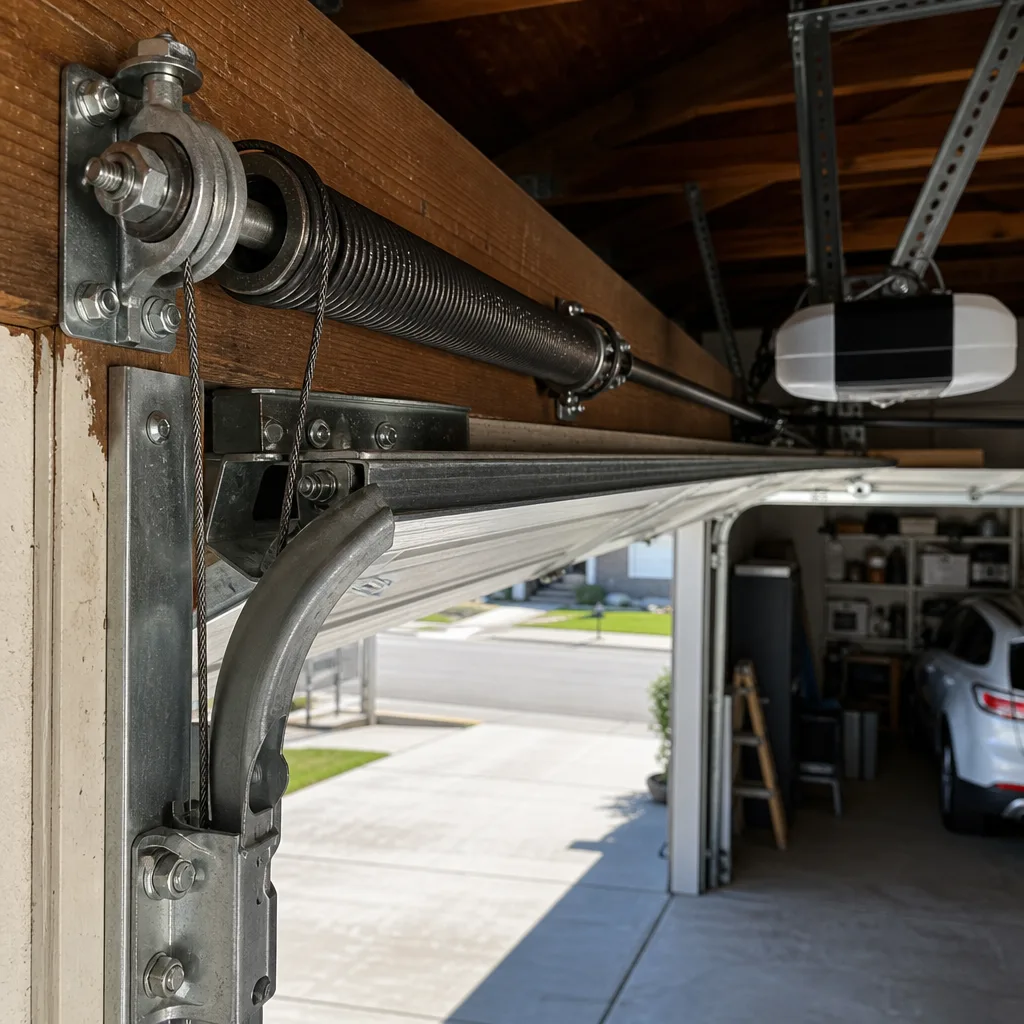
Before you can diagnose a problem, you need to know what you’re looking at. A garage door has two distinct systems working together, and confusing them is the single most common mistake we see from homeowners in Torrance. The door system is mechanical: panels, springs, cables, tracks, rollers, hinges, and brackets. The opener system is electrical: motor, logic board, sensors, remote controls, and the rail that connects to the door. They are separate systems with separate failure patterns and separate repair costs.
Here’s what each component does:
- Torsion springs: Mounted above the door on a metal shaft, these counterbalance the door’s weight. They do the actual lifting work. The opener doesn’t lift the door; the springs do. The opener just guides the movement. When a torsion spring breaks, you’ll hear a loud bang that sounds like a gunshot. The door becomes extremely heavy and won’t open manually or with the opener.
- Extension springs: Found on older or lighter doors, these run along the horizontal tracks on either side. They stretch to provide lift. They’re less common on modern installations but still present in many Torrance homes built before 1990.
- Cables: Steel cables attach the bottom of the door to the spring system. They transfer the spring’s force to the door. When a cable frays or snaps, the door can become crooked and jam in the track.
- Rollers: These ride inside the vertical and horizontal tracks. Steel rollers with ball bearings last 10 to 15 years. Nylon rollers last about 7 to 10 years. Worn rollers cause grinding, shaking, and uneven movement.
- Panels: The visible face of the door. Made from steel, aluminum, wood, or composite. Steel panels with a polyurethane core provide insulation and rigidity. Panel damage is usually cosmetic unless the structural frame bends.
- Tracks and hardware: The rails that guide the door up and over. Misaligned tracks cause the door to bind, squeal, or come off its rollers entirely.
- Opener motor and logic board: The opener pulls a trolley along a rail, but the springs do the heavy lifting. Logic board failures on smart openers account for a disproportionate share of “the opener just stopped responding” calls.
- Safety sensors: Two photo eyes mounted near the floor on either side of the opening. If the beam is blocked or misaligned, the door reverses or refuses to close. This is a safety feature, not an annoyance.
Understanding this anatomy matters because it tells you where to look first. A door that won’t open could be a broken spring (door system), a dead logic board (opener system), or a blocked sensor (opener safety system). Each has a different fix, a different cost, and a different urgency.
The Five Most Common Failure Points
In our experience, garage door problems in Torrance cluster around five components. If you learn these five, you’ll correctly identify about 85% of all issues before making a call.
- Torsion springs (most common): Springs have a rated cycle life, usually 10,000 cycles for standard springs and 25,000 or more for high-cycle springs. At 1,500 cycles per year, a standard spring lasts about 6 to 7 years. If your door is older than that and the spring hasn’t been replaced, you’re on borrowed time. The failure is sudden and loud. The door won’t lift. This requires professional replacement because the spring is under enormous tension.
- Opener logic boards and gears: Smart openers from LiftMaster and Chamberlain have circuit boards that control everything from the remote signal to the safety sensor response. Power surges, heat, and age cause components to fail. A common symptom: the wall button works but the remote doesn’t, or the door opens but won’t close. Gear failures inside the opener produce a grinding noise as the motor spins but the trolley doesn’t move.
- Broken or frayed cables: Cables carry the spring’s force to the door. Over time, especially in the salt-tinged air near the Torrance coast, the steel cable strands separate and rust. A frayed cable looks like a steel bottle brush. It can snap without warning and send the door crashing down on one side. If you see fraying, replace the cable before it fails.
- Worn rollers and bearings: Rollers wear unevenly, especially in coastal humidity. You’ll hear a grinding or squealing sound during operation. In severe cases, the roller comes off the track and the door hangs crooked. Replacing all rollers at once costs less than replacing them one at a time as each fails.
- Misaligned or rusted tracks: The vertical and horizontal tracks must be aligned within tight tolerances. A door hitting a car bumper, a loose track bolt, or years of coastal rust can shift the track enough that the door jams. Track problems are often the result of another failure, like a broken roller, rather than the root cause.
Each of these failures has a telltale sound or visual signature. Learn to recognize them, and you’ll catch problems before they become emergencies. For advance planning tips, read our Garage Door Emergency Preparedness Guide for Torrance Homes.
Door System vs. Opener System: Why the Distinction Matters
Here’s a scenario we see repeatedly in Torrance: a homeowner calls because the door won’t open. The opener motor hums, the lights flash, but nothing moves. A generalist might replace the opener at a cost of $500 to $700. The actual problem is a broken spring, which costs $180 to $340 to replace. The opener was fine. The spring was doing all the lifting, and when it broke, the opener simply couldn’t move the dead weight of the door.
This is why the distinction between the door system and the opener system matters for your wallet. The door system includes springs, cables, rollers, tracks, and panels. The opener system includes the motor, rail, trolley, logic board, sensors, and remote controls. They are independent systems that work together. A failure in one doesn’t mean the other needs replacement.
Here’s how to tell which system has failed:
- Pull the emergency release cord. This disconnects the opener from the door. Try to lift the door manually. If it’s unusually heavy or won’t move, the problem is in the door system, usually the springs. If the door moves smoothly by hand, the problem is in the opener system.
- Look at the springs. A broken torsion spring has a visible gap in the coil. A broken extension spring is dangling in two pieces. If you see either, the door system is the culprit.
- Watch the cable drums. If the door moves on one side but not the other, a cable has slipped or snapped. That’s a door system failure.
- Listen to the opener. If the motor hums but the trolley doesn’t move, the opener’s internal gear is stripped. That’s an opener system failure. If the opener clicks and does nothing, the logic board may be dead.
Misdiagnosing door problems as opener problems, or vice versa, is the most expensive mistake a homeowner can make. It leads to replacing working components while the actual failure remains. A technician who works on both systems daily, and who knows the specific brands involved, makes the correct call in minutes rather than hours.
Brand Fluency: What It Means and Why It Changes Repair Outcomes
Garage doors are not interchangeable. A Clopay door uses different hardware geometry than an Amarr. A Wayne Dalton door from 2005 has a different spring configuration than a Raynor installed last year. On the opener side, a Genie uses different logic board architecture than a LiftMaster or Chamberlain. These differences matter when diagnosing.
When a technician knows the brand inside and out, diagnosis is faster and repairs are more precise. For example, certain LiftMaster models have a known issue with the capacitor on the logic board failing after power surges. A technician who’s seen this 50 times recognizes the symptoms immediately: the opener powers on, the lights work, but the motor won’t engage. A generalist who’s seen this once or twice spends 90 minutes testing components, swapping boards, and guessing. The specialist spends 20 minutes and replaces the right part the first time.
Brand fluency also matters for parts. A Clopay door uses specific bottom brackets. A Genie opener uses a specific gear and sprocket kit. When a technician arrives with the right part on the truck, the repair is done in one visit. When they have to order it, you wait days with a non-functional door. That’s the practical difference between a garage door specialist and a general contractor. We work on your brand, whether it’s Genie, Clopay, Amarr, or Wayne Dalton, because garage doors are all we do.
This depth also applies to smart-home integration. Openers from LiftMaster and Chamberlain connect to apps like myQ. Genie has its own Aladdin Connect platform. Craftsman units use a mix of technologies depending on the model year. These connectivity issues are increasingly common and often stump technicians who treat openers as simple motors. Opener problems diagnosed, not guessed, is the standard that saves you a return visit.
How Torrance’s Coastal Air Affects Your Door
Torrance sits less than two miles from the Pacific in many neighborhoods. The marine layer that rolls in most evenings carries salt and moisture. That combination accelerates corrosion on every metal component of your garage door. We see the effects most clearly on springs, cables, and track hardware.
Steel torsion springs in Torrance rust faster than the same springs installed 20 miles inland. Surface rust isn’t immediately fatal, but it weakens the spring over time. Rust on the coil creates friction points that concentrate stress, and that’s where the spring eventually snaps. Cables suffer similarly. The strands separate as rust eats through individual wires. A cable that looks merely discolored might be days from failure.
Track hardware like bolts, brackets, and hinges rusts too. Galvanized steel offers some protection, but the salt air eventually wins. Homes within a mile of the coast, in neighborhoods like Seaside and Southwood, tend to show hardware corrosion 2 to 3 years earlier than homes in eastern Torrance. This isn’t a product defect. It’s physics.
There are practical responses to coastal corrosion:
- Ask for high-cycle springs when replacement is needed. They use thicker wire and a different alloy that lasts longer in harsh conditions.
- Choose nylon rollers over steel rollers for louder doors. Nylon rollers are quieter and resist corrosion on the bearing race.
- Inspect cables quarterly during the rainy season. Rust advances faster when moisture is present continuously.
- Consider a door with a factory-applied anti-corrosion coating if you’re within a mile of the ocean.
These adjustments cost a little more up front but extend the service life of every component. For more on replacement options, see our full treatment in the Garage Door Installation in Santa Fe Springs guide.
Repair, Replace, or Upgrade: A Decision Framework
Every door reaches a point where continued repairs cost more than replacement. The challenge is knowing when you’ve crossed that line. Here’s a decision framework we use with Torrance homeowners, and it maps door age, damage type, and part availability to a clear recommendation. For detailed pricing context, see our Garage Door Cost Breakdown: The Torrance Homeowner’s Reference for 2026.
- Door is under 10 years old: Repair almost always makes sense. A broken spring at year 7 is normal wear, not a sign of systemic failure. Replace the spring, not the door. If the opener fails, repair or replace the opener alone. The door itself has years of life left.
- Door is 10 to 15 years old: Evaluate the panel condition. If panels are dented, rusted, or delaminating, replacement may cost less than repairing multiple components over the next 5 years. If the panels are clean and the frame is solid, repair the failing component and keep the door.
- Door is over 15 years old: Spring replacement is still reasonable if the door is structurally sound. But if you’re facing a spring, two cables, and three rollers all in the same year, replacement often makes more sense. The cumulative cost of piecemeal repairs approaches half the cost of a new door.
- Structural damage: A car hitting the bottom panel bends the panel and often the track. Single-panel replacement is possible if the model is still in production. If the door is discontinued, you’re looking at a full door replacement because panels can’t be matched.
- Opener is over 10 years old and fails: Replacement is nearly always the right call. Opener technology has advanced significantly. New openers from LiftMaster and Genie include smart-home integration, battery backup, and better safety features. Repairing a 12-year-old opener means investing money in a system nearing end of life.
Part availability matters in this decision. Some door models are discontinued after 10 years. You can still get universal parts like springs and cables, but model-specific panels and hardware become impossible to find. When your door’s model is no longer manufactured, the write-or-wait question answers itself: begin planning for replacement.
For a deeper look at repair economics, read Garage Door Repair in Santa Fe Springs, where we break down common repair costs and what they include.
A Practical Maintenance Routine for Torrance Homeowners
Garage door maintenance is boring, which is exactly why most people skip it. But 15 minutes every three months prevents most of the breakdowns we’re called for. Here’s the routine we recommend to homeowners throughout Torrance.
The 15-Minute Quarterly Inspection
- Watch and listen. Open and close the door once. Stand where you can see the full travel. The door should move smoothly with no jerking, grinding, or hesitation. Listen for scraping, squealing, or popping.
- Inspect the springs. Look at the torsion spring above the door. Check for rust, gaps, or separation in the coil. For extension springs, check that both are attached and not stretched unevenly.
- Check the cables. Look at both sides of the door. Cables should be taut and clean, not frayed or rusted. Any visible strand separation means replacement is due.
- Test the balance. Pull the emergency release cord and lift the door manually. It should lift easily and stay open at about waist height without falling or shooting up. If it falls, the springs are weak. If it shoots up, they’re too strong. Both are problems.
- Test the safety sensors. With the door open, place a broom handle in the path of the photo eyes and press the close button. The door should reverse immediately when the beam breaks. If it doesn’t, the sensors need attention.
- Check the rollers and track. Look for cracked rollers, bent track sections, or loose bolts. Tighten any hardware that has worked loose.
What to Lubricate and What to Leave Alone
- Lubricate: Hinges, roller bearings, and the torsion spring. Use a silicone-based garage door lubricant or white lithium grease. Spray the spring along its length, the hinge pivots, and the roller stems.
- Do not lubricate: The opener rail (unless it’s a screw-drive model, which uses a specific lubricant), the safety sensors, and any electrical component.
- Do not touch: The torsion spring adjustment bolts, the cable drums, and anything under tension. These are dangerous if mishandled.
This routine catches rust on cables, fraying on rollers, and spring fatigue before they become failures. Most of the emergency calls we take in Torrance involve components that showed visible warning signs for weeks before failing. The owner just wasn’t looking.
Common Mistakes to Avoid
- Replacing the opener when the spring is broken. This is the most expensive mistake we see. The opener motor hums and nothing moves, and the homeowner assumes the opener died. The actual fix is a $180 to $340 spring replacement. Always test the door manually with the emergency release before calling anyone.
- Ignoring a noisy door. Grinding, squealing, and popping sounds are early warnings. They don’t resolve on their own. A popping noise during operation is often a spring nearing failure. A grinding noise is a roller bearing disintegrating. Fix the source before it becomes a breakdown.
- Attempting DIY spring replacement. Torsion springs are under several hundred pounds of tension. If the winding bar slips, the force can cause serious injury. This is one repair where professional tools and training are non-negotiable.
- Lubricating with WD-40. WD-40 is a solvent, not a lubricant. It degrades the grease in roller bearings and leaves components dry. Use a silicone-based lubricant made for garage doors.
- Disabling the safety sensors. Some homeowners bypass photo eyes to make the door close when the beam keeps breaking. This defeats a required safety feature and risks injury to children and pets. Fix the sensor alignment instead.
- Choosing the cheapest replacement door without comparing insulation values. In Torrance’s coastal climate, an uninsulated steel door makes the garage uncomfortable on hot August days and cold January mornings. The R-value of the panel matters, even if you don’t heat the garage.
- Waiting until the door completely fails before researching options. When a spring breaks on a Friday evening, you’re calling whoever answers. When you plan replacement ahead of time, you compare options, get multiple prices, and make a decision without pressure. Proactive owners get better outcomes.
When to Call a Professional
Some repairs are DIY-appropriate: lubricating hinges, tightening loose bolts, cleaning sensors, and testing balance. Others are not, as covered in our DIY vs Professional Garage Door: The Torrance Homeowner’s Decision Guide. Call a professional when a torsion spring breaks, when a cable frays or snaps, when the door comes off its track, or when the opener’s logic board fails. These jobs involve high tension, heavy components, or electrical current, and they carry real risk of injury if mishandled.
If you’re in Torrance and want a specialist who works on your brand, Torrance Garage Door Service offers free estimates over the phone and in person. Call (855) 341-7719 and describe what you’re seeing. We’ll tell you whether it’s a door system issue or an opener issue, what parts are likely involved, and what the repair will cost before anyone arrives.
Frequently Asked Questions
Torsion spring replacement in Torrance typically costs $180 to $340, including the spring and labor. High-cycle springs cost more but last two to three times longer. Prices vary by door weight, spring type, and whether cables need replacement at the same time. Call (855) 341-7719 for an exact quote based on your door.
Pull the emergency release cord and try lifting the door manually. If it’s heavy or won’t move, the problem is the door system, usually the springs. If it moves smoothly, the problem is the opener system. This test takes 30 seconds and saves you from paying for the wrong repair.
Yes. Garage door specialists work on all eight major brands: LiftMaster, Chamberlain, Genie, Clopay, Amarr, Wayne Dalton, Craftsman, and Raynor. Brand-specific knowledge means faster diagnosis and the right part on the first visit, regardless of what’s installed in your garage.
Openers last 10 to 15 years on average. If yours is older than 10 and the logic board or motor fails, replacement is usually more cost-effective than repair. New openers offer smart-home integration, battery backup, and quieter operation than older models.
Yes. Coastal salt and moisture accelerate rust on springs, cables, and track hardware. Homes within a mile of the ocean typically show corrosion 2 to 3 years earlier than inland homes. High-cycle springs and regular inspection help offset the effect.
Most installations take 4 to 6 hours from start to finish, including removing the old door, installing the new one, and testing the full system. The process includes a free measure and written price before any work begins. Read more in our Garage Door Installation in Santa Fe Springs guide.
Yes. Opener repair is a dedicated service line, not an afterthought. That means we handle everything from stripped gears to failed logic boards to smart-home connectivity issues. See Garage Door Opener Repair in Santa Fe Springs for a complete breakdown.
No. The price is quoted and agreed before any work starts. If the technician finds additional problems during the repair, you’ll be told what was found, why it matters, and what it costs before anything else is done. There are no surprise invoices.
The Bottom Line
Your garage door is a mechanical system with a lifespan, and it rewards attention. The springs last 6 to 7 years on average. The cables rust faster in Torrance’s coastal air. The opener’s electronics fail before its motor does. Knowing the difference between the door system and the opener system saves you from paying for the wrong repair. Knowing your brand means your technician arrives prepared. And knowing when to repair versus replace means you’re never forced into a costly decision at the worst moment. From first repair to full replacement, the right part, the right fix, one visit is the standard that keeps your door working. Start with a call to (855) 341-7719. Garage doors are all we do.
Written by the team at Torrance Garage Door Service, serving Torrance since 2013.
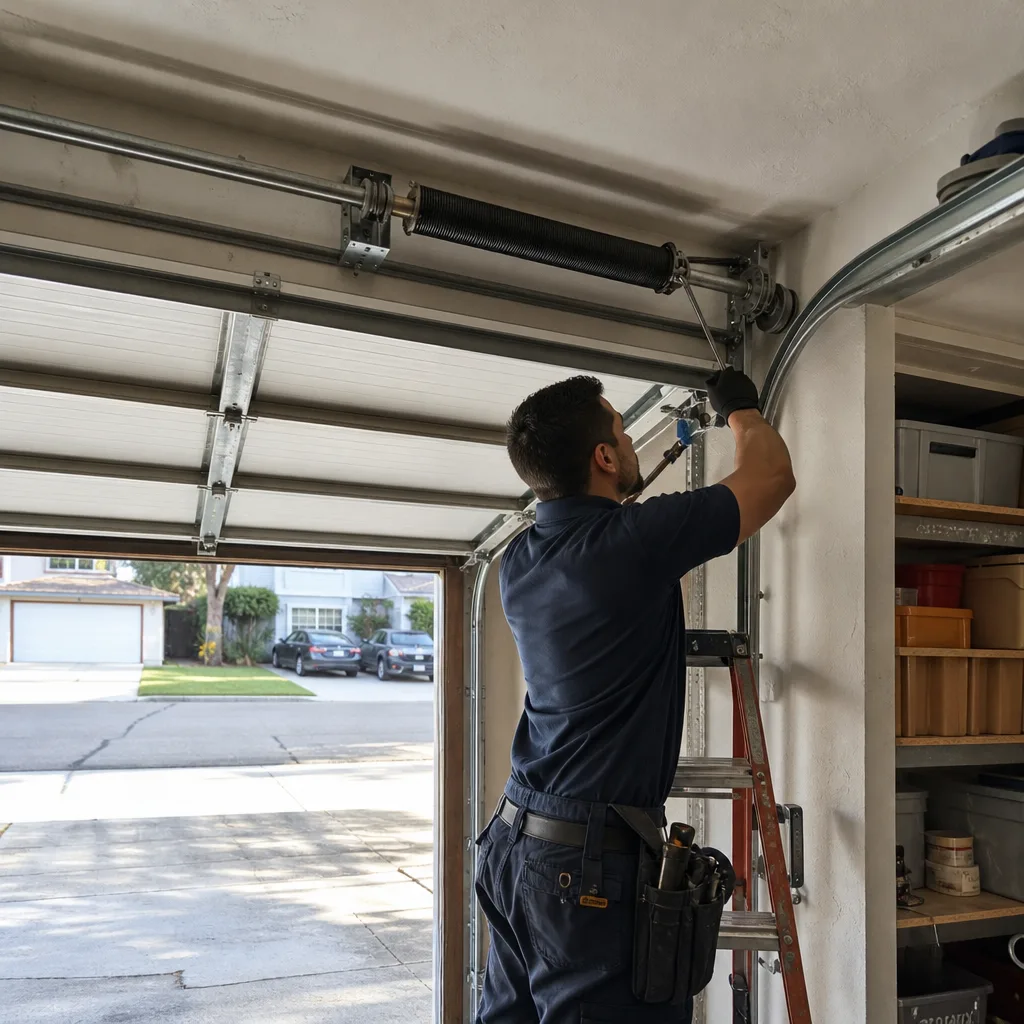
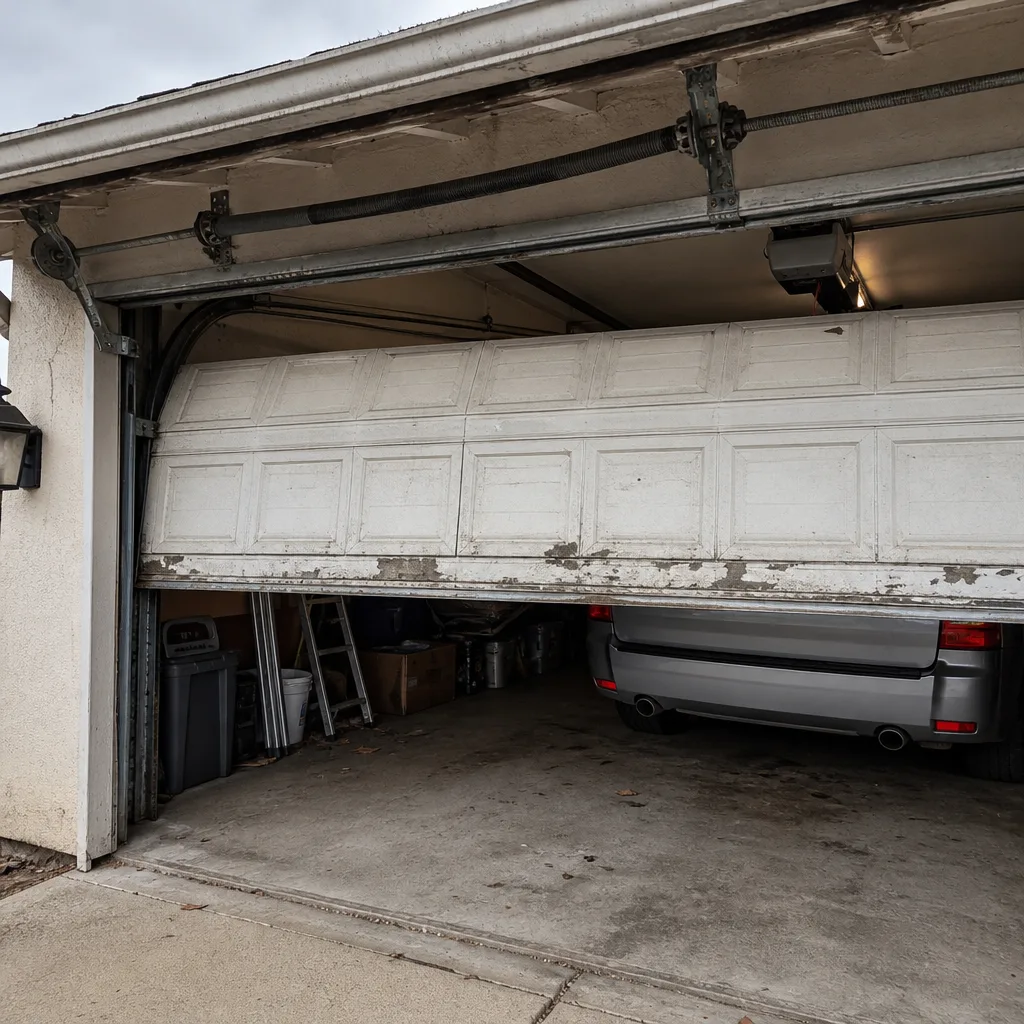
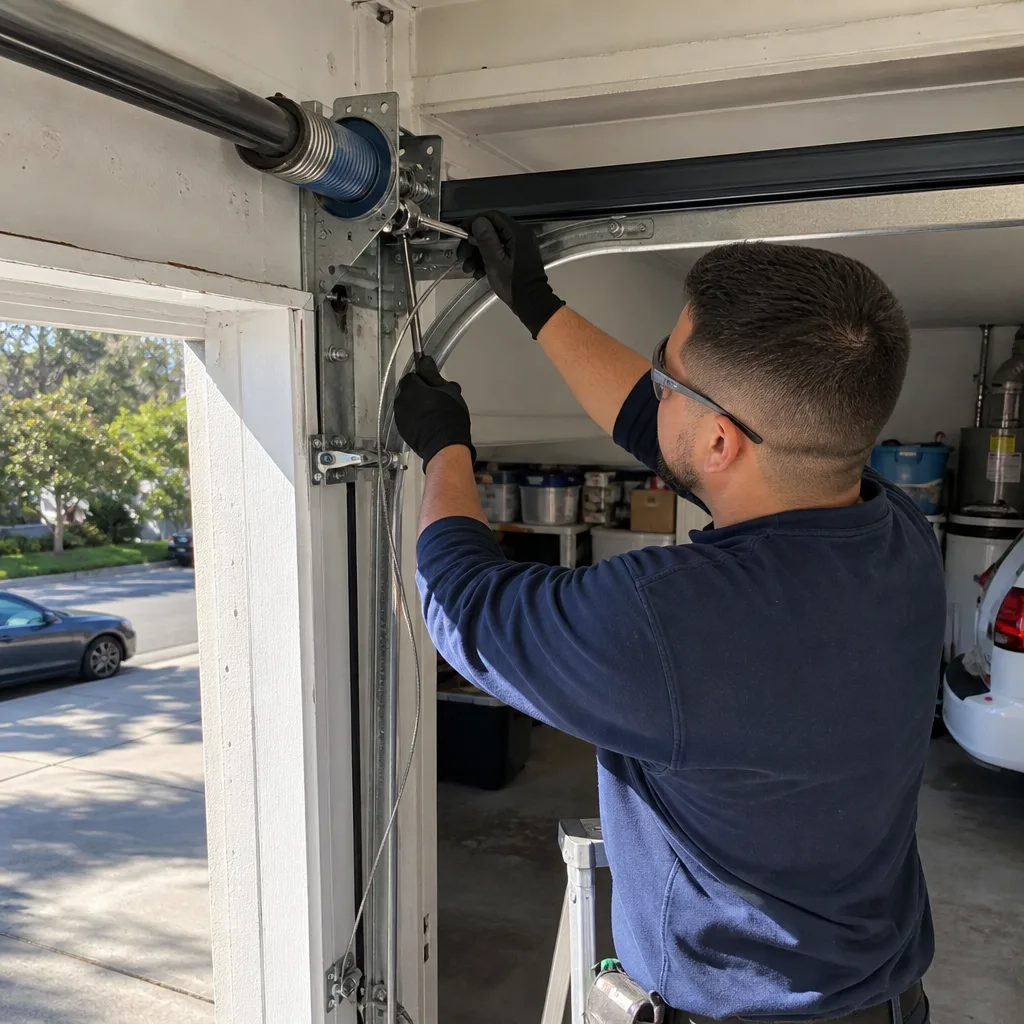
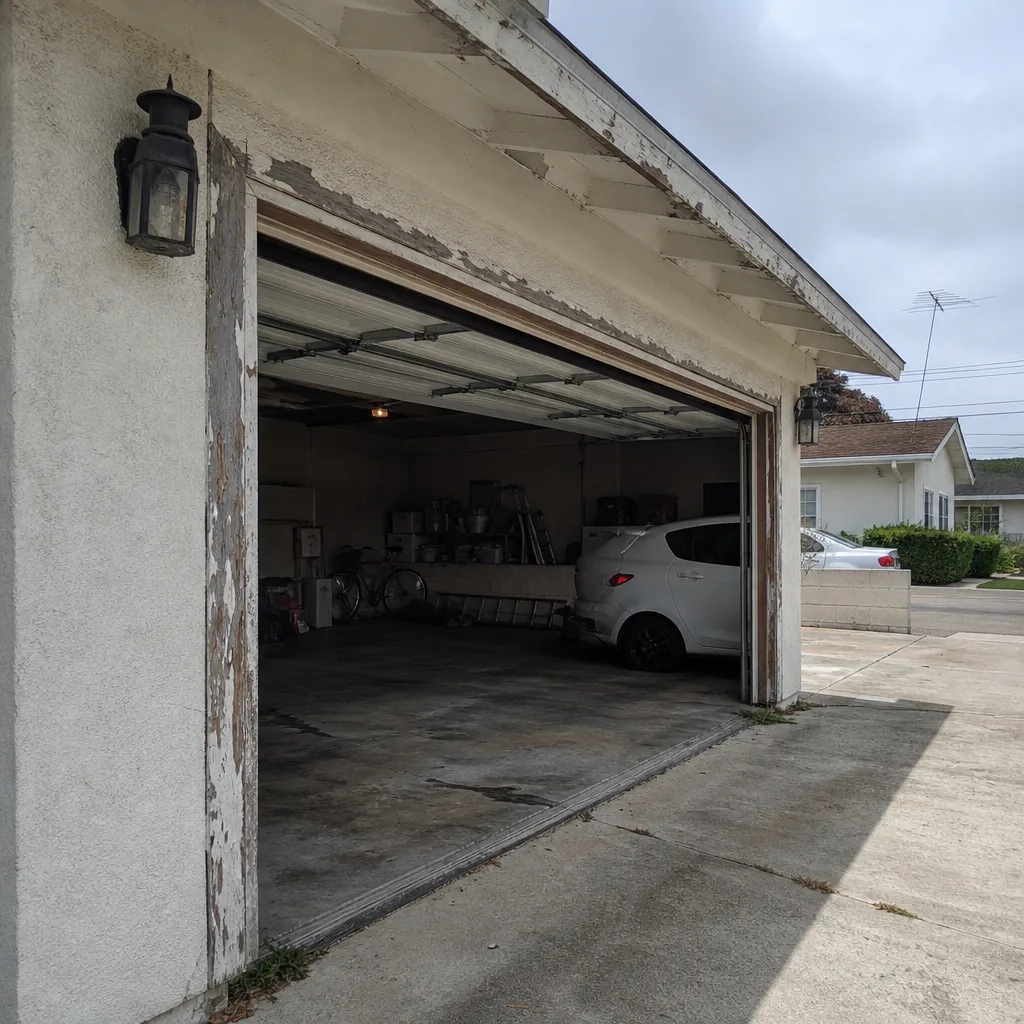
See the difference
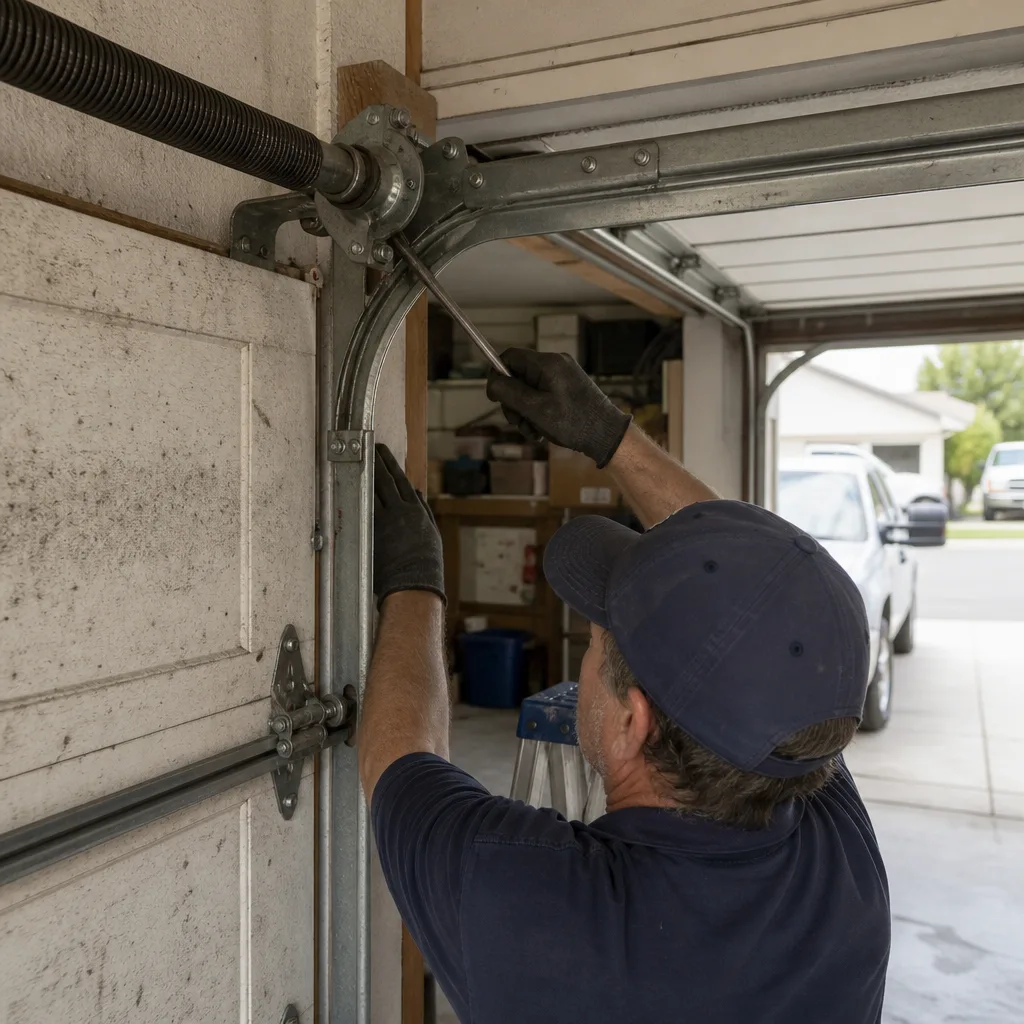 Before
 After
 Before
 After
 Before
 After