Last updated October 31, 2026
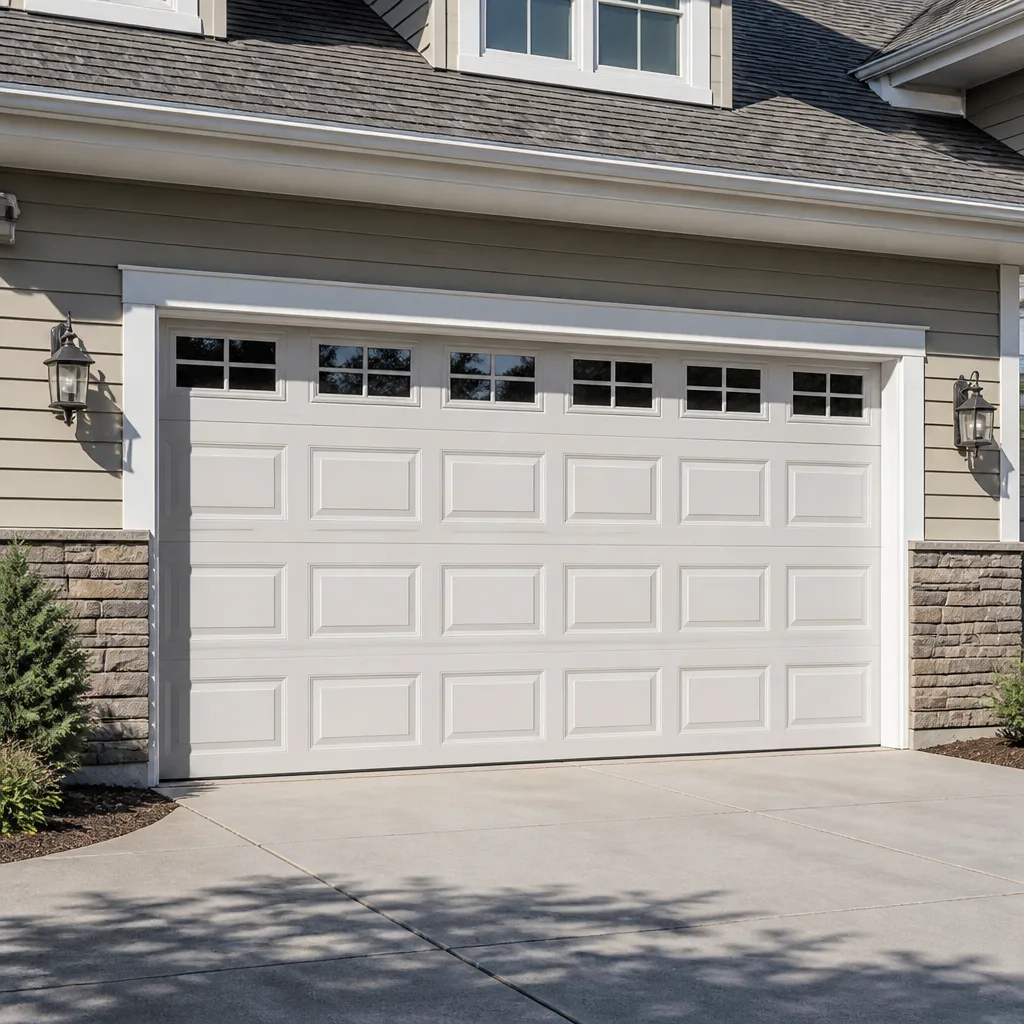 Raised-panel steel
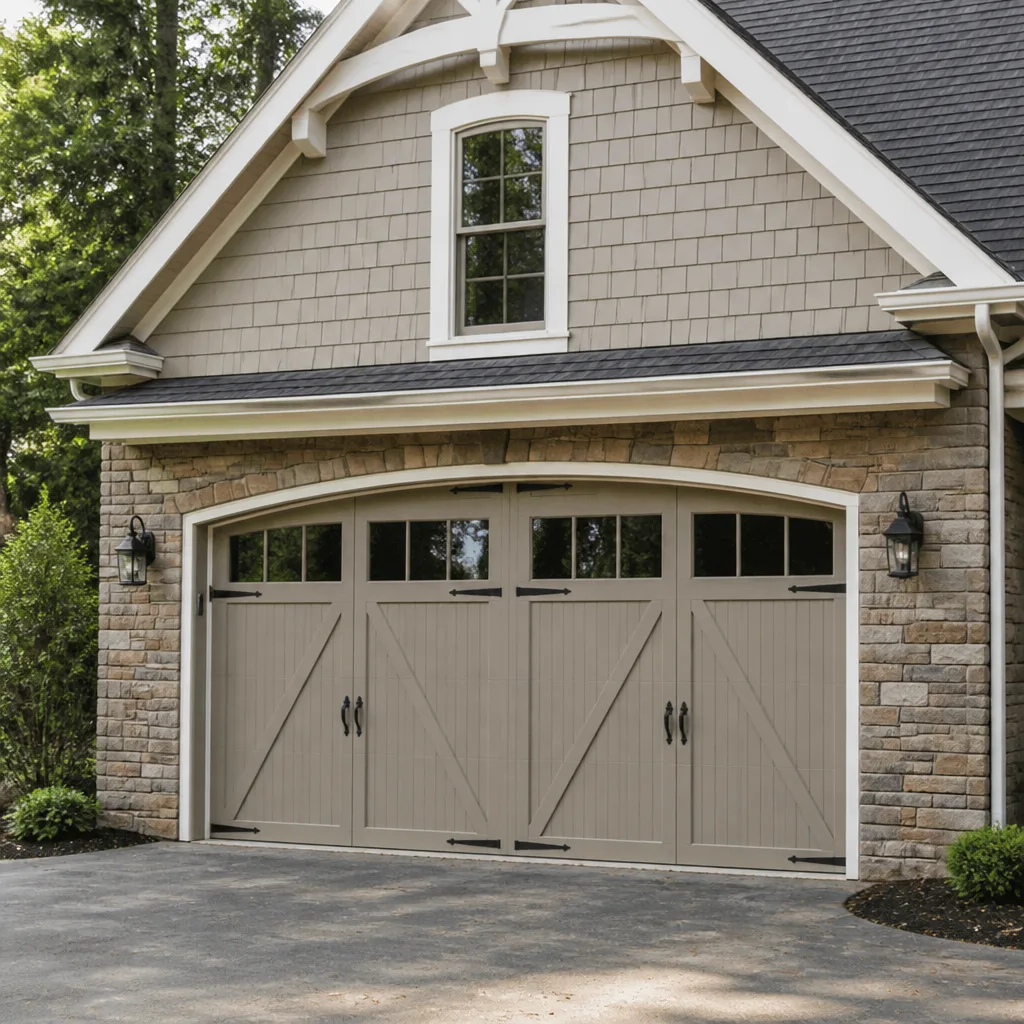 Carriage house
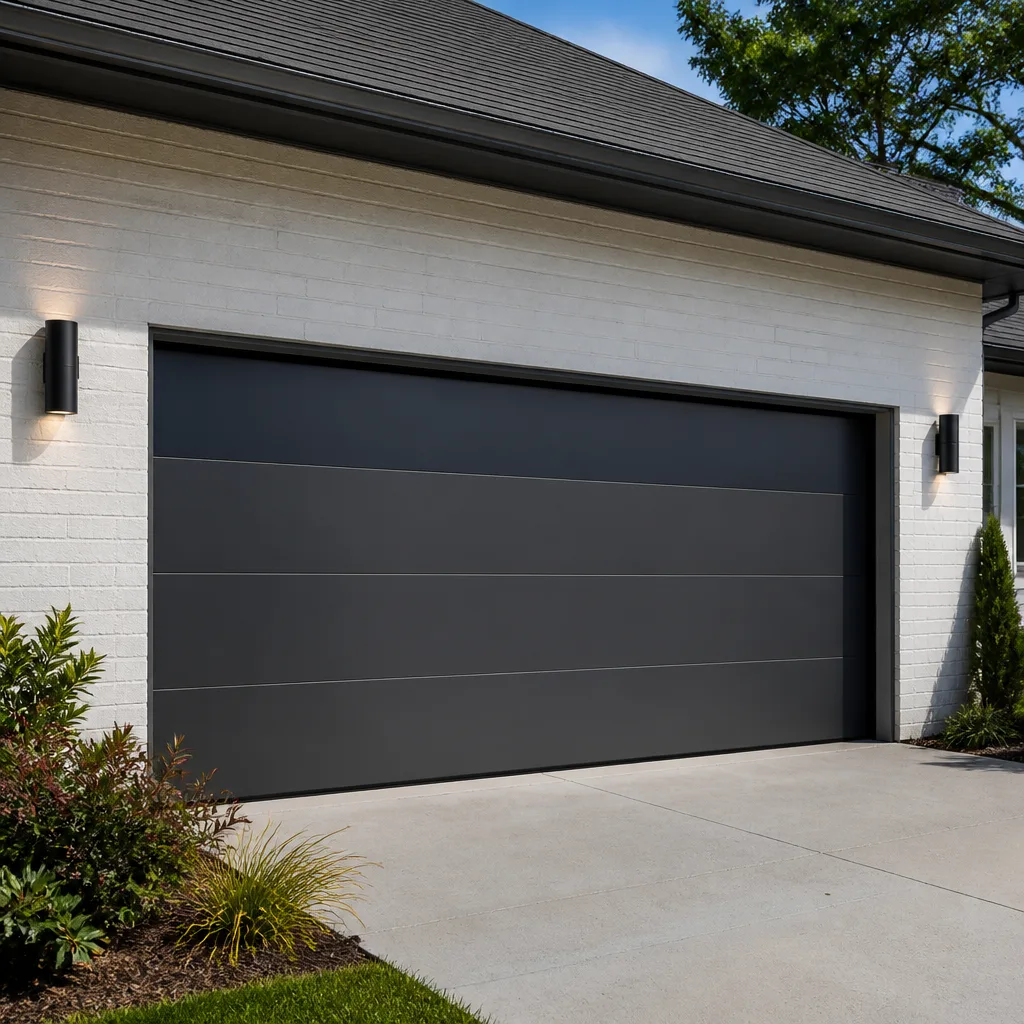 Modern flush
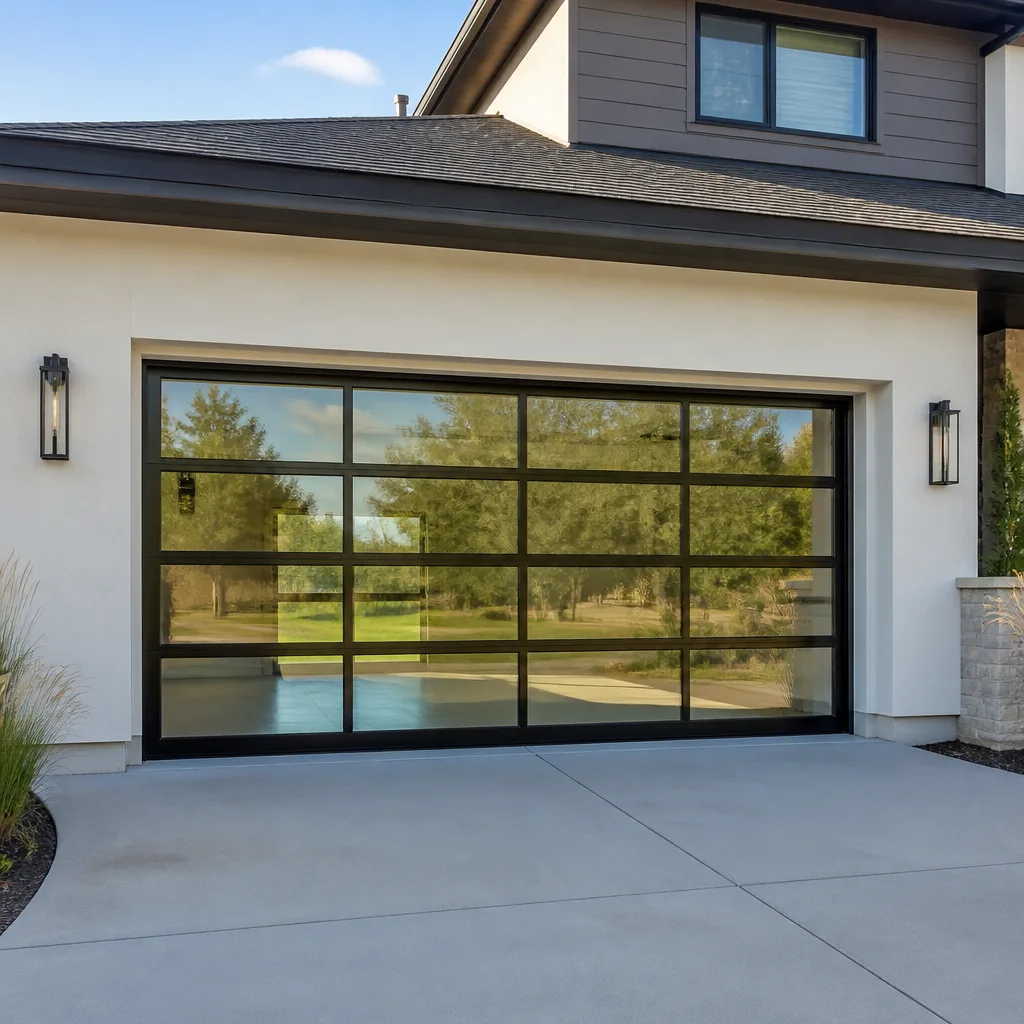 Full-view glass
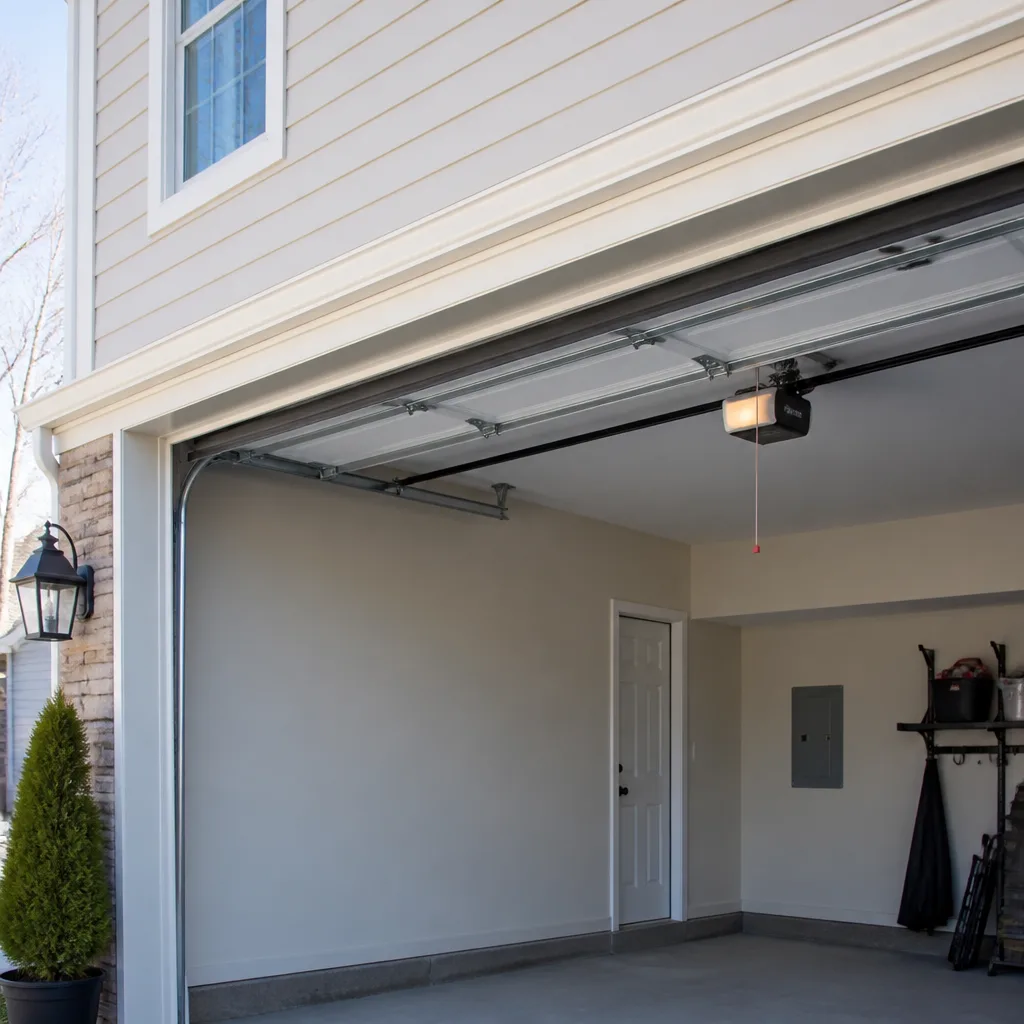 LiftMaster openers
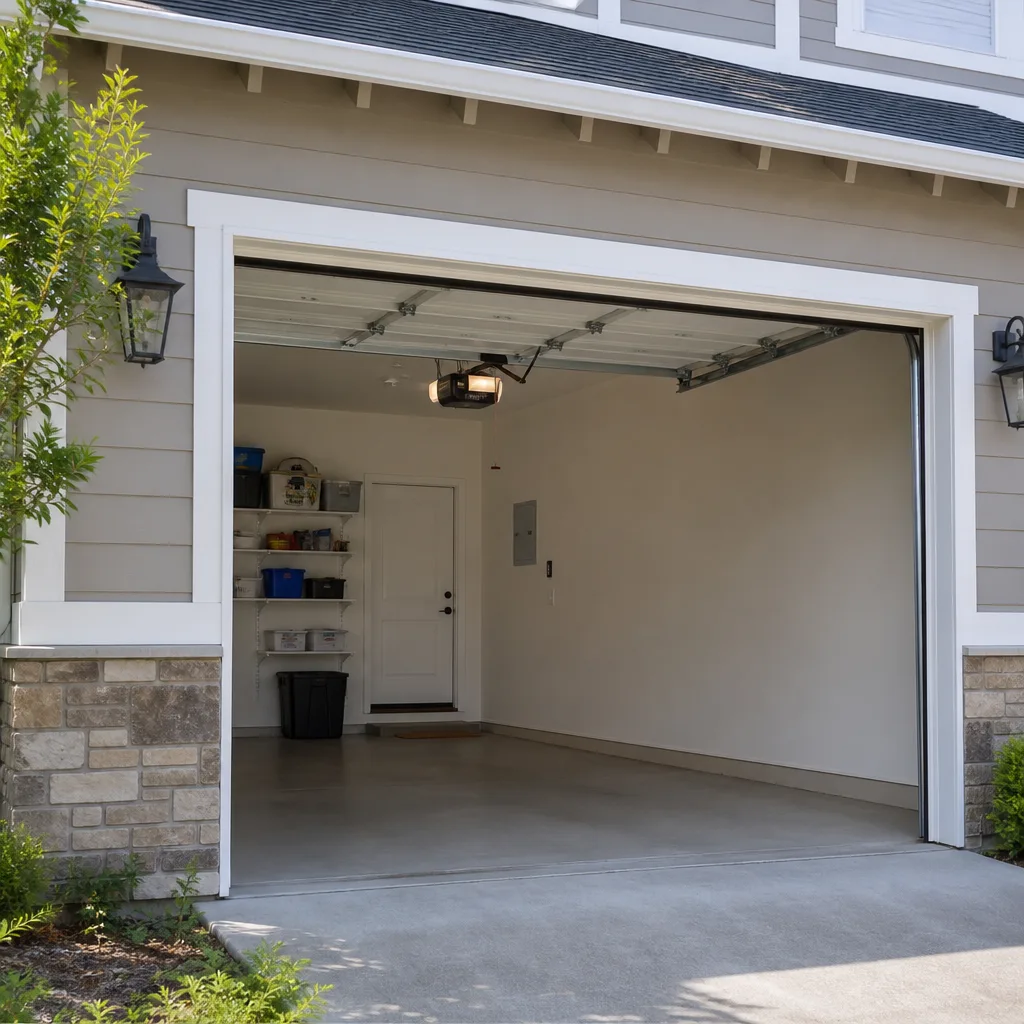 Chamberlain openers
Full 25-point door and opener safety check with every visit - springs, cables, rollers, tracks, and your LiftMaster or Chamberlain opener included
You get a price before we start. It does not change when the truck arrives.
Get your free estimateGarage Door Warning Signs: A Torrance Homeowner’s Reference Guide
A torsion spring doesn’t snap without warning. It creaks first. The door gets heavier. The opener strains a little harder each week to do the same job it did effortlessly a month ago. The problem is that most Torrance homeowners have never been told what those specific signals mean, so they ignore them until the door refuses to open on a Tuesday morning when they’re already running late. By the time a garage door fails completely, it has usually been asking for help for two to six weeks. This guide teaches you to hear what your door is saying back, and you can find more guides & resources on our blog.
Quick Answer
The most common garage door warning signs in Torrance are a door that feels unusually heavy when lifted manually, grinding or squealing sounds during operation, visible fraying on cables, the opener reversing before the door closes, and a door that moves unevenly or shakes on its tracks. Any one of these signals is worth investigating within a few days; two or more together usually mean a component is close to failure and a repair call will be cheaper now than an emergency call later.
Styles & brands we work with
Table of Contents
- The 30-Second Heavy Door Test
- The Garage Door Sound Dictionary
- What Your Opener Is Trying to Tell You
- Visual Warning Signs You Can Spot From the Garage Floor
- Brand-Specific Warning Signs: Genie, Clopay, Amarr, and Wayne Dalton
- What Torrance’s Climate and Housing Stock Mean for Your Door
- Common Mistakes to Avoid
- When to Call a Professional
The 30-Second Heavy Door Test
Here’s a diagnostic check you can do right now, and it costs you nothing. Pull the red emergency release handle on your opener so the door operates manually. Lift the door by hand from the handle at the bottom. A properly balanced garage door should lift smoothly with roughly 10 to 15 pounds of effort, stay open at about waist height without dropping or shooting upward, and settle gently when you close it. If the door feels like you’re deadlifting a gym plate, if it drops hard when you let go, or if it creeps downward from the open position, your springs are losing tension or nearing the end of their cycle life.
Most residential torsion springs are rated for 10,000 cycles. For a Torrance household that opens and closes the door three or four times a day, that’s seven to nine years. When the spring is done, the door gets progressively heavier because the opener motor is compensating for the spring’s diminishing force. Homeowners rarely notice this slow decline until they happen to lift the door by hand during a power outage and realize how much it weighs.
We’ve seen doors in Torrance neighborhoods where manual lift resistance alone pointed directly to a spring that snapped within two weeks. The test takes less than a minute. Do it tonight.
What Normal Resistance Feels Like at Different Door Weights
- Single-car door (roughly 100-150 pounds): You should lift it with one hand without real strain. If you need both hands and a firm stance, spring tension is off or failing.
- Double-car door (roughly 200-300 pounds): Lifting should still feel manageable with one hand for most adults. Heavy resistance means springs are underperforming.
- Insulated doors or solid wood doors: Heavier by design, but balanced movement still applies. An insulated door in a Torrance home with a south-facing garage wall needs functional balance the same as any other, and the lift test tells you before the springs do.
If the door is heavy, call a technician. Do not attempt to adjust torsion springs yourself. The tension stored in a garage door spring is enough to cause serious injury, and this is the one repair where the risk equation never favors the DIY route.
The Garage Door Sound Dictionary
Garage doors are never completely silent, but they’re predictable. Once you know what your door normally sounds like, changes stand out. Here’s what specific noises implicate, component by component.
Grinding
Grinding is almost always a roller or track issue. Metal-on-metal friction with a rough, rasping quality means the rollers aren’t rolling freely, either because the bearings inside the roller have failed or because the track is misaligned and the roller is dragging against the rail. Grinding is more urgent than squeaking. Continued operation with seized rollers wears the track surface and can pull the door out of alignment entirely.
Squealing
A high-pitched squeal during door travel usually points to rollers that have lost lubrication or a loose belt on the opener. If your rollers are nylon and over seven years old, the squeal often happens because the roller bearing has dried out. On a screw-drive opener, a squeal can also be the main gear wearing against the threaded rod. Squealing is a monitor-first sound: lube the rollers if you’re comfortable doing that, and watch whether it returns within a few weeks. If it does, replacement is the real fix.
Popping
A sharp pop or bang during operation is the sound of a spring under stress. It can mean the spring is binding in its bracket, has slipped a winding cone, or is near failure. A popping noise does not resolve itself. This is an urgent sound, because the consequence of a spring breaking while the door is in motion can be severe, both to the door panels and to anything underneath it.
Rumbling or Straining
A deep, labored rumble from the opener motor is usually belt or chain tension drifting out of spec, or the motor working against a door that’s no longer balanced because the springs have weakened. If the opener sounds like it’s working harder than it did a month ago, it almost certainly is.
What Your Opener Is Trying to Tell You
Your garage door opener behaves like a diagnostic instrument if you watch it. Three specific behaviors tell you something concrete about the health of the system, and none of them require getting on a ladder.
- The door reverses before reaching the floor. This is the opener’s safety sensors or force setting saying “something is wrong.” If the door goes down part way, hesitates, and comes back up with no visible obstruction, it often means the travel limits have drifted or the force threshold has been triggered by a door that’s moving less freely than it should. On LiftMaster and Chamberlain units, this is also a common error-code scenario.
- The door moves slower than normal. Openers run at a fixed motor speed, so when the door moves noticeably slower, the opener is fighting resistance. Load on the motor goes up when springs weaken, rollers bind, or tracks pinch inward. Slow movement is the opener telling you the mechanical door is harder to move than it used to be.
- The opener runs longer than usual. If the motor labors for a couple extra seconds at the top or bottom of the cycle, or you hear it keep running after the door has stopped moving, travel limits have drifted. The opener is calibrating against positions that no longer match the physical door. This is a limit-switch or travel-module issue, and it’s one of the most common repairs we do for openers across every brand.
A door that reverses, moves slower, or runs long is never just being quirky. Each behavior maps to a specific cause. Speaking of openers specifically, our repair teams work on units across the entire brand spectrum precisely because opener behavior is a language in itself, and diagnosing it correctly on the first visit means not replacing parts speculatively.
Visual Warning Signs You Can Spot From the Garage Floor
You don’t need a ladder to catch most of these. Stand at the center of your garage door, look up, and inspect with intent. Here’s what marginal wear looks like before it becomes failure.
Cables
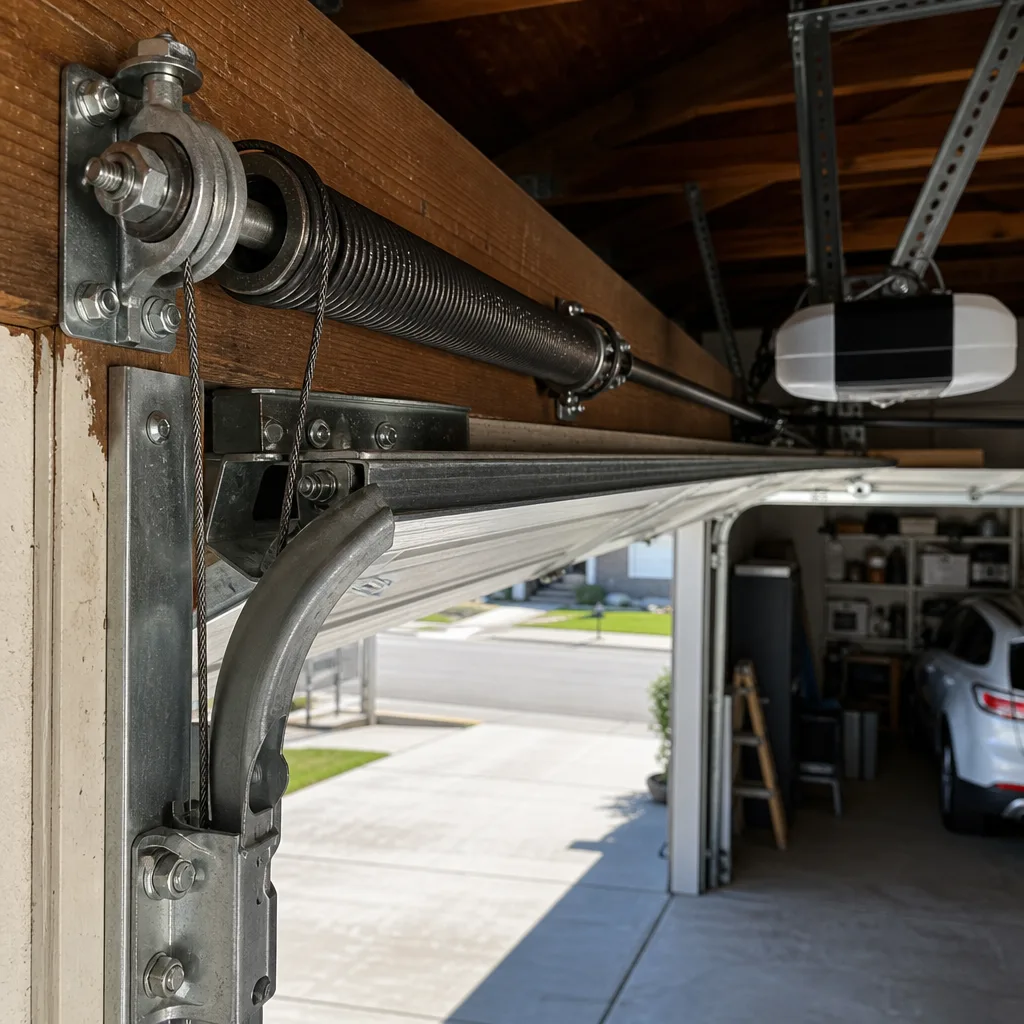
Look at the cables running up both sides of the door. Healthy cables are uniform in thickness, clean, and straight. You’re looking for frayed strands poking out like whiskers near the bottom bracket, kinks that catch the light, or rust discoloration. A cable with even three or four broken strands is a cable that’s working at reduced capacity, and a cable that snaps mid-lift is the second most common garage door emergency behind spring failure.
Rollers
Survey each roller where it meets the track. Steel rollers should look round and free of flat spots. Nylon rollers should not have visible cracks on the wheel surface or wobble as the door moves. A roller with a flat edge or a shimmy has failing bearings, and it’s dragging against the track. One failing roller eventually pulls the door out of square.
Tracks
Check where the vertical track meets the horizontal curve at the top of the door. That curve takes the most lateral force, and it’s where tracks bend inward when a heavy door has been running on weak springs for months. Look for a gap between the roller and the track surface, or wear marks where metal has been rubbing. If you can see daylight between roller and track at rest, the track has spread or shifted.
Door Balance and Alignment
Stand back and sight the top edge of the door. Does it sit level across the width? If the door rises or closes with a visible wobble, or if one side reaches the floor before the other, the lift system is unequal. This is common in Torrance garages with original hardware from the 1960s and 1970s, where years of coastal-air corrosion have taken a toll.
Brand-Specific Warning Signs: Genie, Clopay, Amarr, and Wayne Dalton
We work on your brand. That matters because warning signs are not universal, and knowing which exit lane your door takes when it fails saves hours of diagnostic time. Here’s what to watch on the systems we see most in Torrance garages.
Genie Openers
Genie units use limit switches that rely on physical contact to establish open and close positions. Over time, switch contact points build up micro-arcing residue, and stop positions drift. If your Genie opener stops an inch short of the floor on Monday and a full inch-and-a-half on Friday, the limit system is drifting. Watch for the door creeping further from expected stop points over successive cycles. That’s a limit-switch issue developing, and it gets worse without adjustment.
Clopay Doors
Clopay builds doors with sectional construction that depends on tight hinge alignment across panels. Clopay doors signal trouble early with panel gapping: look for uneven spacing between panels where they meet, or screws that have backed out of hinge points. A Clopay door that’s beginning to sag will show panel edges that no longer line up flush at the top edge. This is fixable when caught at the gap stage. It’s a bigger repair once panels have actually deformed.
Amarr Doors
Amarr is a common brand in Torrance because its residential lines span from entry-level steel to custom wood-look designs. On Amarr doors, the early warning sign is often torsion hardware noise at the spring bracket itself: a rhythmic ticking or light knock each time the door passes a specific point in its travel. It’s the spring winding cone shifting inside its anchor bracket. Greasing the spring won’t fix it; the cone needs reseating.
Wayne Dalton Doors
Wayne Dalton uses a proprietary TorqueMaster spring system on many models, which means the spring is inside a tube rather than exposed on the header. The warning sign on a TorqueMaster is different: watch the end brackets where the tube mounts to the wall. If the tube begins to wiggle or the end brackets show movement during operation, the internal spring is losing tension or the tube bearings are wearing. You won’t see the spring itself, so bracket movement is the tell.
This is the advantage of specialization. A generalist might spend a service call identifying what system you have. Our technicians see these brands every week, and starting from that baseline means the diagnosis happens faster, so the fix happens on the first visit.
What Torrance’s Climate and Housing Stock Mean for Your Door
Torrance sits in a specific environmental band. We’re close enough to the coast that morning marine layer deposits humidity into open garages, but not so coastal that salt spray is the primary concern. What we see instead is a humidity-and-age mix: condensation on steel hardware, slow corrosion on cables and springs, and doors that are decades old because the weather rarely punishes them enough to force replacement. Our Seasonal Garage Door Care for Torrance: Year-Round Homeowner’s Guide has a full maintenance calendar.
Torrance housing stock is also distinctive. The city has a large share of homes built between 1945 and 1975, and many of those original garage doors are still in place. That’s 50 to 80 years of cycle wear on springs that were never designed for that service life, even if the door itself looks fine from the street. In neighborhoods like Old Torrance, the Springs, and Seaside, we frequently encounter doors where the original hardware has been patched more times than it’s been properly serviced.
Newer Torrance construction in areas like Harbor Gateway and Walteria comes with modern, lightweight doors typically equipped with belt-drive openers, which changes the sound profile. A newer belt-drive system should be nearly silent. If a door installed after 2015 is squealing in Walteria, that’s not normal aging. That’s a component needing attention now.
Permit requirements also matter here. The city of Torrance requires permits for some types of garage door replacements, particularly when structural changes to the opening are involved. Most straightforward door replacements and repairs don’t require a permit, but if the opening itself is being resized or the header modified, permitting gets involved. That’s the kind of detail a specialist knows before quoting, not after.
Common Mistakes to Avoid
- Greasing a door that doesn’t need grease anymore. Most homeowners reach for spray lubricant at the first squeal, but a roller that’s already seized or a spring that’s binding won’t be fixed by grease. Lubrication masks the symptom and postpones the real repair. If the noise returns within a week of lubing, you need parts replaced.
- Ignoring a door that reverses randomly. A reversing door is the opener’s safety logic doing its job. When homeowners defeat or ignore this behavior, they’re overriding the one system designed to prevent a closing door from hitting something. The reversal is never a glitch; it’s a warning signal with a real cause behind it.
- Replacing the opener when the spring is the problem. This happens more than it should. The opener strains, the homeowner assumes the motor is dying, and a new opener gets installed when the old spring was simply worn out. The new opener then strains against the same bad spring. Diagnose the spring first.
- DIY spring work. Garage door torsion springs hold enough stored energy to cause severe injury. This is not a handyman repair and not a weekend project. The warning signs described throughout this guide are for detection, not correction. Leave spring work to someone with the right winding bars and the right experience.
- Waiting until the door won’t open. A door that fails completely in the closed position traps your car inside or outside, at the worst possible moment. Every warning sign in this guide is cheaper to address before failure than after. A fraying cable is a $150 repair when caught early; it’s a bent track, damaged panel, and emergency call when it snaps mid-cycle.
- Mixing and matching components across brands. Torrance homeowners sometimes swap in a generic roller or hinge from a hardware store shelf, then wonder why the door runs worse. Components from different manufacturers have different tolerances. Brand-matched parts keep the system working as engineered.
When to Call a Professional
Call a professional the day you notice any of these warning signs: frayed cables, a popping spring sound, a door that refuses to stay open in manual mode, or an opener that reverses every cycle. These are not monitoring situations. They are repair needs that get more expensive and more dangerous the longer they wait.
If you’re in Torrance and have noticed one of the warning signs in this guide, Torrance Garage Door Service home offers free estimates across the city. We diagnose the full mechanical picture, not just the symptom, and we quote a price before any work starts. Call (855) 341-7719 to schedule an inspection. Garage doors are all we do, and that narrow focus means the diagnosis is usually made in the first few minutes of the visit, rather than after trial-and-error replacement parts.
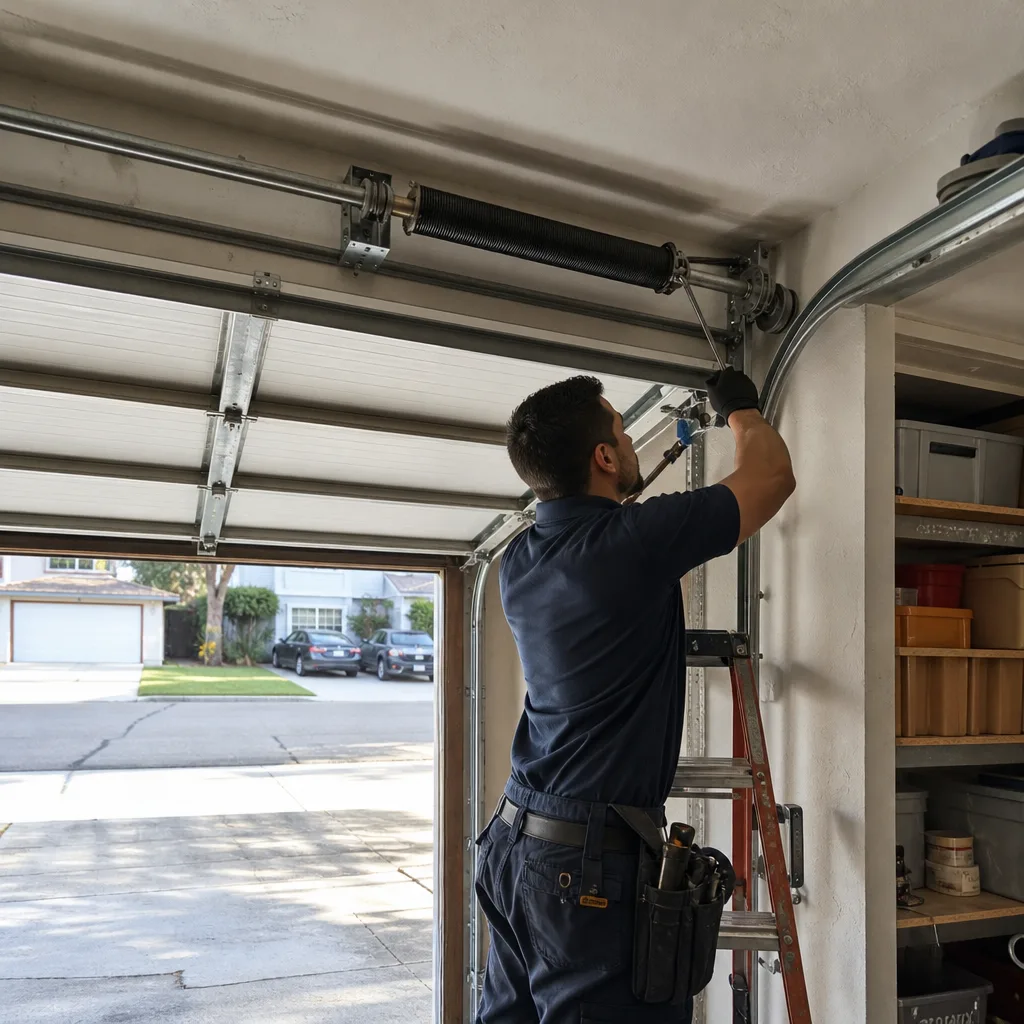
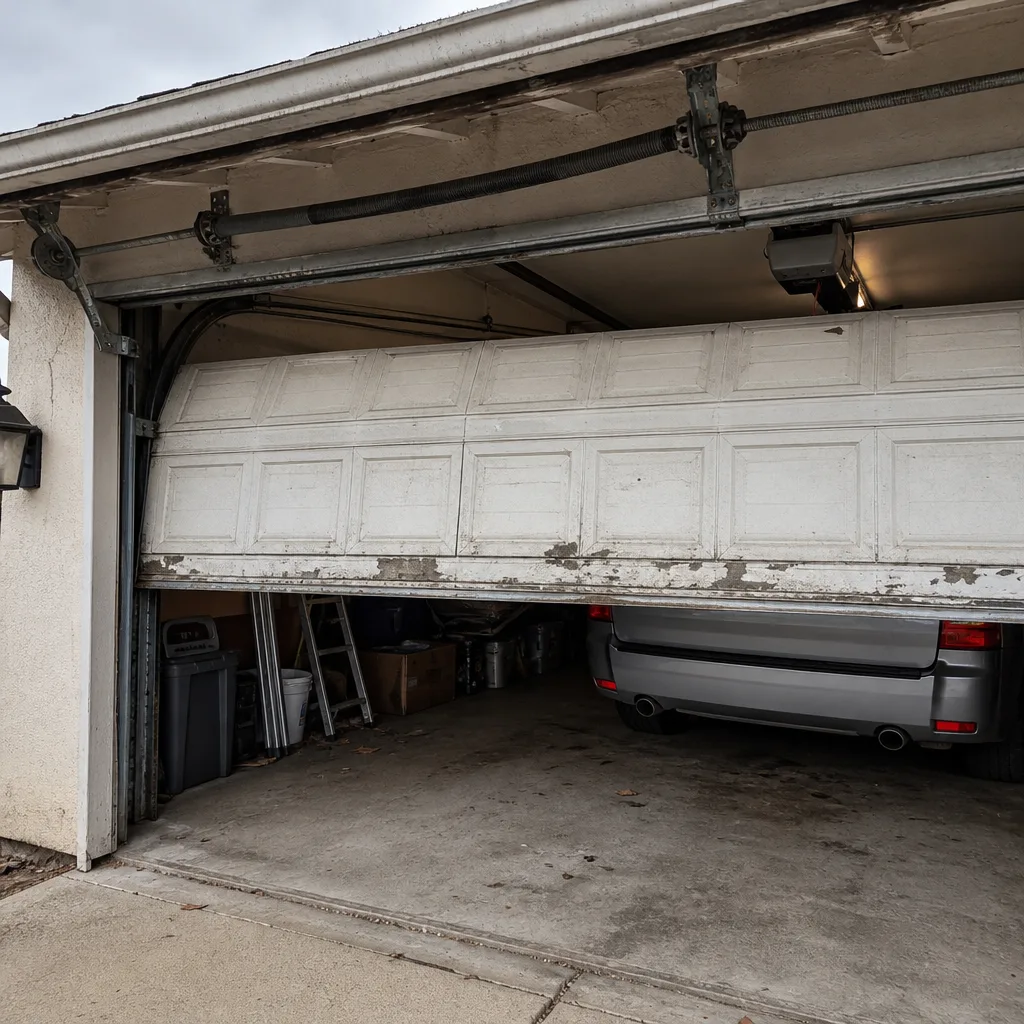
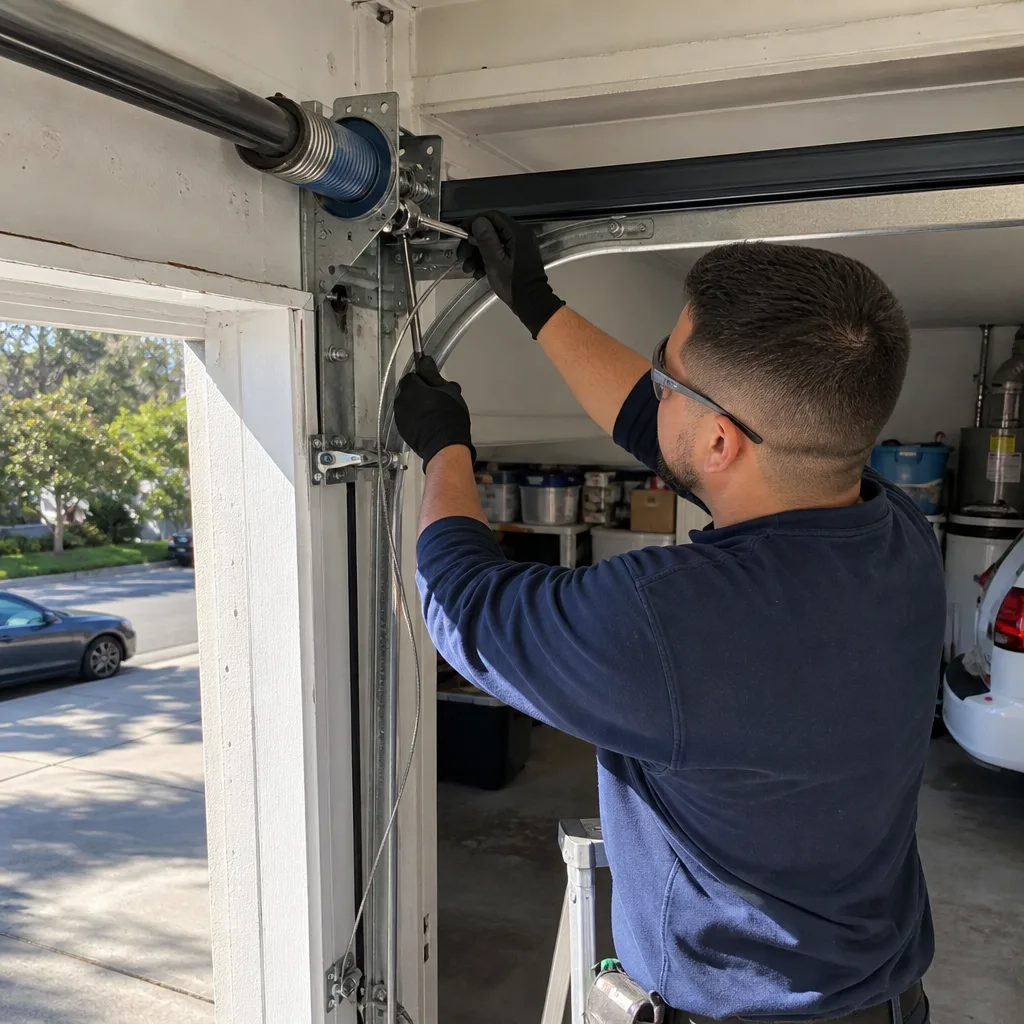
See the difference
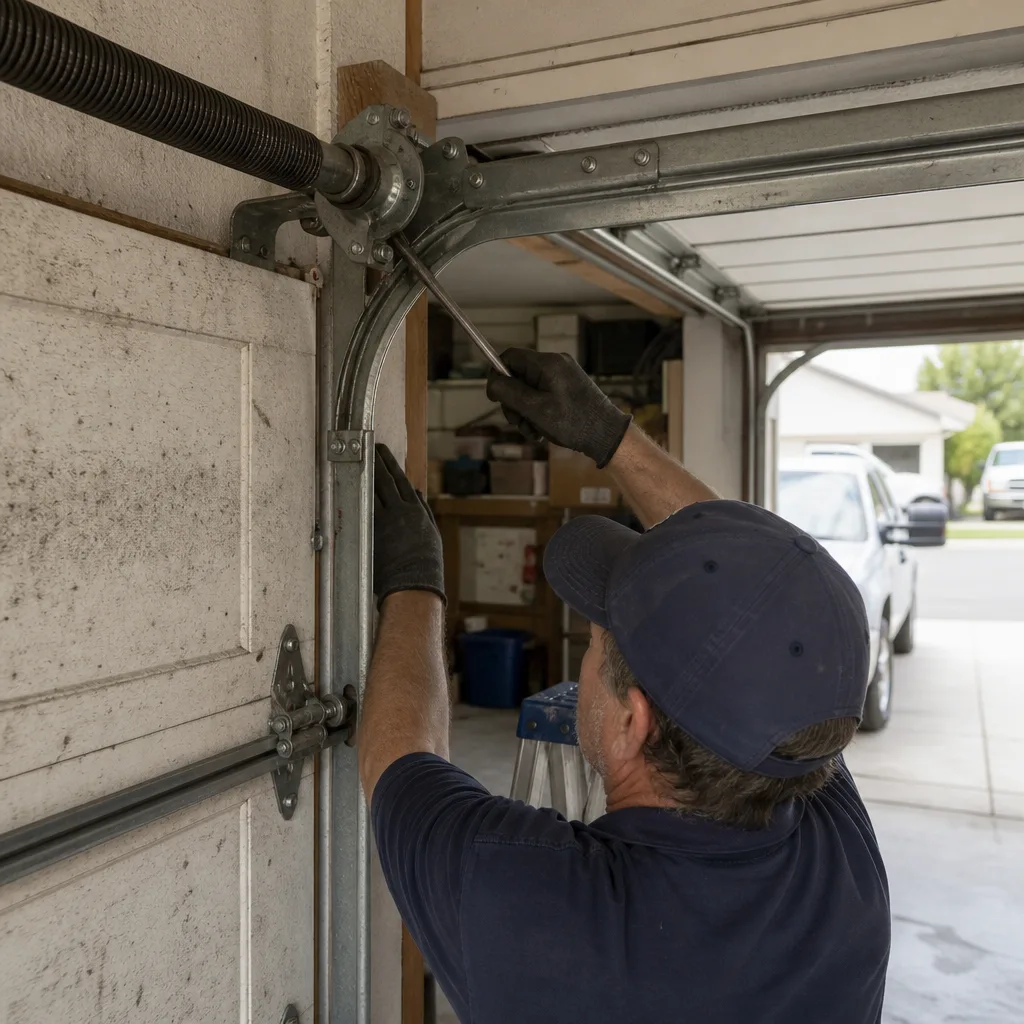 Before
 After
 Before
 After
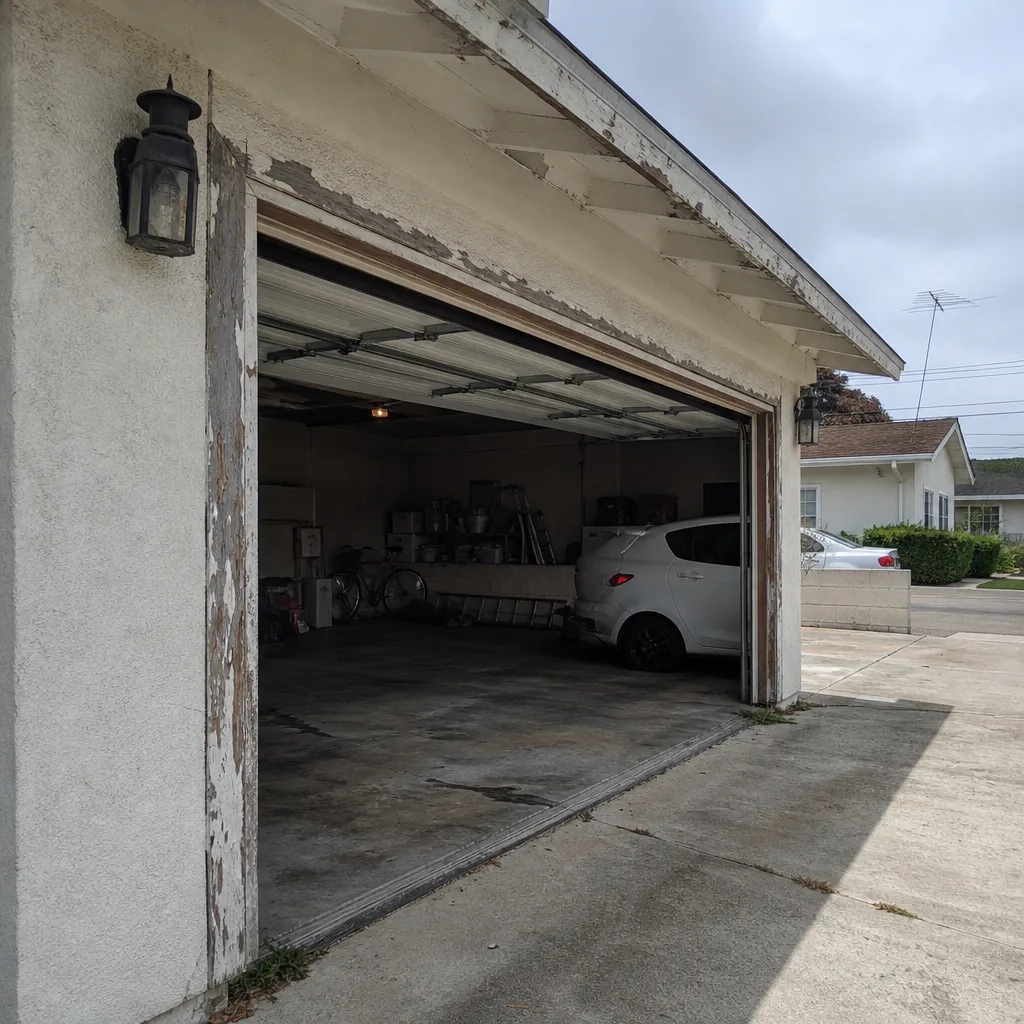 Before
 After
Frequently Asked Questions
Single spring replacement in Torrance typically runs between $180 and $340 depending on the door’s weight class and spring cycle rating. A double-door spring pair replacement usually falls between $280 and $500. We quote the exact price before any work starts, so the number we give you is the number you pay.
A garage door can drop suddenly if a spring breaks while the door is open or mid-travel, especially on older doors without cable-based safety capture systems. This is exactly why spring-related warning signs should never be ignored. If you suspect a spring is close to failure, stop using the door and call (855) 341-7719 for an inspection.
Yes. We service Wayne Dalton doors including the TorqueMaster internal spring system regularly in Torrance. The internal spring system changes the warning signs to watch for, mostly bracket movement and tube end wear, but the repair itself is well within our routine service work.
Most warning-sign diagnostics and repairs can be completed the same day we arrive, and many repair visits in Torrance are scheduled same-day when the issue is urgent. Call (855) 341-7719 in the morning and we’ll tell you exactly when a technician can reach your address.
No. We diagnose on-site, show you what we found, and quote a firm price before touching a single component. The price we agree to is the price on the invoice. No surprises, no add-ons discovered after the work is done.
Our service trucks are stocked for the brands you’ll find in Torrance garages including Genie, Clopay, Amarr, and Wayne Dalton, plus LiftMaster, Chamberlain, Raynor, and Craftsman openers. We’re a garage door repair specialist serving the broader South Bay, which means the right part is usually on the truck the first time. Call (855) 341-7719 to confirm availability for your specific issue.
The Bottom Line
Garage doors are mechanical systems that fail on a schedule, not by surprise. The heavy door, the grinding roller, the reversing opener, the frayed cable: each is a message from a component that’s already past its peak and heading for failure. Learning to read those messages takes ten minutes, and doing so means you’ll be scheduling a predictable repair instead of waking up to a car trapped in the garage.
For Torrance homeowners, the practical takeaway is straightforward. Check your door’s balance tonight with the 30-second lift test. Listen to the sounds it makes over the next week. Look at the cables and rollers from the floor. If anything matches the warning signs in this guide, opener repair or door service is cheaper now than emergency service later. Torrance Garage Door Service offers free estimates throughout the city. Call (855) 341-7719, and we’ll diagnose what your door is telling you.
Written by the team at Torrance Garage Door Service, serving Torrance since 2013.