Last updated October 31, 2026
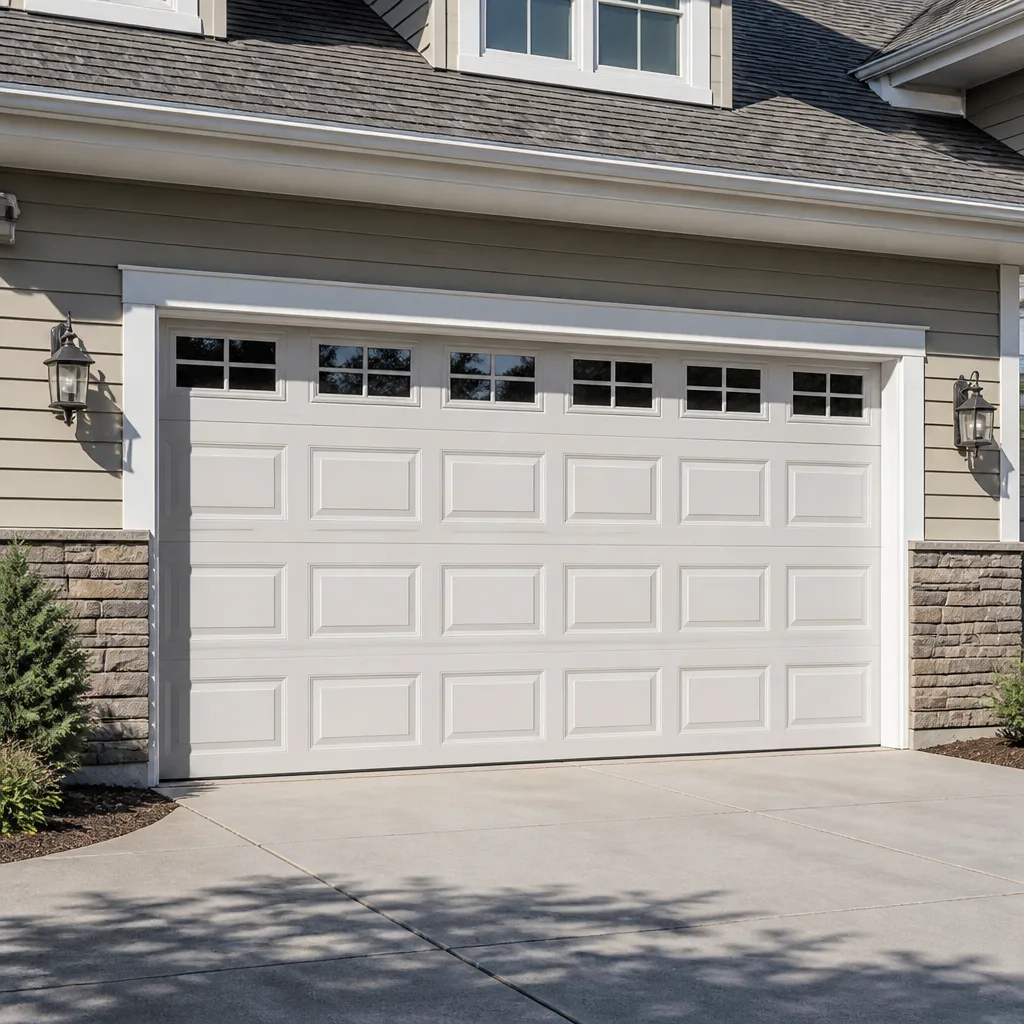 Raised-panel steel
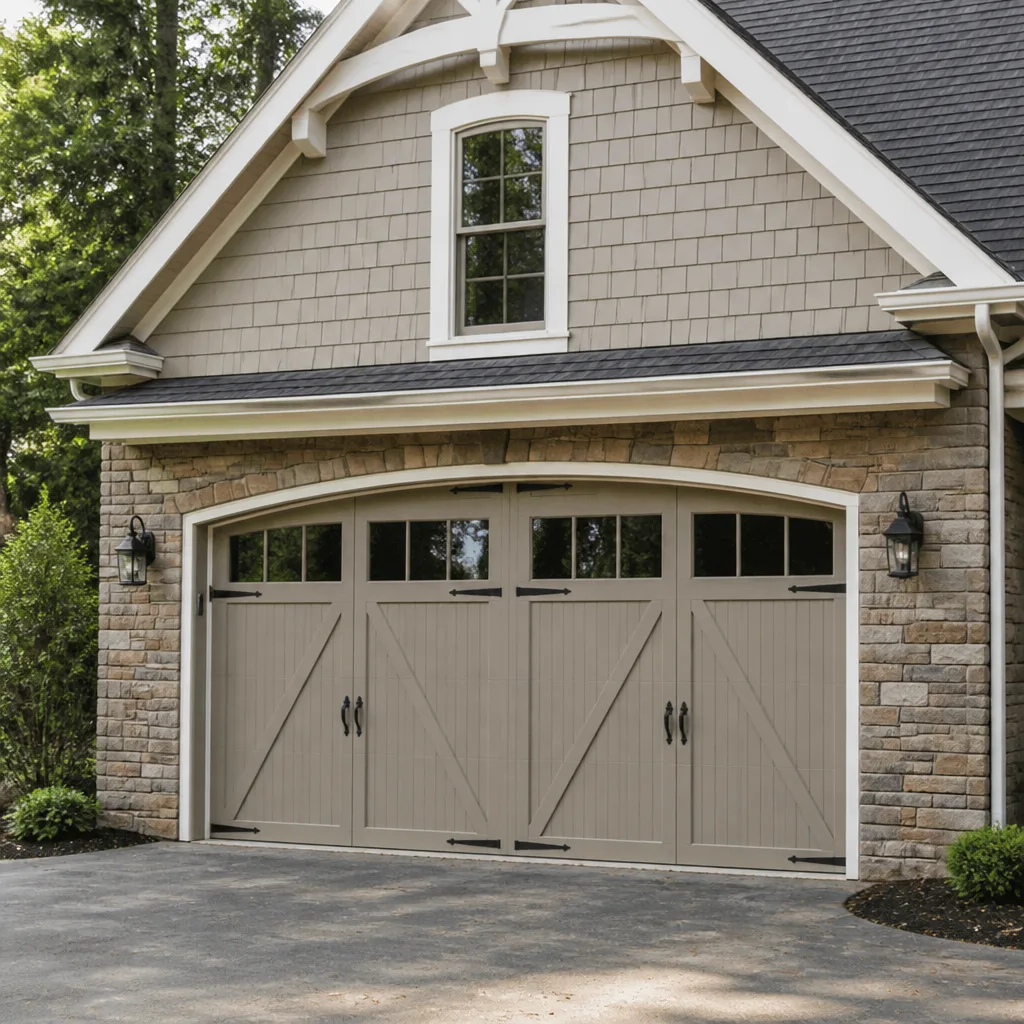 Carriage house
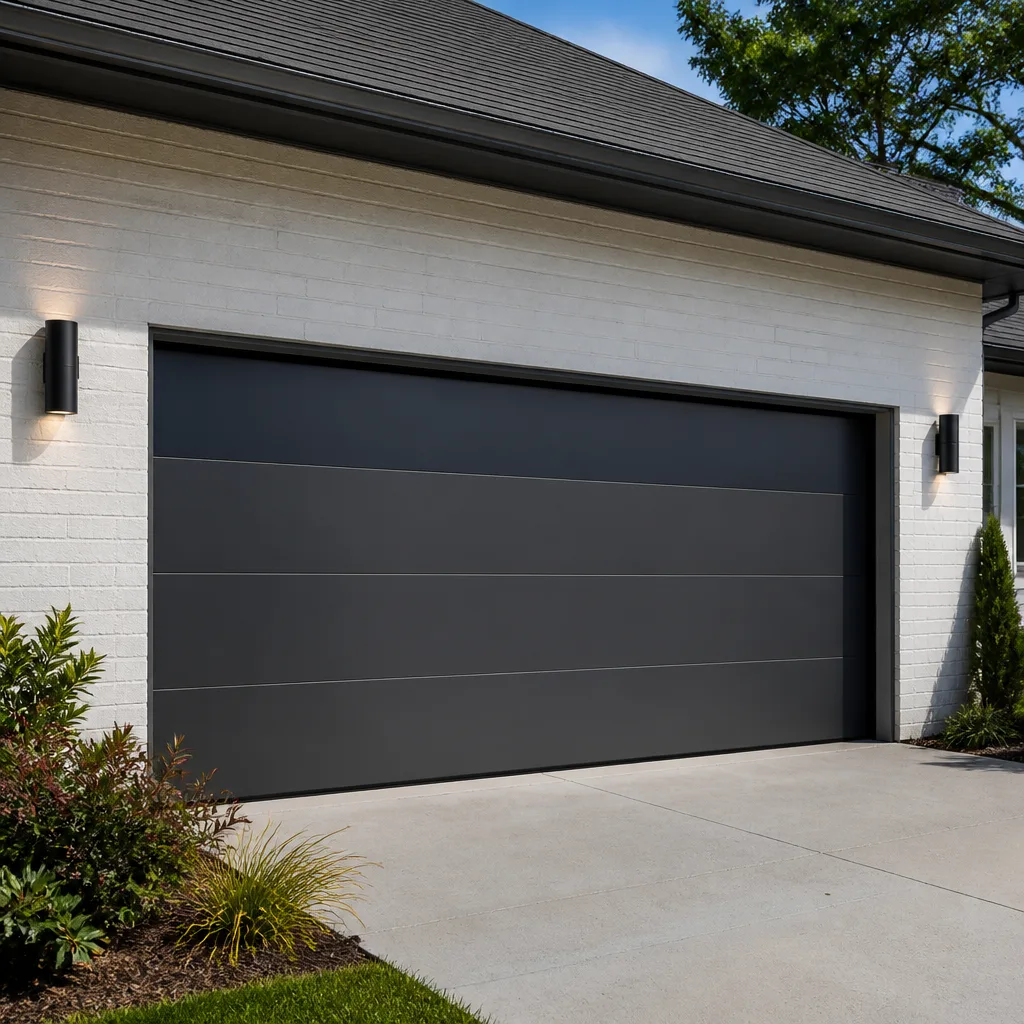 Modern flush
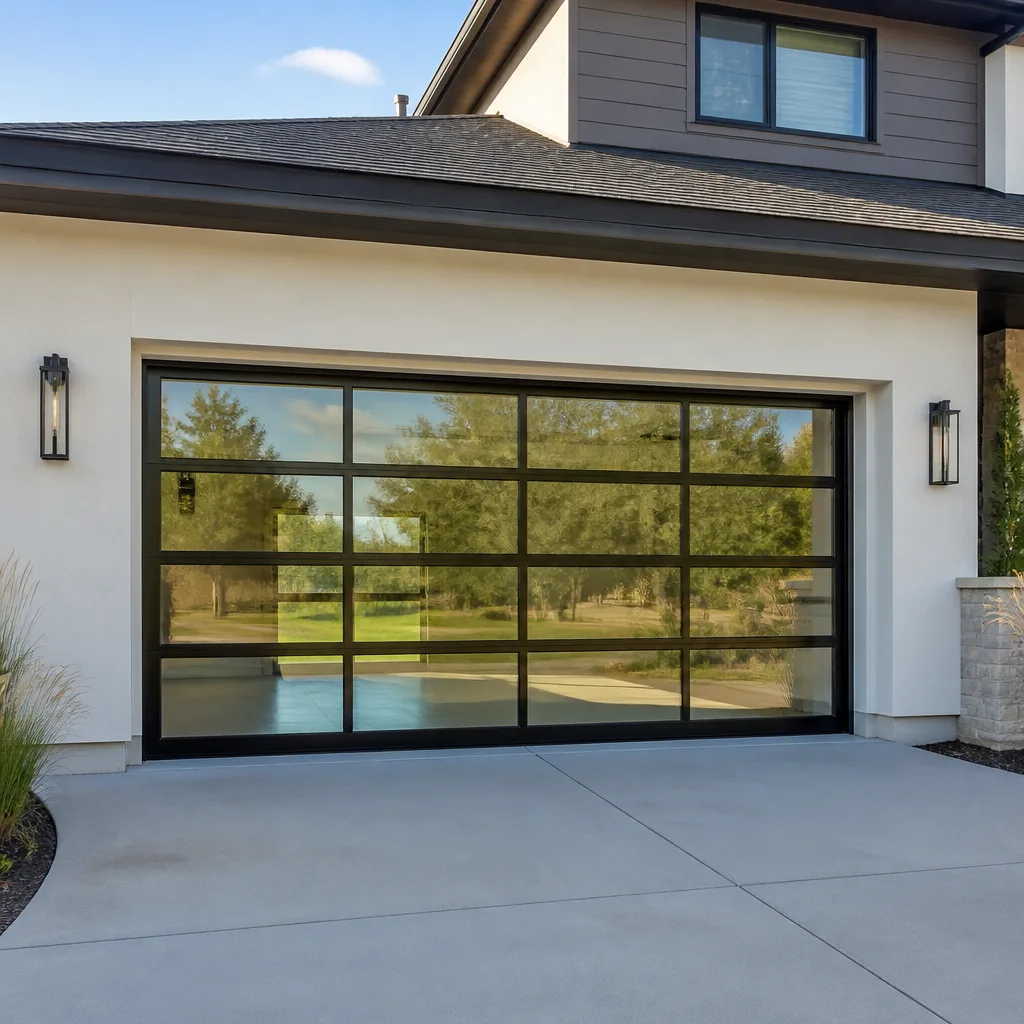 Full-view glass
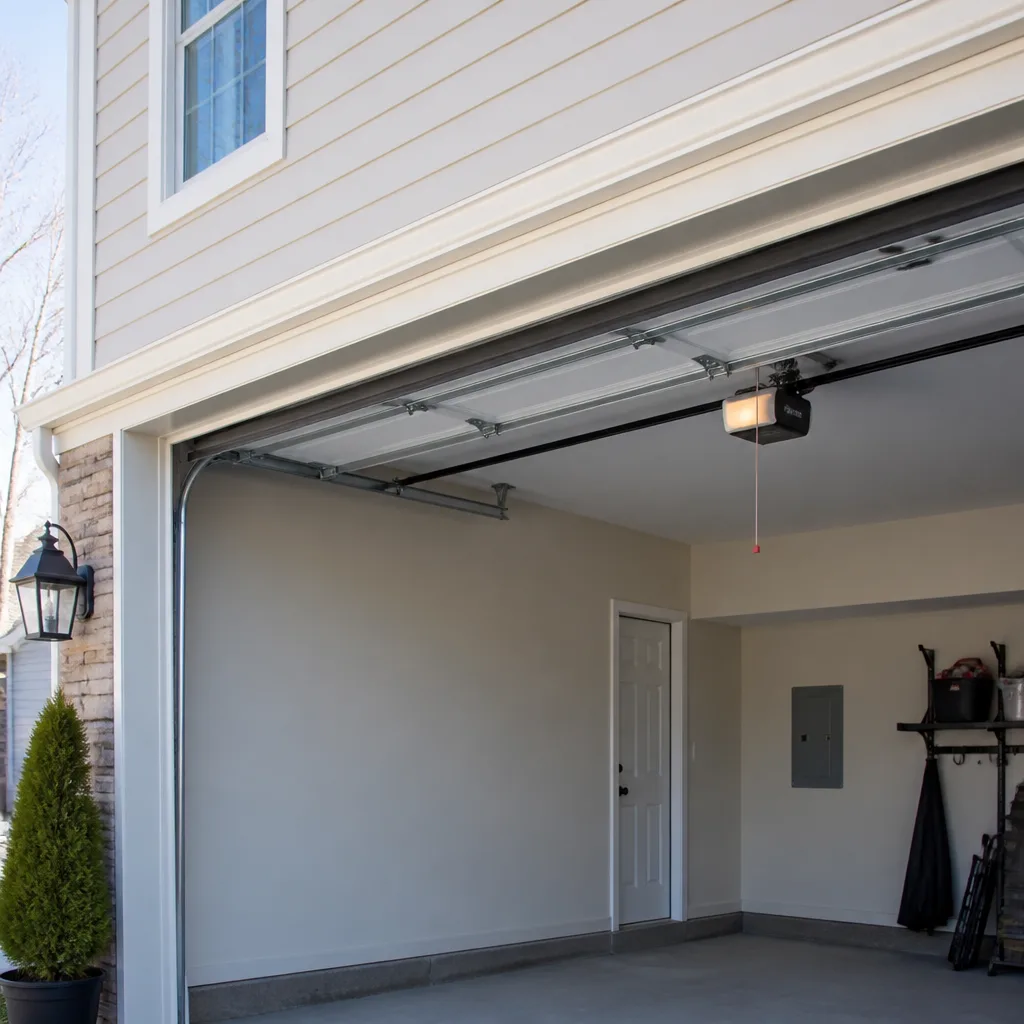 LiftMaster openers
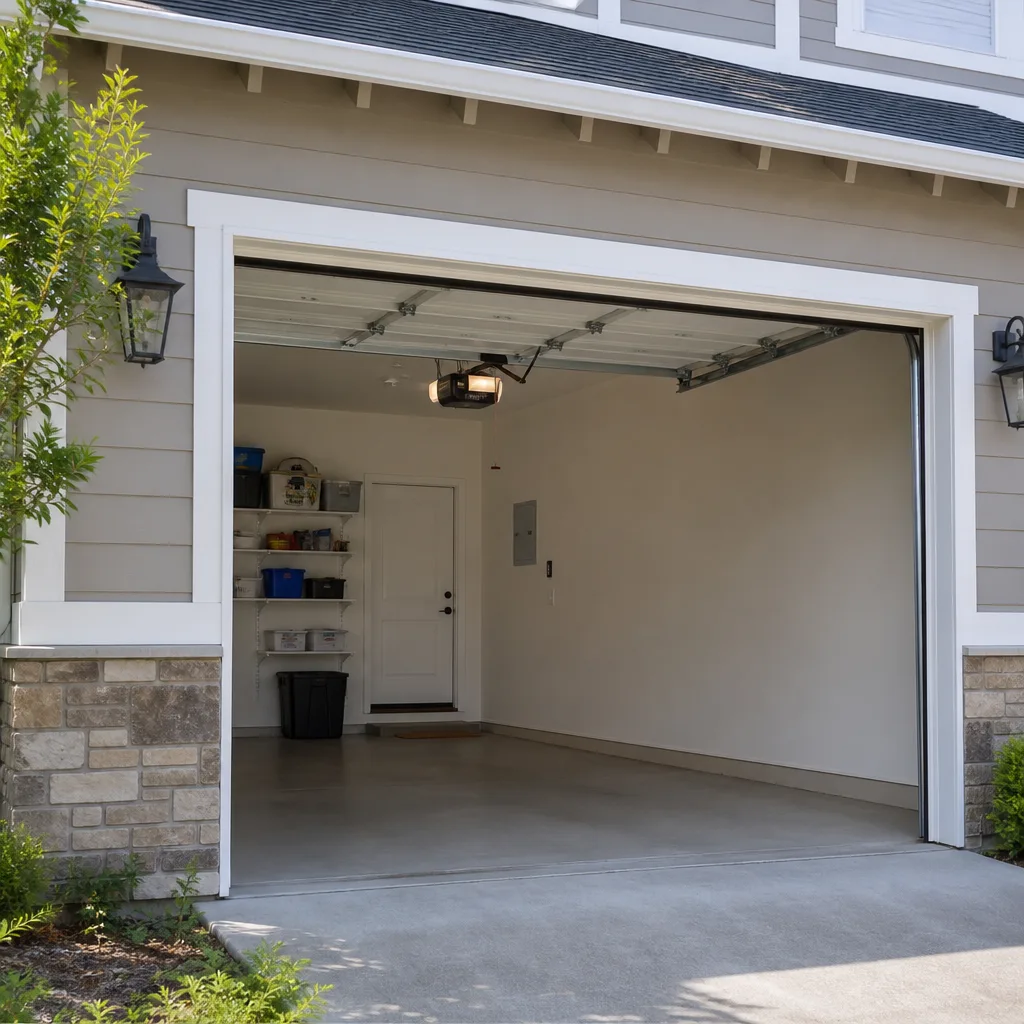 Chamberlain openers
Full 25-point door and opener safety check with every visit - springs, cables, rollers, tracks, and your LiftMaster or Chamberlain opener included
You get a price before we start. It does not change when the truck arrives.
Get your free estimateGarage Door Repair Maintenance Checklist for Torrance Homeowners
Most garage door maintenance guides tell you to “inspect the springs.” None of them tell you what a spring that’s 60% through its cycle life actually looks like, or that by the time it looks visibly bad, it’s already a liability sitting above your car and your family. In Torrance, where salt air from the Pacific accelerates corrosion on metal components year-round, that liability compounds faster than homeowners expect. This guide pairs each checklist item with a specific pass/fail standard and a clear next action, so you’ll know exactly when lubrication is enough and when the situation calls for Garage Door Repair.
Quick Answer
A garage door maintenance checklist for Torrance homeowners should include monthly visual inspections of springs, cables, and rollers, lubrication every six months with a lithium-based grease (never WD-40 on torsion springs), and a semi-annual balance and auto-reverse safety test. The tasks that need professional attention are spring inspection under tension, cable wear assessment, and opener gear health, since these are the three components that drive roughly 80% of the repair calls we see in this area.
Styles & brands we work with
Table of Contents
- The Monthly Visual Inspection: What Needs Looking At and Why
- The Three Components That Cause 80% of Repair Calls
- Lubrication: Type, Frequency, and the WD-40 Problem
- How Torrance’s Coastal Air Changes Your Maintenance Schedule
- The Annual vs. Semi-Annual Split: DIY vs. Professional Tasks
- Balance Test and Auto-Reverse Safety Test: Step-by-Step
- Door Hardware: Hinges, Rollers, and Track Alignment
- Opener Maintenance: What a Specialist Checks
The Monthly Visual Inspection: What Needs Looking At and Why
Here’s what most guides get wrong: they tell you to “look for wear” without defining what wear actually looks like until it’s too late. A visual inspection is only useful if every observation maps to a decision. Here’s what we tell our Torrance customers to check, and what the finding means.
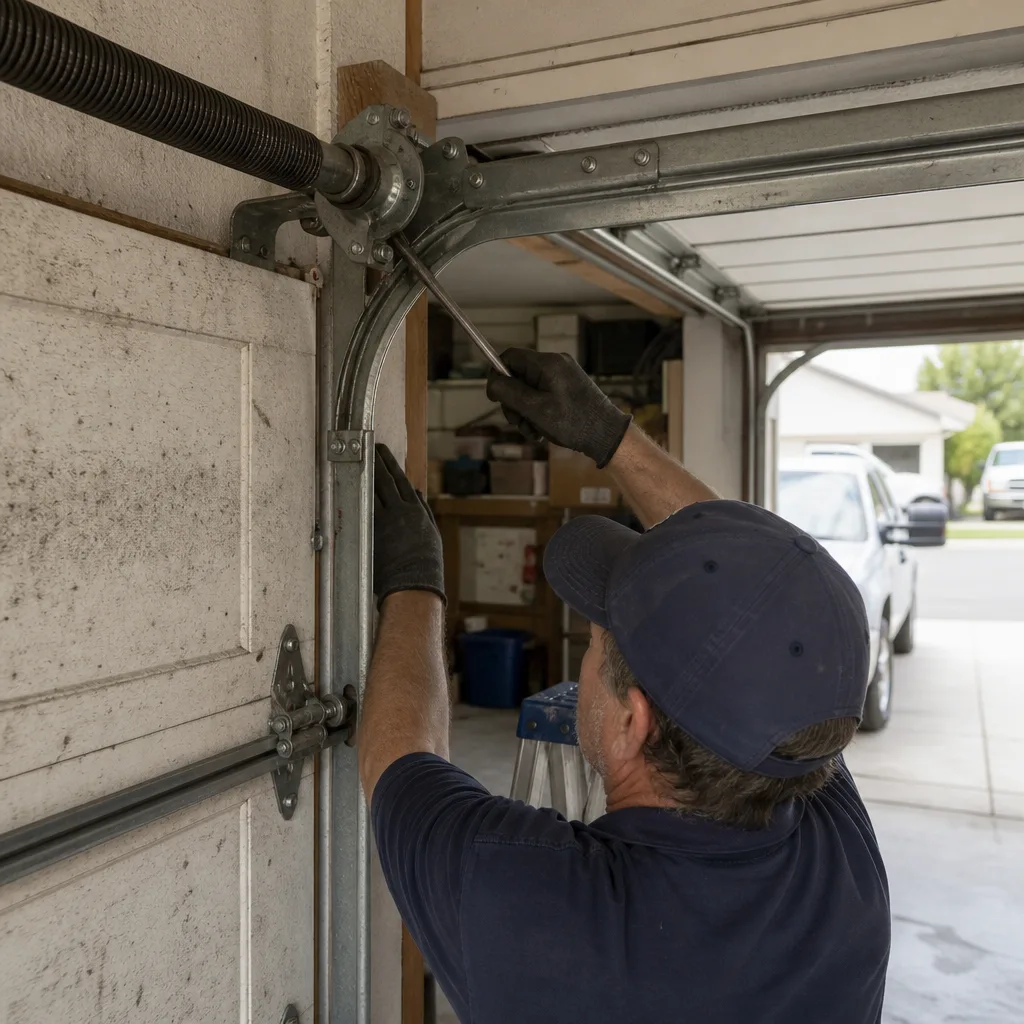
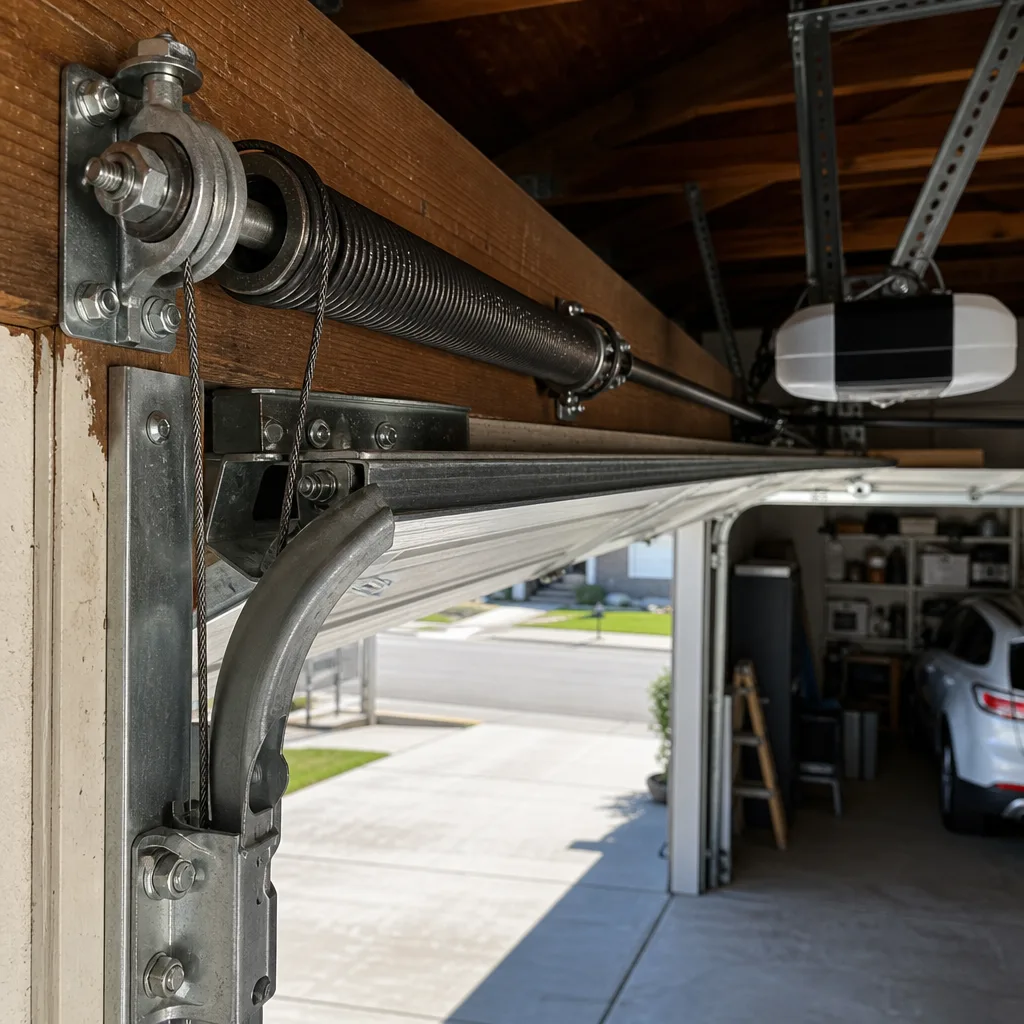
- Torsion springs: Look for a visible gap in the coil, rust that flakes when touched, or a spring that no longer sits evenly spaced along its length. A gap means the spring has lost tension and is in the early stages of failure. Rust means the metal is oxidizing, which shortens cycle life. If either is present, the spring should be replaced by a professional. Do not attempt to touch or adjust torsion springs under any circumstances.
- Cables: Run your eyes along the full length of both lift cables. Fraying looks like loose strands, like a rope starting to unravel. Kinking looks like a permanent bend that does not straighten. Either one means the cable is losing structural integrity and needs replacement before it snaps.
- Rollers: Look at each roller where it meets the track. A healthy roller spins when the door moves. A failing roller slides, wobbles, or has visible flat spots on the wheel. If a roller has clearance of more than a few millimeters between the wheel and track, it’s wearing out.
- Track alignment: Stand inside the garage and sight down each vertical track. The gap between track and door edge should be consistent all the way down. If the gap narrows or widens, the track has shifted and the door is fighting itself on every cycle.
- Weather seal: Look at the rubber flap along the bottom of the door. If it’s brittle, cracked, or letting daylight through in patches, it’s not doing its job keeping Torrance’s damp air and the occasional storm-driven moisture out of your garage.
None of these five items takes more than three minutes total. The point is not to become a garage door technician. The point is to catch an expensive failure before it becomes an emergency call on a Sunday night.
The Three Components That Cause 80% of Repair Calls
We’ve worked on doors from Wayne Dalton, Craftsman, Raynor, and most other major manufacturers that show up in Torrance homes. Across all of them, three components account for the overwhelming majority of the calls we take. Understanding Garage Door Warning Signs: A Torrance Homeowner’s Reference Guide is the difference between a $120 fix and a $600 emergency repair.
1. Torsion Springs: The Cycle Life Problem
Every torsion spring has a finite cycle life, typically rated between 10,000 and 20,000 cycles depending on the spring’s wire gauge and coating. Ten thousand cycles at four uses per day is roughly seven years. The catch: most Torrance homeowners have no idea how many cycles their springs have already burned through, because they bought the house with the door already installed. A spring at 60% of its cycle life looks normal to an untrained eye. At 80%, it may show subtle signs: a slight gap between coils at one end, a faint metallic creak when the door starts moving, or rust blooming at the stress points. By the time a spring visibly sags or separates, it’s already failed or is hours from failing.
Safety note: Torsion springs are under hundreds of pounds of tension. Never attempt to replace, adjust, or even closely handle a torsion spring yourself. A spring that lets go while someone is working on it causes severe, life-altering injuries. If you see any sign of spring wear, call a specialist.
2. Lift Cables: The Silent Failure
Lift cables typically fail without warning because they fail internally first. The individual steel strands that make up the cable begin to break inside the winding drum or at the bottom bracket, where they’re least visible. By the time fraying is obvious along the visible length of the cable, the cable has already lost a significant percentage of its load-bearing capacity. A snapped cable while the door is moving can send the door crashing down or twisting in the track. The precursor signs: a door that feels slightly heavier on one side, a gap where the cable sits on the drum that wasn’t there before, or a faint popping sound when the door operates.
3. Opener Gears: The Plastic Gear Problem
Most modern garage door openers, including models from LiftMaster and Craftsman, use a plastic worm gear inside the drive assembly. This gear is designed to fail before the motor does, as a sacrificial component. But it wears at a rate that depends heavily on how well the door itself is balanced. A door that’s even slightly out of balance makes the opener work harder on every cycle, which grinds down the gear prematurely. The telltale sign of gear failure: the opener motor runs but the door does not move, or the opener makes a grinding sound that is clearly coming from the motor unit itself, not the door.
These three failures share a common thread: each one gives you a warning window before the catastrophic failure. Maintenance is how you exploit that window. For our full breakdown of how these issues get resolved, see our Garage Door Repair in Santa Fe Springs guide, which walks through the diagnostic process in detail.
Lubrication: Type, Frequency, and the WD-40 Problem
If there’s one thing we see Torrance homeowners get wrong more than any other maintenance task, it’s lubrication. The wrong product on the wrong component does more damage than no lubrication at all.
Why WD-40 on torsion springs is a problem: WD-40 is a water-displacing solvent, not a lubricant. It’s designed to clean and penetrate, not to provide lasting lubrication. When you spray WD-40 on a torsion spring, two things happen. First, the solvent strips any existing lubricant film from the metal surface. Second, because WD-40 evaporates quickly and leaves behind a thin, non-lubricating residue, the spring is now exposed to air without protection. In Torrance’s salt-laden coastal air, that exposure accelerates oxidation on the spring surface. The spring rusts faster than if you had done nothing at all.
What to use instead: Torsion springs need a lithium-based grease applied in a thin, even film across the spring coils. The grease needs to be thick enough to stay in place on a coiled spring but not so thick that it attracts grit. We recommend a white lithium grease spray for springs, applied every six months.
Here’s the component-by-component breakdown:
- Torsion springs: White lithium grease, applied lightly to the coils. Every six months in Torrance, every three months if your garage faces the ocean within a mile.
- Extension springs (if your door has them): Same lithium grease, applied to the full length of the spring. These are under less tension than torsion springs but require the same respect for safety boundaries. If you can see the spring stretching and compressing with the door, do not apply grease while the door is in motion.
- Rollers: Nylon rollers need no lubrication on the wheel itself. The metal ball bearings inside the roller benefit from a drop of silicone-based lube at the bearing point once a year. Steel rollers should be lubricated at the wheel axle with lithium grease. Never lube the track itself; it causes the rollers to slide instead of roll, which flattens them.
- Hinges: White lithium grease or light machine oil at the pivot points, every six months. A drop at each hinge pin keeps the door from creaking and reduces stress on the hinge plates.
- Opener chain or screw drive: Chain drive openers get a light coat of chain lube, not grease, every six months. Screw drive openers need a specific screw-drive lubricant, not lithium. Check the opener’s manual – if you have a LiftMaster or Genie unit from the last decade, the manual will specify the exact product.
- Weather seal: Not a lubrication point, but a light coat of rubber protectant once a year keeps the bottom seal pliable. In Torrance’s dry-summer climate, seals crack faster than in humid regions.
How Torrance’s Coastal Air Changes Your Maintenance Schedule
Torrance sits within a few miles of the Pacific Ocean in every direction. That proximity shapes how garage door components age in ways that a generic maintenance guide written in Ohio will never address. The Santa Fe Springs area, with its own industrial and infrastructure profile, has different environmental pressures entirely, which is why location-specific guidance matters. But for Torrance, the defining variable is salt air.
What salt air does to hardware: Sodium chloride in the atmosphere acts as an electrolyte that accelerates galvanic corrosion on any exposed metal surface. For a garage door system, that means torsion springs rust faster, roller bearings seize sooner, hinge plates wear at the screw points, and cable strands break down more quickly than they would twenty miles inland. The effect is most pronounced in homes within one mile of the coast, but all of Torrance experiences elevated salt exposure compared to inland California cities.
What this means for your schedule:
- Standard recommendation: lubricate springs and hinges every six months. Coastal Torrance: every three to four months.
- Standard recommendation: full professional inspection once a year. Coastal Torrance: twice a year, ideally in early spring and late fall, when seasonal moisture changes stress the metal.
- Standard recommendation: replace weather seal when visible cracking appears. Coastal Torrance: expect to replace the seal every two to three years, not every five.
- Standard recommendation: cables last the life of the door if properly maintained. Coastal Torrance: cables in homes near the ocean frequently need replacement within a decade regardless of maintenance, because internal corrosion is invisible until failure.
The takeaway is not that the ocean dooms your garage door. It’s that maintenance intervals written for a general audience are too long for a coastal city. You don’t need more complex maintenance. You need the same maintenance, done more frequently and more consistently. That’s the adjustment that keeps a Torrance garage door operating through its natural life cycle instead of failing five years early.
The Annual vs. Semi-Annual Split: DIY vs. Professional Tasks
Every maintenance task falls into one of two categories: things a homeowner can safely and competently do without any special tools, and things that require a technician who works under tension every day. The dividing line is not about effort. It’s about the stored energy in the system.
Homeowner-Safe Tasks (Every 3-6 Months)
- Visual inspection of springs, cables, rollers, tracks, and hinges using the pass/fail criteria in the first section above.
- Lubrication of hinges and rollers using the products specified in the lubrication section.
- Light cleaning of track debris: wipe the inside of the tracks with a dry cloth to remove accumulated dust and cobwebs. Do not use grease-cutting solvents on the track, as they strip the surface that rollers depend on.
- Weather seal check: check the bottom seal for cracking, brittleness, or gaps.
- Balance test: the manual version described in the next section, done without disconnecting the opener.
- Auto-reverse test: the two-minute check described in the next section.
Professional-Only Tasks (Semi-Annual for Coastal Torrance)
- Spring inspection under tension: a technician can feel the spring’s coil spacing, check for stress fractures with a flashlight, and assess cycle fatigue in ways that are not possible from six feet away. This takes thirty seconds for a trained eye and catches failures months before they happen.
- Cable drum inspection: the winding drums sit at the top of the door, impossible to see clearly without a ladder and often obscured by the opener rail. A technician checks inside the drum where cable strands hide and early breakage starts.
- Track alignment correction: a track that has shifted by even a quarter of an inch causes uneven wear on everything else. Correcting it requires loosening and retightening track brackets in the right sequence, not hammering it back into place.
- Opener gear and drive assessment: the technician removes the opener cover and inspects the plastic gear for wear patterns. This is not a homeowner task, period.
- Roller replacement: even if the rollers look fine, a technician can assess bearing play and spot the ones that will fail in the next six months.
If you’re in Torrance and you need any of these professional tasks done, we work on every major brand you’re likely to have. LiftMaster, Chamberlain, Genie, Clopay, Amarr, Wayne Dalton, Craftsman, and Raynor: we’re trained on all of them, and we arrive with the right parts for your specific system. Opener problems are diagnosed, not guessed. For homeowners in the Santa Fe Springs area, our Garage Door Opener Repair in Santa Fe Springs page covers opener-specific diagnostics in the same depth.
Balance Test and Auto-Reverse Safety Test: Step-by-Step
These two tests take four minutes combined and tell you more about your door’s health than anything else you can do as a homeowner. Do them every three months in Torrance, not just when something seems wrong.
The Balance Test
- Close the garage door completely.
- Pull the emergency release cord on the opener rail. The door is now in manual mode.
- Lift the door by hand to waist height, about three feet off the ground.
- Let go of the door entirely.
- Observe what happens.
Pass: The door stays in place without moving more than an inch up or down. This means the springs are properly tensioned and sharing the load evenly.
Fail: The door drifts upward. The springs have too much tension, which means the opener is working against excess force on every cycle.
Fail: The door drifts downward. The springs are losing tension or have too little for the door’s weight. The opener is overworking to compensate, which accelerates gear wear and shortens the opener’s life.
Severe fail: The door slams down when released. The springs are nearly done. Stop using the door and call a professional immediately.
After the test, re-engage the opener by pulling the release cord again and cycling the door once. If the opener re-engages cleanly, you’re done.
The Auto-Reverse Safety Test
- Open the garage door fully.
- Place a 2×4 piece of wood or a full unopened paint can flat on the floor directly under the door’s center point.
- Close the door using the opener.
- Watch what happens when the door’s bottom edge contacts the object.
Pass: The door reverses direction within two seconds of contact and returns to the fully open position. This means the opener’s safety reverse mechanism is working correctly.
Fail: The door keeps pressing down on the object, or reverses only after significant hesitation. The door’s safety system is compromised. This is the feature that prevents a child or pet from being crushed. If it fails, disconnect the opener and operate the door manually until a professional can repair it.
Note: The auto-reverse function is separate from the photo-eye sensors at the bottom of the track. Both need to work independently and together. If the photo-eye sensors are misaligned (indicated by a blinking light on the sensor), the door may reverse randomly even when nothing is in the path.
Door Hardware: Hinges, Rollers, and Track Alignment
The door panel itself is the largest moving part of your home, and the hardware that supports it takes more abuse than any other component. Here’s what we actually check on Torrance doors, including the ones from Amarr, Wayne Dalton, and Raynor that are common in the area.
Hinges
Door hinges connect the panels to each other at the seams. They’re the pivot points that allow the door to bend as it moves along the curved track. A healthy hinge sits tight against the door section with no visible gap, and the pin in the center shows no signs of walking out of the hole. A failing hinge will exhibit loose screws, with the screw holes in the panel getting larger over time due to vibration. That vibration feedback loop is a common Torrance issue because of how frequently garage doors are used as the primary entrance to the home. When a hinge screw hole strips out, the hinge flexes, which transfers more stress to the next hinge, which eventually causes the door section to crack at the corner.
Rollers
Rollers are the most neglected component of any garage door system because they look fine even when they’re mechanically shot. The wheel spins, so the average homeowner assumes it’s working. What’s actually happening in a worn roller is that the ball bearings inside the wheel are gaining slack, which allows the wheel to wobble on its stem. That wobble transfers lateral force into the track, causing the door to slightly shimmy on the way up and down. Over months, that shimmy bends the track brackets. We see this pattern regularly in Torrance garages with doors that are more than ten years old, on every brand you can name. Roller replacement is inexpensive. Track bracket replacement with realignment is not.
Track Alignment
Track alignment issues rarely come from the track itself bending. They come from the brackets that hold the track to the wall or ceiling getting knocked loose, or from the track being re-hung incorrectly at some point in the door’s history. A track that’s out of alignment manifests in a few specific ways: the door makes a grinding or scraping sound at a particular point in its travel, the door visibly hesitates or jerks at mid-height, or the gap between door and track is visibly uneven. Left uncorrected, a misaligned track causes the rollers to bind, which puts the entire load on two or three rollers instead of eight or ten, which shortens roller life dramatically. It also causes cable wear on one side as the door fights itself.
When a Torrance door with these symptoms comes to us, we check the track as part of the repair, not as an upsell. Garage doors are all we do, which means every diagnostic includes the whole system, not just the part that’s visibly broken. For homeowners considering a full replacement rather than ongoing hardware repairs, our Garage Door Installation in Santa Fe Springs guide covers the evaluation process.
Opener Maintenance: What a Specialist Checks
The garage door opener is the single most failure-prone component of the entire system, and it’s also the one homeowners understand least. An opener is not a sealed unit that either works or doesn’t. It’s a collection of moving parts, electronic components, and safety systems that degrade over time. Here’s what we check when we service an opener, whether it’s a LiftMaster, Chamberlain, Genie, or Craftsman.
Drive Mechanism
Chain drive openers, which are still the most common type in Torrance, have a chain that stretches over time. A stretched chain causes the opener to make a rattling noise and can eventually skip teeth on the drive sprocket, which causes the door to jerk and the opener to work harder. Belt drive openers have the same tension issue, minus the noise. Screw drive openers, common on older Genie and Chamberlain units, use a threaded rod that wears at the travel ends. A worn screw drive produces a grinding sound on startup and shutdown.
The Plastic Gear
As mentioned earlier, the plastic worm gear inside the opener’s main drive assembly is the sacrificial component in most openers made in the last twenty years. A specialist can remove the opener’s cover and inspect the gear’s teeth for wear patterns in about two minutes. Early-stage wear shows as a polished, shiny surface on the gear teeth where the metal worm has been riding. Late-stage wear shows as actual tooth deformation or missing sections. Early replacement of a gear is a minor repair. Late-stage gear failure can destroy the opener’s motor, at which point the unit is typically not worth repairing.
Force Settings and Travel Limits
Every opener has adjustable force settings that control how much resistance the opener will push against before reversing. Over time, as the door’s springs lose tension and the door gets heavier relative to the opener’s settings, the opener needs more force to move the door. If the force settings were never adjusted after the springs were changed, or if the springs have degraded since the opener was installed, the opener is now running at the edge of its range. That causes premature motor burnout. A specialist checks the force setting against the actual door weight and adjusts it to match, which is not a homeowner adjustment and should not be treated as one.
Smart Features and Connectivity
Modern openers from LiftMaster and Chamberlain include MyQ connectivity, which allows remote operation and monitoring through a smartphone app. When the opener stops responding to the app, the problem is almost always the opener’s WiFi module, not the app or the phone. A specialist can determine whether the module needs a reset, a firmware update, or a replacement. Generalist handyman services often cannot resolve these issues because they don’t carry the diagnostic tools or the manufacturer-specific replacement parts. Opener problems diagnosed, not guessed. That’s the difference.
Common Mistakes to Avoid
- Using WD-40 on torsion springs. It strips existing lubricant and accelerates rust in Torrance’s salt air. Use white lithium grease instead, applied every three to four months in coastal areas.
- Lubricating the track. The track should be dry so the rollers roll instead of slide. Grease on the track picks up grit and grinds down both the roller and the track surface.
- Skipping the balance test because “the door opens fine.” A door that opens fine with the opener may still be badly out of balance when disconnected. The opener is hiding the problem, not solving it, and burning through its own gears in the process.
- Ignoring a noisy door. A garage door should be among the quieter moving parts of your home. Noise is the earliest indicator of roller wear, hinge wear, or opener gear wear, and all three are cheaper to fix early than late.
- Assuming the photo-eye sensors are optional. The auto-reverse system is not an optional convenience. If the sensors are misaligned or the reverse mechanism fails, the door is a crushing hazard. Test it every time you do the quarterly check, not just when something seems off.
- Leaving a broken spring “for later” because the door still opens manually. A door with one broken spring is using the second spring at more than its rated load. The second spring will fail much sooner, and when it does, the door will come down with nothing to stop it. A broken spring is a repair-now situation.
- Calling the previous homeowner’s handyman instead of a garage door specialist. Garage doors are one system where a partial repair is often worse than no repair at all, because a misdiagnosed spring or cable job creates a safety hazard. Garage doors are all we do, and every fix starts with a full-system diagnostic.
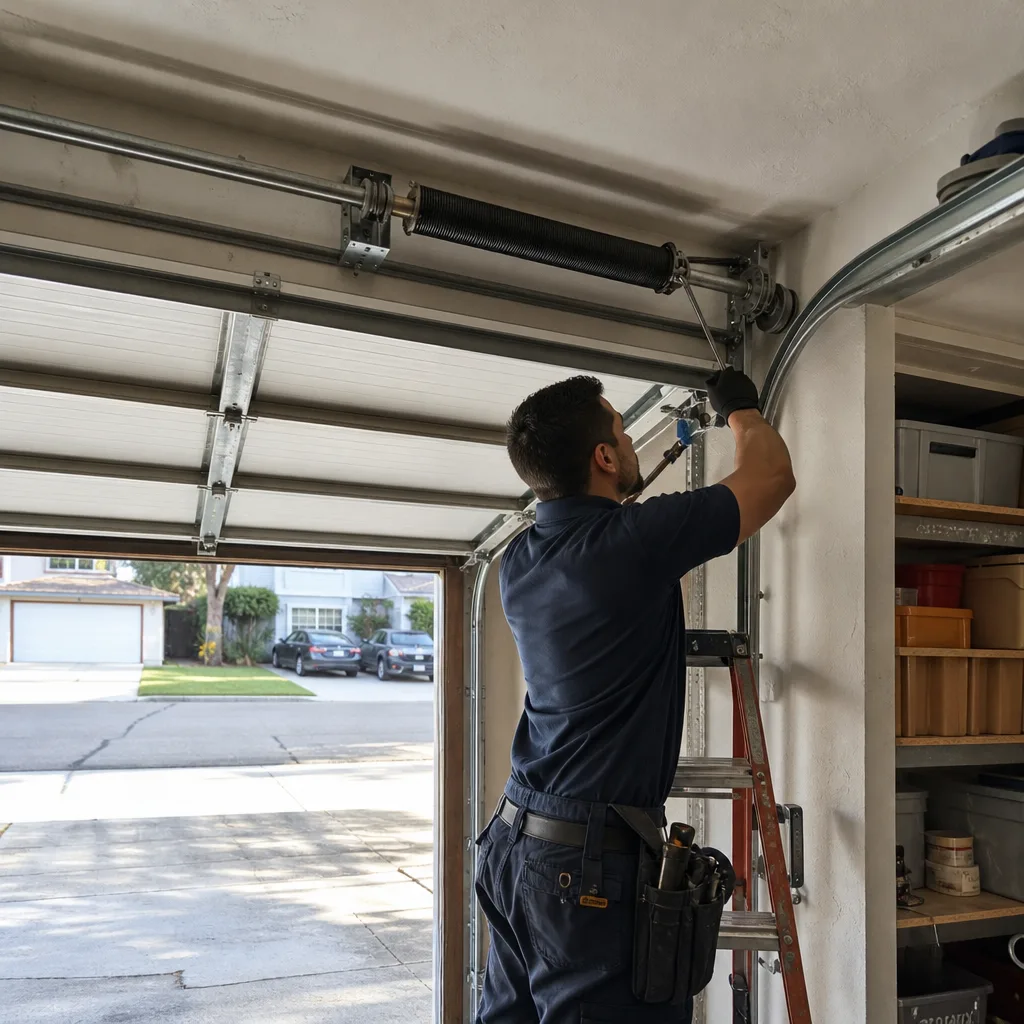
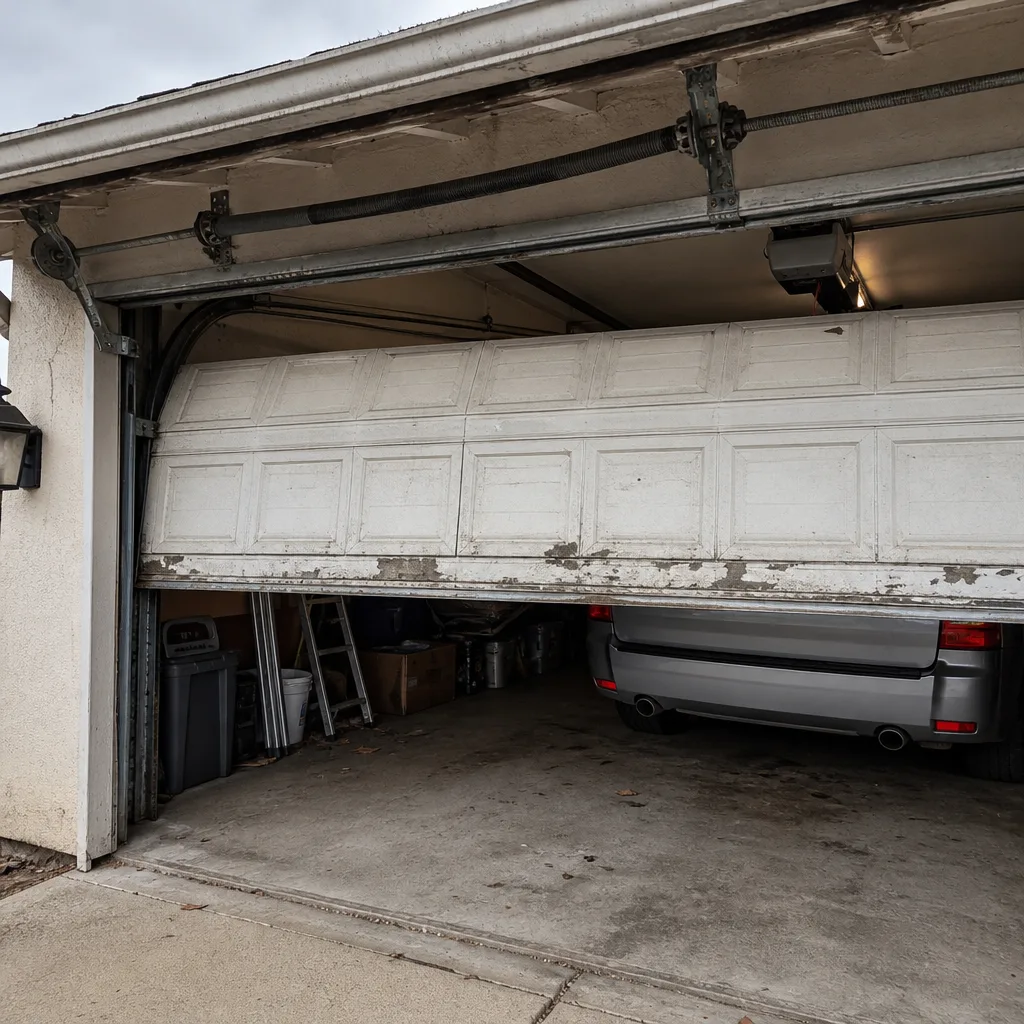
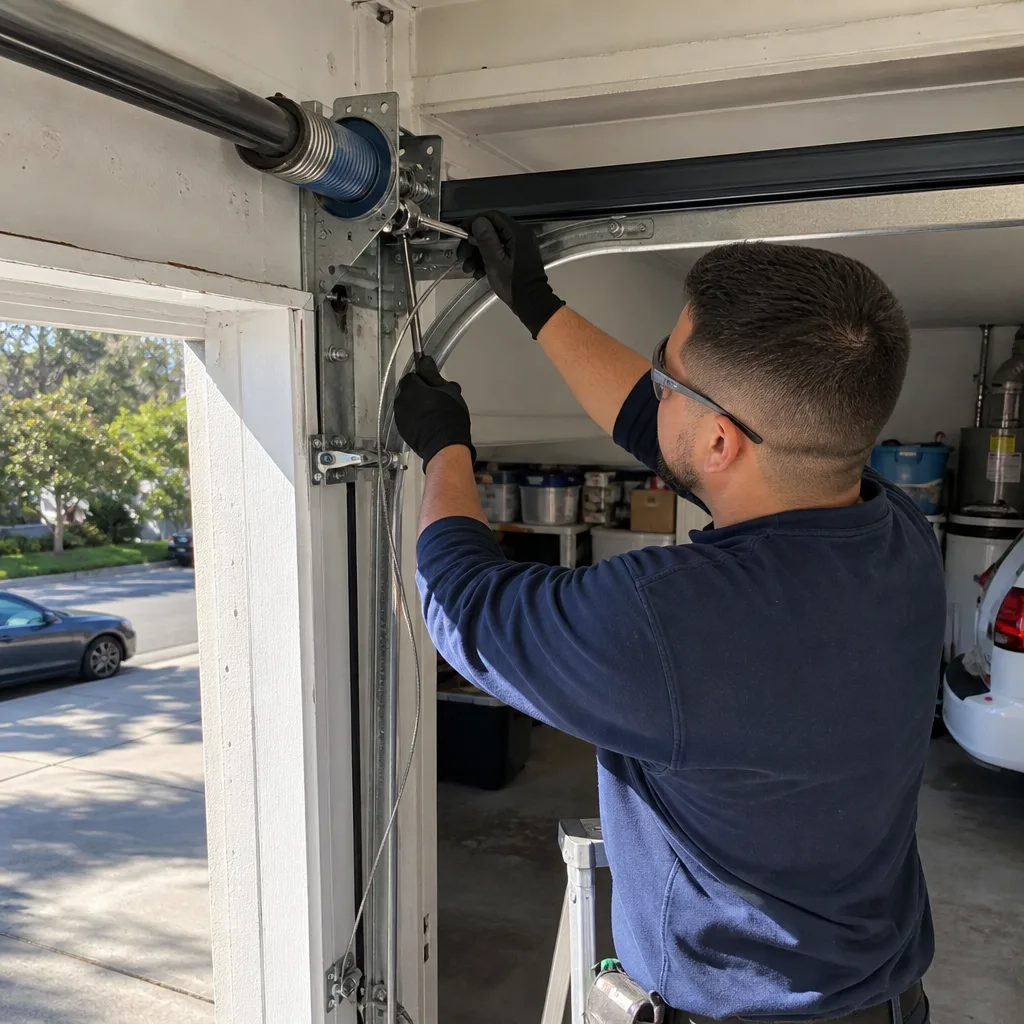
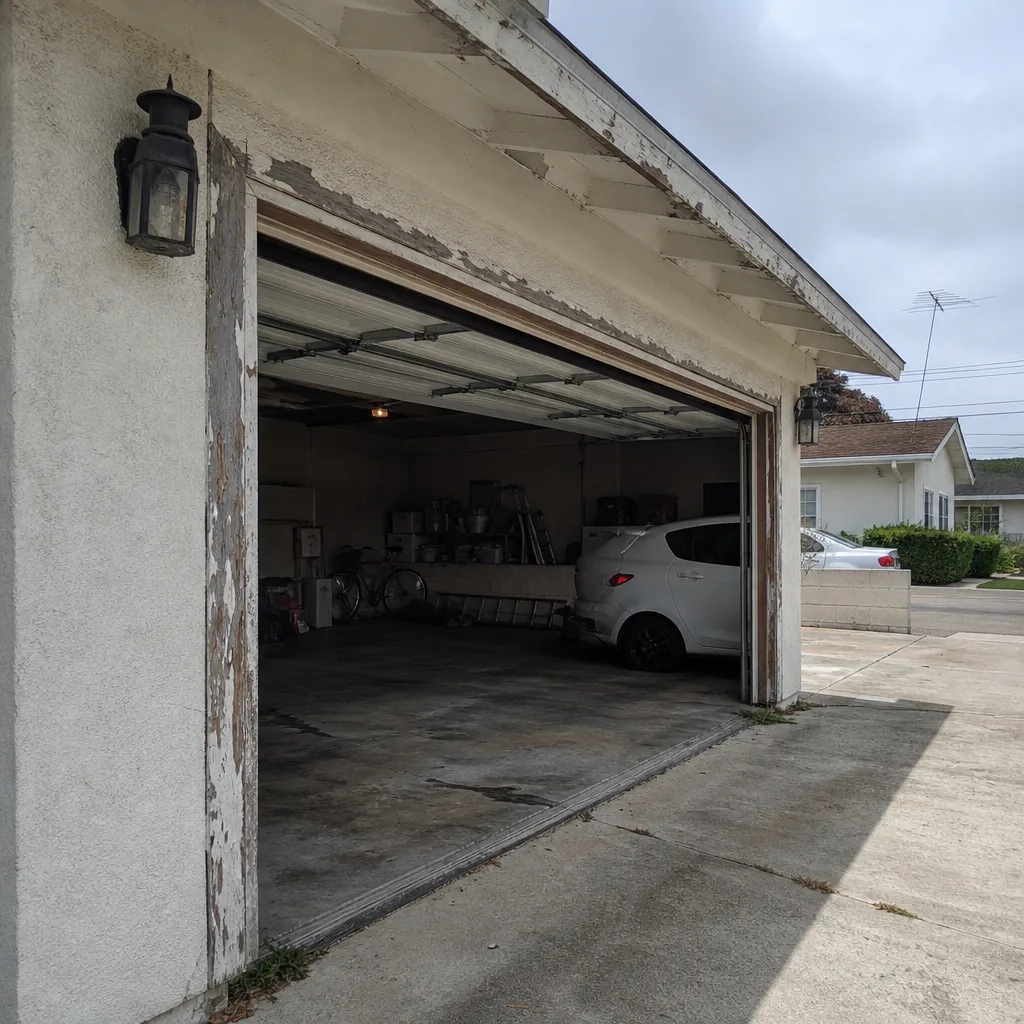
See the difference
 Before
 After
 Before
 After
 Before
 After
When to Call a Professional
If any of the following applies to your garage door, the maintenance window has closed and the repair window is open. A broken torsion spring, a snapped cable, a door that’s off its tracks, an opener that runs but won’t move the door, or a door that slammed down during the balance test: these are not DIY situations. These are situations with stored energy and heavy objects involved, and they require a trained technician with the right tools and the right parts for your specific door brand. For context, see our Garage Door Repair Troubleshooting: Common Problems and How to Fix Them. Torrance Garage Door Service offers free estimates in Torrance. Call (855) 341-7719 and we’ll diagnose the problem, quote the fix, and get the work done. The right part, the right fix, one visit. That’s how we work.
Frequently Asked Questions
Every three to four months if you live within a mile of the coast, every six months if you’re further inland in Torrance. The difference is salt air exposure, which accelerates corrosion on springs and hinges. Use white lithium grease on metal-to-metal contact points.
No. Torsion springs are under hundreds of pounds of tension and can cause severe injury or death if they release while you’re working on them. Even a professional never works on a spring without the proper winding bars and safety procedures. This is not a homeowner task under any circumstances.
That’s the classic symptom of a stripped plastic gear inside the opener’s drive assembly. The motor runs, the gear that should transfer power to the drive mechanism no longer engages, and the door stays put. It’s a repairable opener problem in most cases, not an automatic replacement.
With proper coastal-maintenance intervals, a quality steel door from manufacturers like Amarr, Wayne Dalton, or Raynor should last 20 to 25 years. Without lubrication and scheduled inspections, we’ve seen Torrance doors fail at 12 to 15 years purely from hardware neglect. The door panels themselves usually outlast the hardware around them. Browse more guides & resources for coastal maintenance tips.
In most cases, replacing an existing garage door in Torrance with the same size and configuration does not require a permit. If you’re changing the structural opening, adding a door where there wasn’t one, or making significant framing changes, the project may fall under the city’s building permit requirements. We can advise on your specific situation when we come out for the estimate.
Yes. We work on LiftMaster, Chamberlain, Genie, Craftsman, and every other major opener brand regardless of where you bought it or who installed it originally. Opener repair is a standalone service for us, and we arrive with manufacturer-specific parts on the truck.
The Bottom Line
A garage door is not a “set it and forget it” system. It’s a mechanical assembly with springs under tension, cables under load, and an opener working against both of them on every cycle. In Torrance, where salt air shortens every metal component’s life, scheduled maintenance is not optional if you want the door to reach its natural lifespan. The good news: the maintenance that matters is neither complicated nor time-consuming when it’s done on schedule and done correctly. The bad news for procrastinators: every skipped month transfers the cost into the future, and the future version of your garage door will collect with interest. If you don’t know the condition of your door today, call (855) 341-7719 for a free estimate, and we’ll tell you exactly where you stand. From first repair to full replacement, we’re the garage door people for Torrance.
Written by the team at Torrance Garage Door Service home, serving Torrance since 2013.