Last updated October 31, 2026
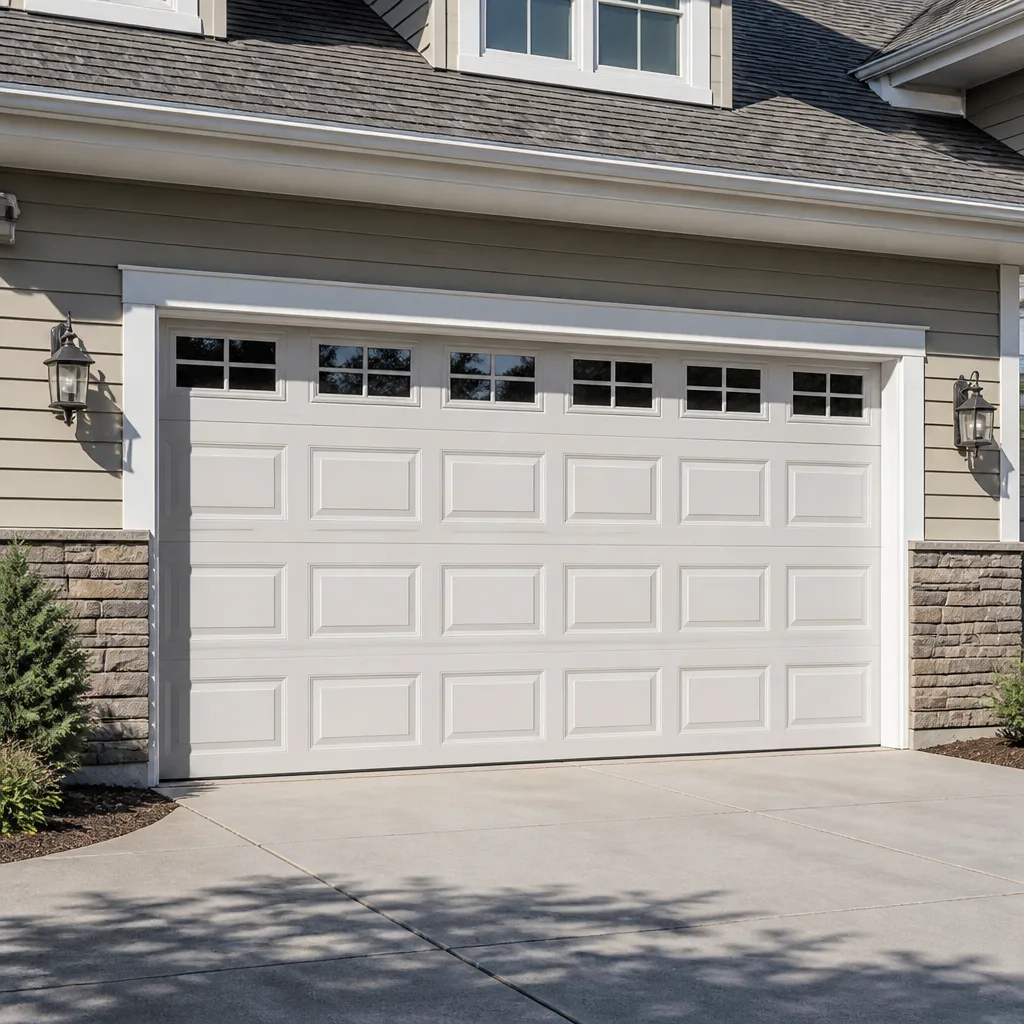 Raised-panel steel
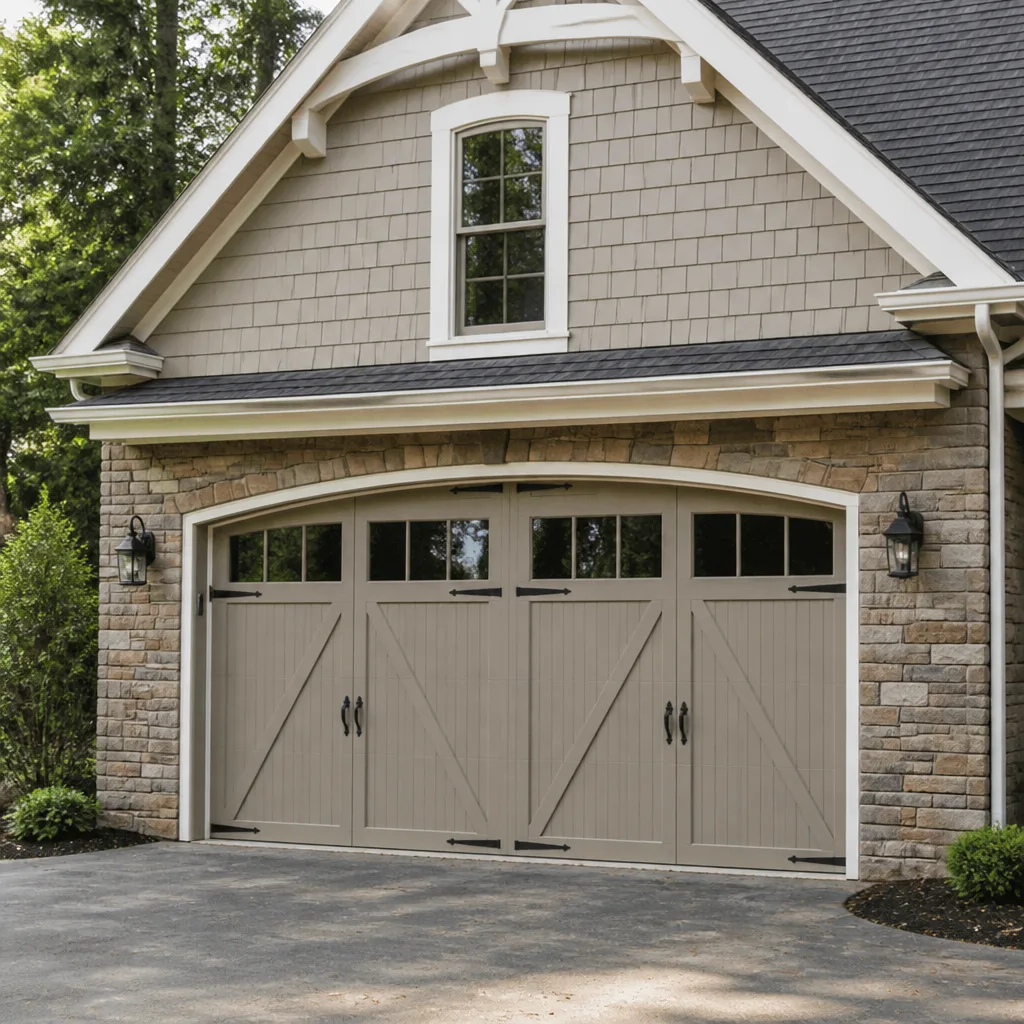 Carriage house
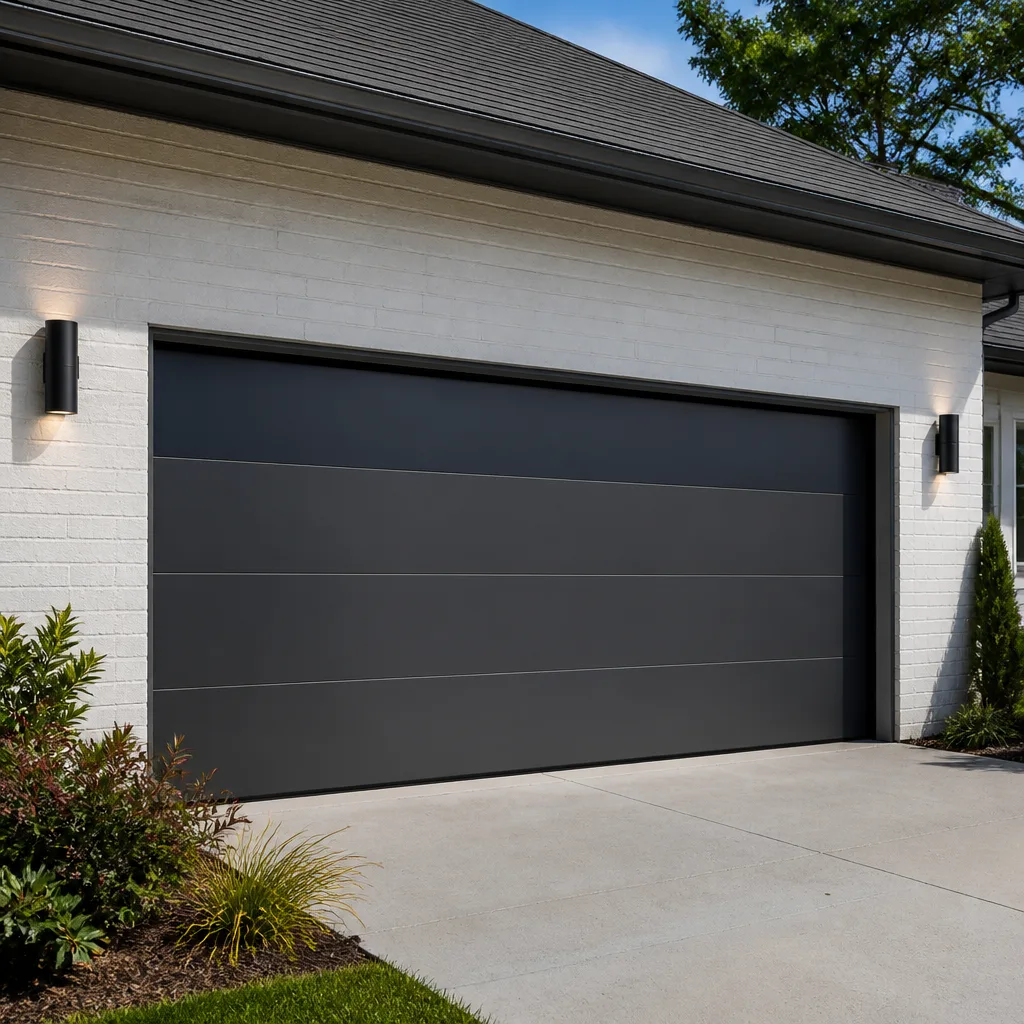 Modern flush
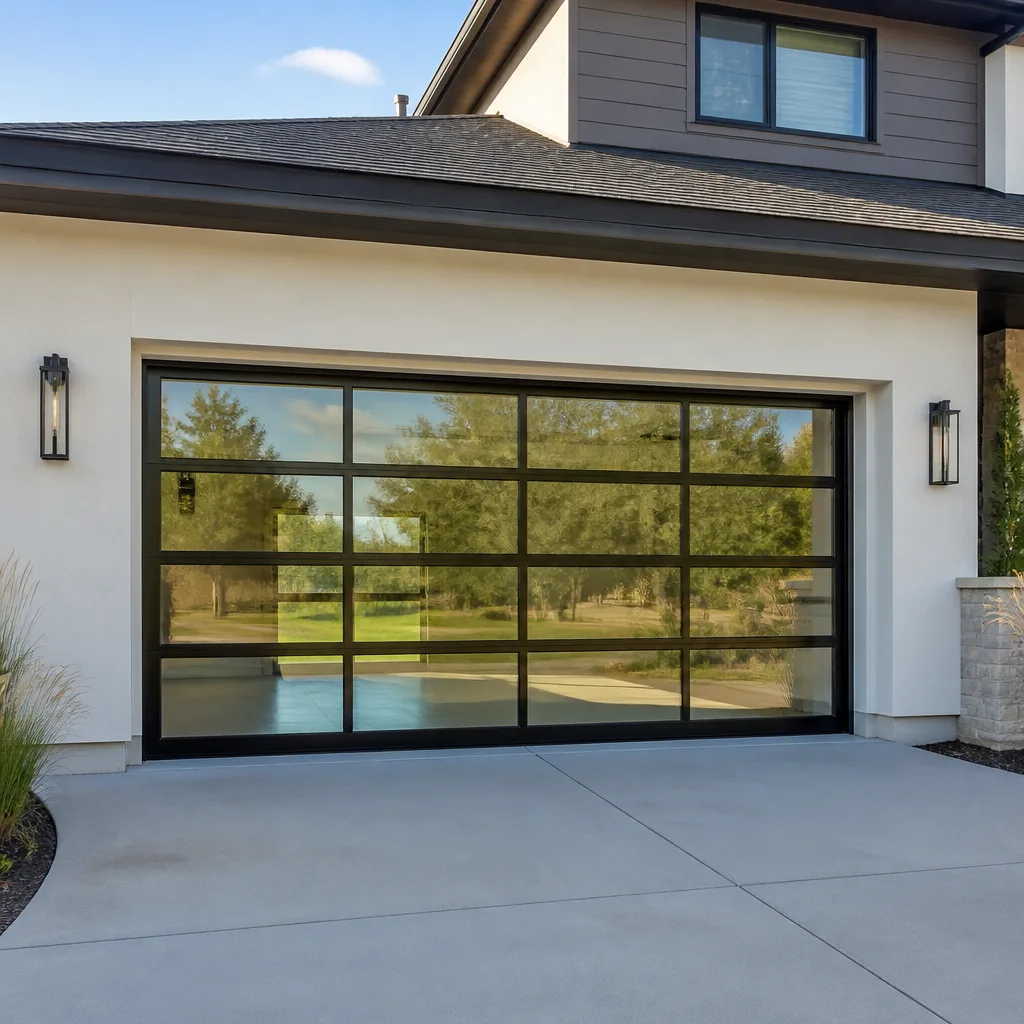 Full-view glass
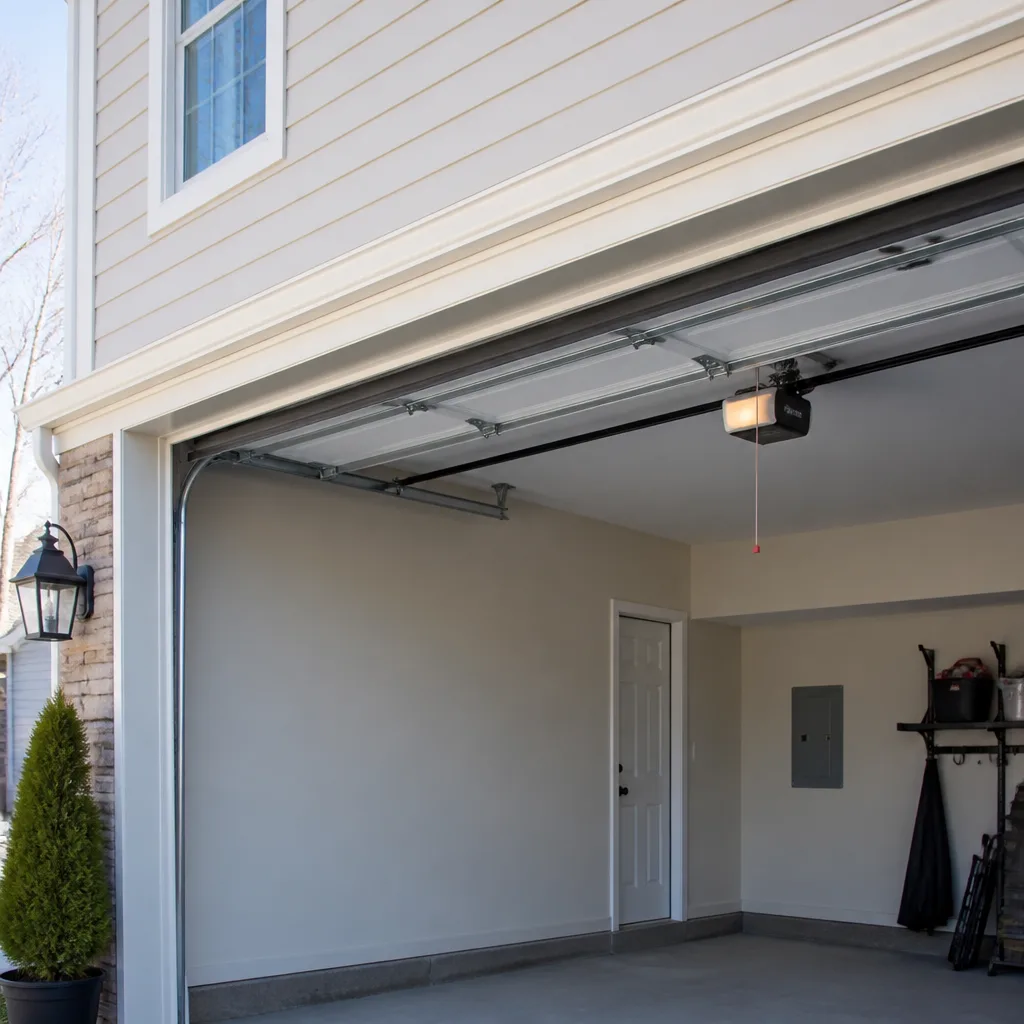 LiftMaster openers
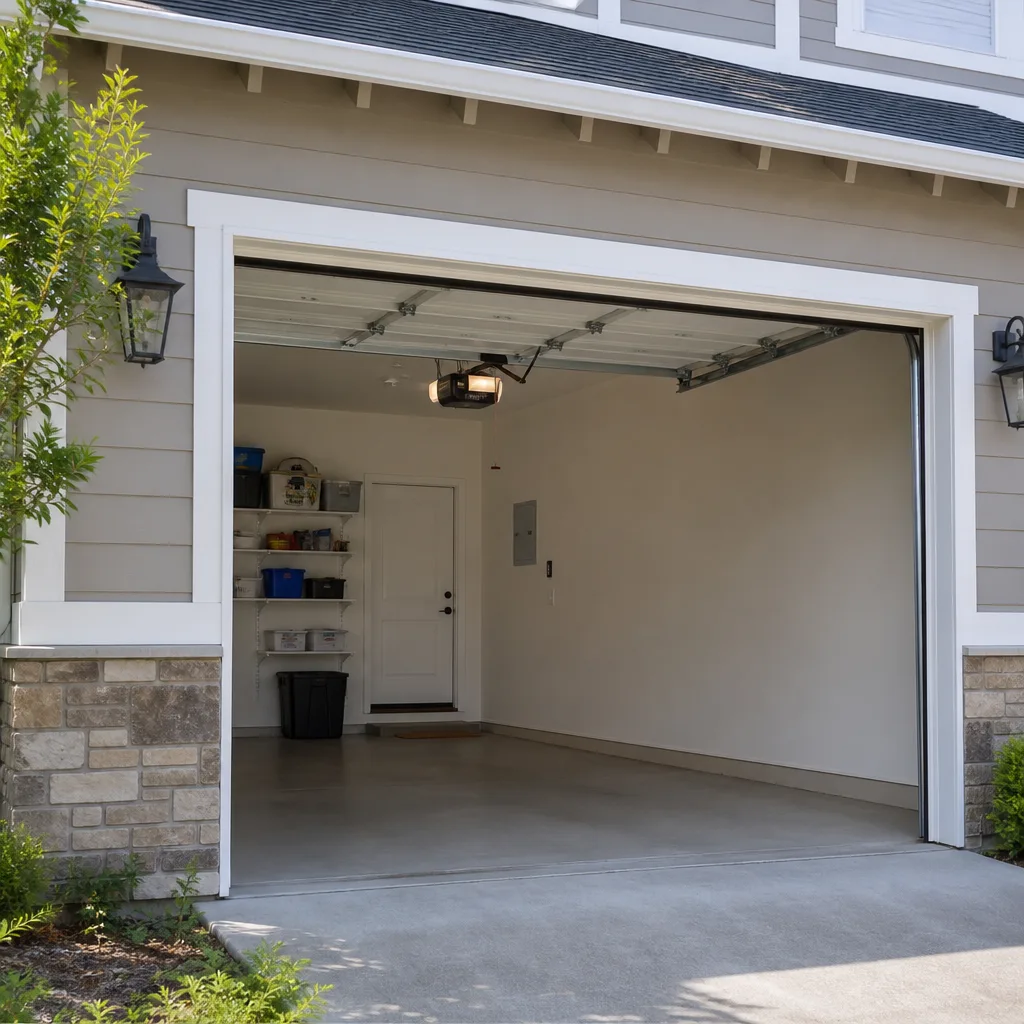 Chamberlain openers
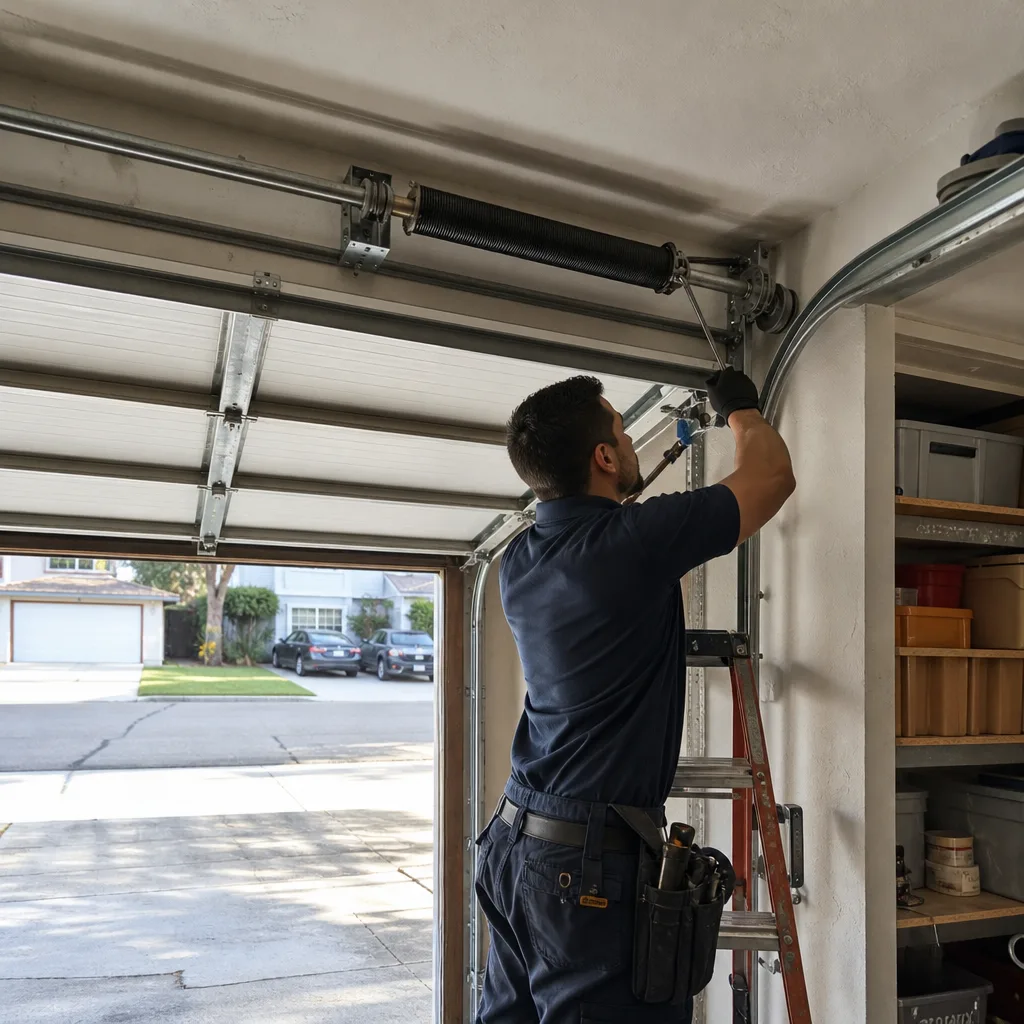
Full 25-point door and opener safety check with every visit - springs, cables, rollers, tracks, and your LiftMaster or Chamberlain opener included
You get a price before we start. It does not change when the truck arrives.
Get your free estimateThe Complete Garage Door Repair Guide for Torrance Homeowners
A garage door has over 300 moving parts, but 80% of repair calls in Southern California trace back to just six failure points, most of which show warning signs weeks before the door actually fails. This guide maps those failure patterns to the specific Garage Door Repair services they require, so you can walk into any service call in Torrance informed instead of dependent. We’ll cover what actually breaks on garage doors in this coastal climate, what those repairs should cost, which ones you can safely handle yourself, and how to read an estimate without getting taken. By the end, you’ll know exactly which category your problem falls into and what a fair fix looks like.
Quick Answer
Most garage door repairs in Torrance fall into six predictable failure categories: broken torsion springs, worn extension springs, cable failures, opener logic board or motor failures, track misalignment, and roller/hinge degradation. The majority of these issues are caused or accelerated by Southern California’s heat cycles and coastal air, which corrode metal parts and alter spring tension differently than national specifications assume. For any repair involving springs, cables, or track hardware, a trained professional should handle the work: these components hold dangerous tension and cause serious injuries when mishandled.
Styles & brands we work with
Table of Contents
- The Six Failure Patterns We See Most in Torrance
- How SoCal Heat and Coastal Air Change the Repair Calculus
- What’s Actually DIY-Safe and What Isn’t
- What Garage Door Repairs Cost in Torrance
- How to Read a Repair Estimate Line by Line
- Brand-Specific Repair Difficulty Index
- Preventing the Next Failure
- Common Mistakes to Avoid
- When to Call a Professional
- Frequently Asked Questions
The Six Failure Patterns We See Most in Torrance
Ranked by frequency, not alphabetically. Knowing where your problem sits on this list cuts diagnosis time in half, because each pattern has a distinct set of symptoms and a predictable repair path.
1. Torsion Spring Failure
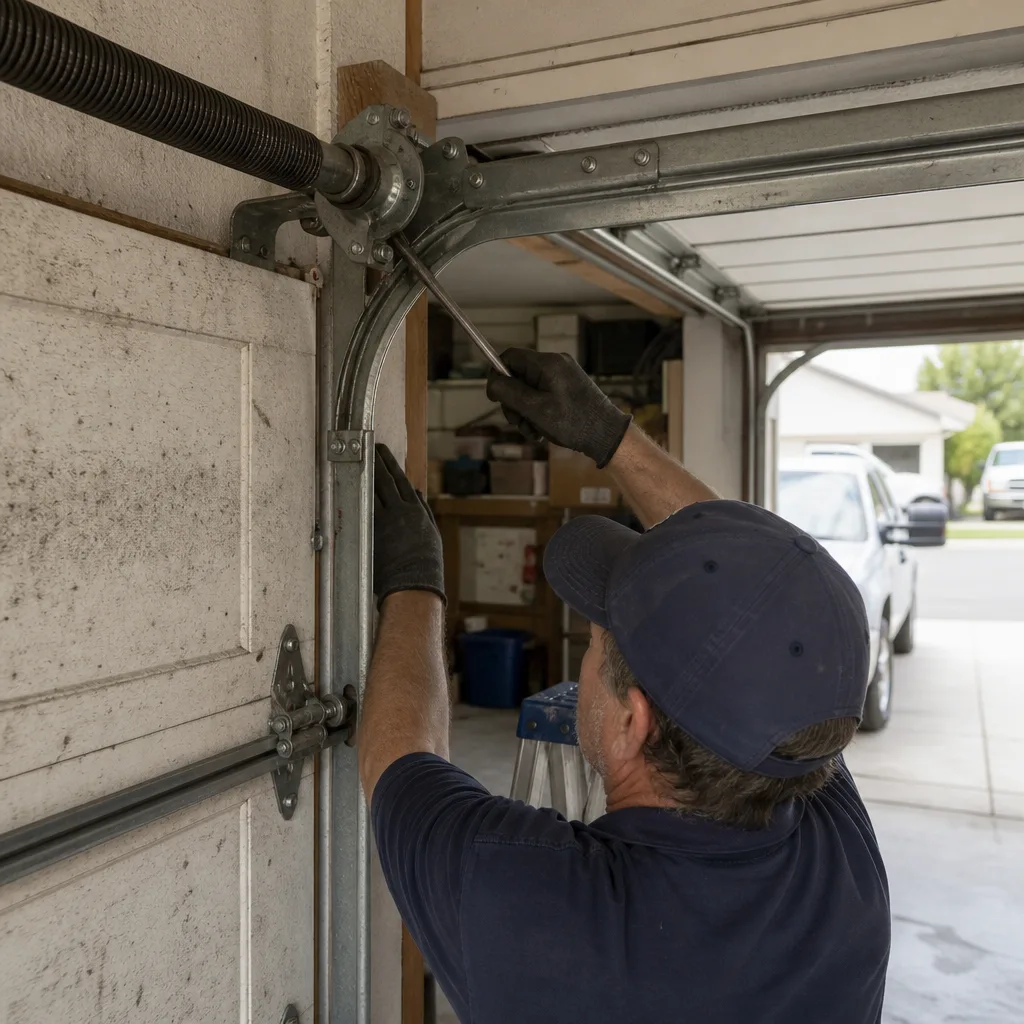
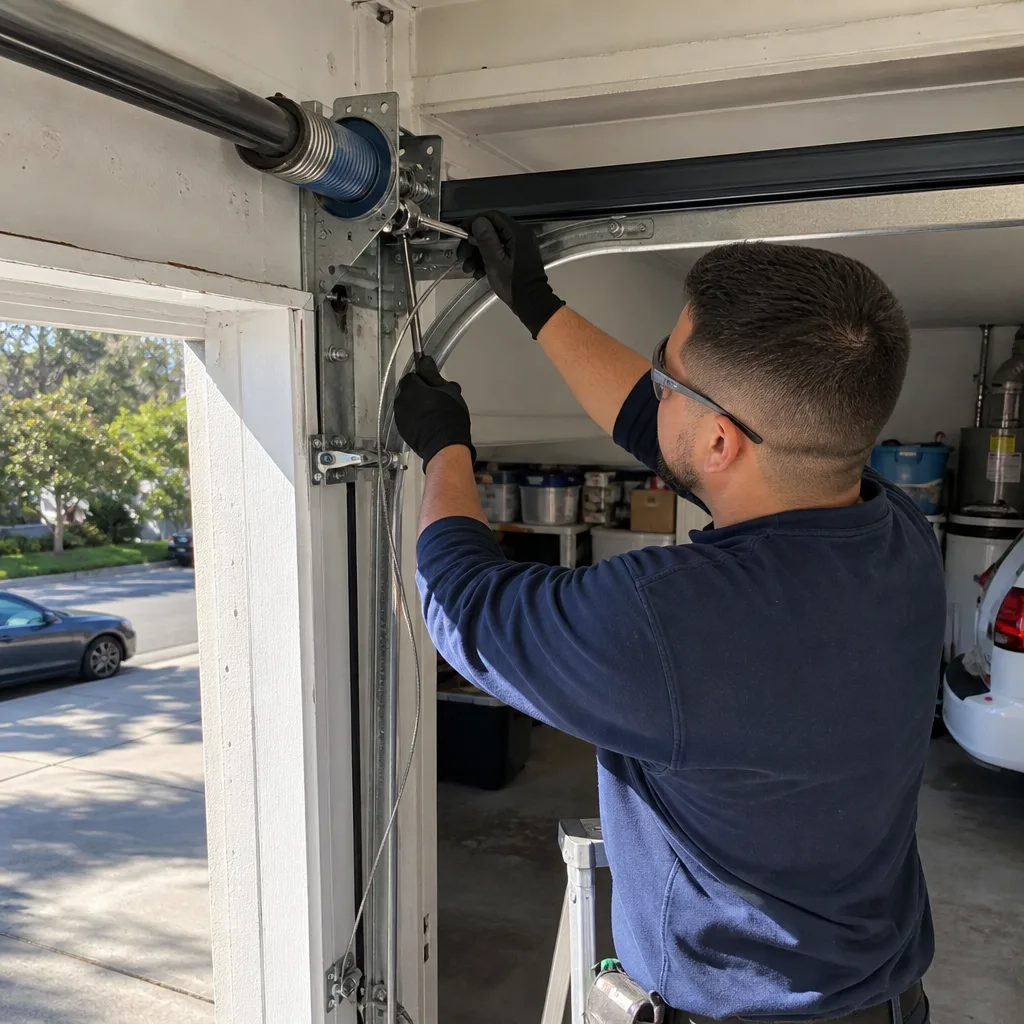
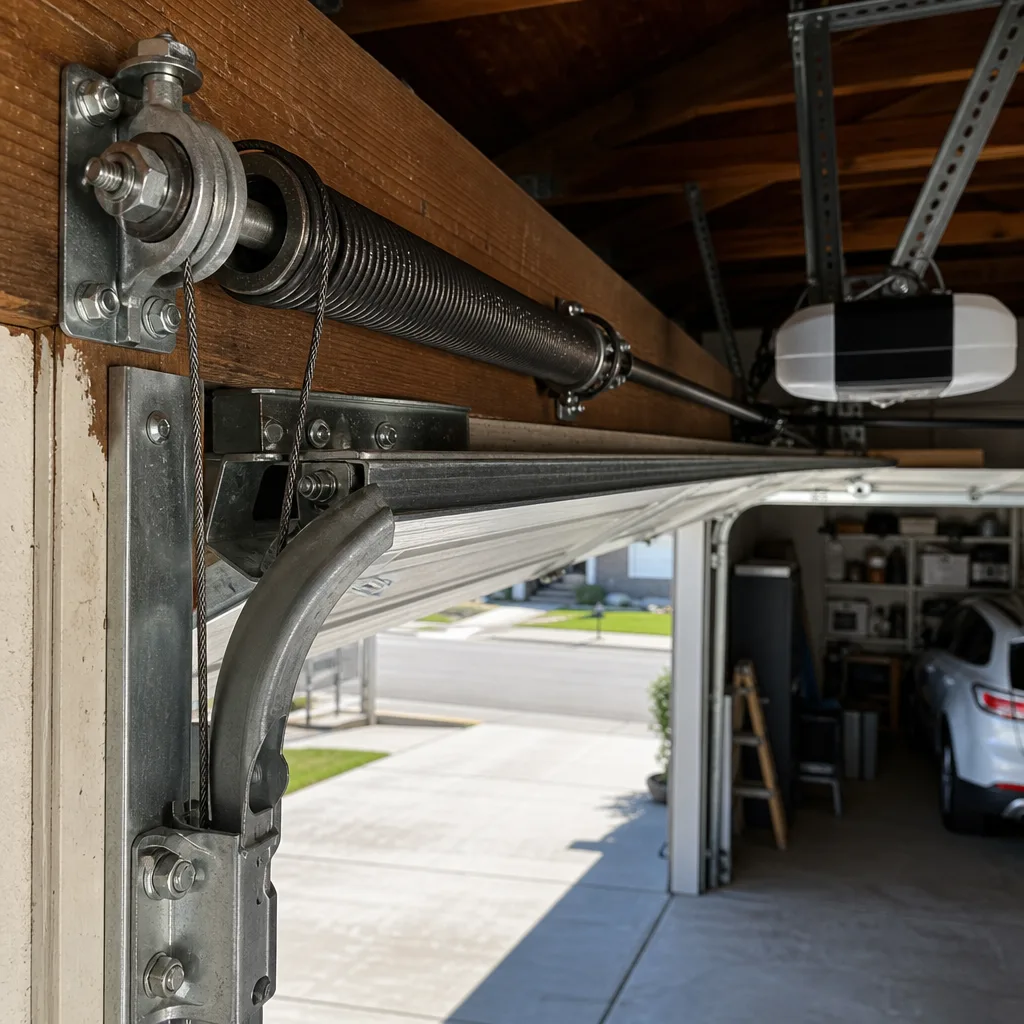
Torsion springs sit on a metal shaft above the closed door and counterbalance the door’s weight. They’re rated for a specific number of cycles, typically 10,000 to 20,000 open-close operations. In Torrance, where garages are frequently used as primary entry points, a spring rated for 10,000 cycles can wear out in seven to nine years. When it fails, you’ll hear a loud bang that sounds like a firecracker. The door becomes extremely heavy, and the opener motor strains against a load it was never designed to lift alone. This is the single most common service call we respond to across Torrance homes, from Hollyglen to Southwood. The repair involves replacing both springs, not just the broken one: the other spring has the same cycle count and is near failure.
2. Extension Spring Stretch or Snap
Extension springs run alongside the horizontal tracks and stretch when the door closes. Older Torrance homes, particularly those built before 1990, often still have these. They fail differently than torsion springs: they stretch permanently over time, losing tension gradually. You’ll notice the door feels heavier on one side, or it hangs slightly crooked when partially open. A snapped extension spring is dangerous because the broken end can whip across the garage. If your door has two springs and one looks longer than the other, the shorter one has already stretched and should be replaced as a pair.
3. Cable Fray and Breakage
The lift cables attach to the bottom corners of the door and wind around drums near the top. In Torrance’s coastal air, cables rust faster than inland. Once rust sets in, individual strands begin to snap, and the cable frays. You can see this if you look at the cables while the door is closed: they should be smooth, not fuzzy. A frayed cable can snap without warning, and if the door is partially open when that happens, the door can come down hard. This is a repair we flag during routine service because homeowners rarely notice the early stages. The fix is straightforward: new cables on both sides, rebalanced for even tension.
4. Opener Logic Board and Motor Failure
Modern openers from LiftMaster, Chamberlain, and Genie rely on circuit boards that handle everything from remote codes to safety sensor signals. These boards are sensitive to heat and power surges. In Torrance, where summer heat can push garage temperatures above 110 degrees, we see logic board failures more often than motor failures. Symptoms include the opener refusing to respond to remotes, the door reversing for no reason, or the opener beeping repeatedly. The good news: a logic board replacement is a fraction of the cost of a full opener replacement, and it’s a repair we handle as a standalone service rather than an excuse to sell you a new unit. The Torrance Garage Door Service home page has more detail on our diagnostic approach. The bad news: generic handyman services often misdiagnose these as “the opener is dead” when the board is perfectly replaceable.
5. Track Misalignment
Your door runs on vertical and horizontal tracks bolted to the garage framing. Over years of use, those bolts loosen, and the tracks shift. In Torrance’s clay-heavy soil, minor foundation movement compounds the problem: the garage floor shifts slightly, and the tracks no longer sit perfectly plumb. A misaligned track causes grinding noises, jerky movement, and eventually the door binding partway up. In the early stages, this is an adjustment that takes under an hour. In later stages, when the door has been running misaligned for months, the rollers and hinges wear unevenly, and you’re looking at a more involved repair.
6. Roller and Hinge Degradation
Rollers are the wheels that guide the door along the tracks. Steel rollers wear out, nylon rollers crack, and the bearings inside them seize. Hinges connect the door panels and flex every time the door opens. The combination of salt air and heat cycles in Torrance shortens the life of these small parts. You’ll hear squeaking or grinding, and the door will feel rough when operated manually. Replacing rollers and hinges is one of the least expensive repairs on this list, and it’s also the one most often neglected until it causes a bigger problem: a seized roller can force the door off track, which is a repair that costs three times as much.
How SoCal Heat and Coastal Air Change the Repair Calculus
Here’s what national repair guides get wrong about Torrance: they assume a standard temperature range and a dry climate. Neither applies here.
Heat expansion is the silent variable. Steel springs, drums, and cables expand and contract with temperature swings. A torsion spring calibrated for a typical inland climate will carry different tension on a 90-degree Torrance afternoon than it will on a 55-degree winter morning. Door manufacturers publish spring tension specs based on door weight and drum size, but experienced Torrance technicians know to check calibration during the heat of the day when the door is most likely to bind. A spring wound “to spec” on a cool morning can be over-tensioned by mid-afternoon, which accelerates wear and shortens the spring’s life.
Coastal air is the second factor. The salt content in Torrance’s marine layer accelerates corrosion on cables, springs, and track brackets. We regularly see cables that would last 15 years in Bakersfield fail in ten here. The same applies to exposed hardware on older Clopay and Amarr doors, which need more frequent inspection and lubrication than their inland counterparts.
What this means practically: if you’re replacing a spring, insist the technician calibrate for the actual temperature at the time of installation and test the door through a full cycle in both directions. If you’re getting a new opener, the motor should be sized for a door that may expand slightly in the heat. These are small adjustments that separate a repair that lasts from one that fails again in eighteen months.
What’s Actually DIY-Safe and What Isn’t
Some garage door tasks are genuinely safe for a careful homeowner. Others are not, and the line is not where most people think it is.
Safe to Do Yourself
- Lubricating rollers, hinges, and springs: Use white lithium grease on hinges and rollers, and a silicone-based lubricant on springs. Do this every six months. This is the single highest-impact preventive maintenance a Torrance homeowner can do.
- Tightening loose bolts and brackets: Walk the track with a socket wrench and snug up anything that has vibrated loose. Do not overtighten: the hardware needs some play to accommodate thermal expansion.
- Replacing remote batteries and reprogramming: Your opener manual has the steps. Most problems that look like opener failure are actually dead remote batteries or a tripped GFCI outlet.
- Photo-eye sensor alignment: If the door reverses immediately after touching the floor, the sensors near the bottom of the track are likely misaligned. Adjust them until the indicator lights stay steady on both sides.
- Clearing debris from the tracks: Wipe the inside of the tracks with a dry cloth. Do not use grease on the tracks: this attracts dirt and makes the problem worse.
Leave These to a Professional
Springs, cables, and anything under tension. Torsion springs hold enough energy to break bones or cause fatal injuries if they release suddenly. Lift cables are under the same load. In Torrance, local emergency room data consistently shows garage-door-related injuries involve springs, cables, and door falls. This is not a “be careful” warning: it’s a “do not attempt” warning. A free estimate and a professional repair costs less than a hospital visit, and the price is always agreed before work starts. The same rule applies to any repair that involves removing the bottom bracket, adjusting the spring drums, or releasing tension from the system.
For opener electrical work, the risk is different but real: a miswired opener can create a fire hazard. If the problem is anything beyond a dead battery or a misaligned sensor, call a specialist who has the wiring diagrams for your specific brand. Our opener repair service exists precisely because this component fails more often than any other, and diagnosing it correctly requires brand-specific knowledge, not guesswork.
What Garage Door Repairs Cost in Torrance
Repair pricing in Torrance sits slightly above the national average, driven by local labor costs and the added wear from coastal conditions. Here’s what we currently see across the market:
| Repair Type | Typical Range in Torrance | Time on Site |
|---|---|---|
| Torsion spring replacement (pair) | $180 – $340 | 60-90 minutes |
| Extension spring replacement (pair) | $140 – $250 | 45-60 minutes |
| Cable replacement (both sides) | $150 – $280 | 45-75 minutes |
| Roller replacement (all rollers) | $120 – $220 | 30-60 minutes |
| Hinge replacement (per hinge) | $15 – $40 | 15-30 minutes |
| Track realignment | $90 – $180 | 30-60 minutes |
| Opener logic board replacement | $180 – $400 | 45-90 minutes |
| Photo-eye sensor replacement | $80 – $150 | 20-40 minutes |
These ranges assume a standard single or double residential door in a Torrance single-family home. A door on a detached garage in a Hollywood Riviera hillside property, or a custom door on a Palos Verdes-adjacent estate, lands at the higher end. A basic builder-grade door in a north Torrance tract home lands at the lower end. The range also depends on whether the technician carries the part on the truck, which is where brand specialization matters: a technician who works on your specific brand daily is more likely to have the right spring or board in stock, which means one visit instead of two.
If you’re comparing quotes from different companies in Torrance, get the price in writing before anyone starts work. Some companies quote a low service fee and then add parts and labor on top. Others quote a flat price that includes everything. Both models can be fair: what matters is that the total is agreed before the first wrench turns. If you’re looking for a repair in a nearby area, our Garage Door Repair in Santa Fe Springs page covers the same pricing framework for that market.
How to Read a Repair Estimate Line by Line
A garage door estimate tells you three things: what parts are being replaced, how much labor is being charged, and whether the contractor is padding either number. Here’s how to read one.
- Look at the parts line first. Is the part named specifically, or does it say “door hardware” or “repair kit”? A legitimate estimate will list the actual component: “2x torsion springs, 0.225 wire, 2″ ID, 24″ length” or similar. Vague parts language is a red flag.
- Check whether the parts price is retail, wholesale, or somewhere in between. Markup on parts is normal: the company buys at wholesale and sells at a rate that covers their ordering, inventory, and warranty risk. A parts markup of 40-80% over wholesale is typical. More than 100% markup on a standard part, like a replacement Genie carriage or a Chamberlain gear kit, is padding.
- Look at labor as a separate line, not bundled into “flat rate.” Flat-rate pricing is legitimate if the company is upfront about what’s included. But if the flat rate appears to be 4-5 hours of labor for a 60-minute spring replacement, the labor is padded. A skilled technician replaces a torsion spring pair in about an hour, and the estimate should reflect that.
- Ask what the service call fee covers. Some companies charge a diagnostic fee and then credit it toward the repair. Some charge a separate trip charge regardless. Neither is wrong, but you should know which model you’re dealing with before you agree. A company that won’t tell you whether the fee is credited is not one you want in your garage.
- Confirm the warranty terms in writing. Springs typically carry a 1-3 year warranty on the part, with labor covered for a shorter window. If the estimate doesn’t state the warranty, the warranty does not exist. This matters in Torrance’s climate: an under-warrantied spring that fails in 18 months should be replaced at no cost, and the estimate should say so.
- Match the payment terms to the work. You should never pay 100% before the work is done. A deposit on a large installation is normal. Full payment upfront for a spring replacement is not.
The same reading applies to opener estimates. A LiftMaster or Chamberlain logic board replacement quote should list the exact board part number. If it just says “opener repair,” you’re going to pay for a process instead of a part. And if you need opener work in a nearby area, our Garage Door Opener Repair in Santa Fe Springs page walks through the same diagnostic process.
Brand-Specific Repair Difficulty Index
Not all garage doors and openers are equally serviceable. Some systems are built to be repaired. Others are built to be replaced. And some are easy to fix if you know the brand’s quirks and genuinely difficult if you don’t. Here’s our assessment of the systems most common in Torrance garages, ranked from easiest to hardest to repair.
LiftMaster and Chamberlain: Moderate, but Board-Sensitive
These two brands share the same parent company and much of the same internal hardware. The good news: replacement parts are widely available, and the opener logic is well documented. The bad news: the logic boards are sensitive to heat and electrical surges, which are both common in Torrance. Most opener failures we diagnose on LiftMaster and Chamberlain units are board failures, not motor failures. The board is replaceable, and the repair is economical compared to a full opener replacement. If a technician tells you the whole opener is dead on one of these units, get a second opinion.
Genie: Straightforward Mechanical, Older Electronics
Genie openers have simple, robust mechanical components that are easy to service. The electronics are another story: older Genie units use a sealed board that cannot be repaired, only replaced. The failure presents as a dead opener: no lights, no response. A straightforward diagnosis, but the repair can be more expensive than the homeowner expects, which sometimes makes a new opener the better value. A knowledgeable technician will present both options with honest pricing on each.
Raynor: Solid Hardware, Variable Parts Availability
Raynor builds a good door, particularly in the residential market. The doors themselves are service-friendly with conventional spring and cable systems. The challenge is parts availability: Raynor components are often ordered rather than stocked, which can add a day or two to the timeline. If you have a Raynor door and need a same-day spring repair, the technician needs to carry universal-fit springs and know how to properly calibrate them for the door’s weight. This is not a job for someone who has never touched a Raynor before.
Craftsman: Discontinued, But Well Understood
Craftsman garage door openers were discontinued by Sears, but there are still thousands of them in Torrance garages, and replacement parts remain available through third-party manufacturers. The openers themselves are simple and reliable. The weak points are the plastic gears in the drive train, which strip over time, and the remotes, which are increasingly hard to source. If your Craftsman opener fails, the repair-versus-replace decision depends on whether the failure is mechanical (fix it) or electronic (probably replace). A good technician will tell you which one you’re dealing with before quoting anything.
For doors, Clopay and Amarr are the two most common residential brands in Torrance, and both are straightforward to service, with standard hardware and good parts availability. Wayne Dalton doors are less common here and use a proprietary torque tube system on some models, which makes spring replacement more involved. If you have a Wayne Dalton, make sure your technician has specifically worked on that torque tube system before they touch it.
Preventing the Next Failure
Most garage door failures are not random. They’re the predictable result of skipped maintenance and ignored warning signs. Here’s what actually makes a difference in Torrance.
- Lubricate every six months. Springs, hinges, rollers, and the opener chain or screw. Use the right product: silicone spray on springs, white lithium grease on metal moving parts. This is a 15-minute task that extends the life of every moving component.
- Test the auto-reverse feature monthly. Place a roll of paper towels under the closing door. If the door does not reverse when it hits the roll, the opener’s force settings are off or the sensor is misaligned. Fix this immediately. It is a safety system, not a convenience feature.
- Listen for the warning sounds. A squeak means a dry roller or hinge. A grinding sound means a worn bearing or a misaligned track. A popping sound from the springs means a spring is developing a stress fracture. Each of these sounds is a problem that is cheap to fix at the sound stage and expensive to fix at the failure stage.
- Watch the door for asymmetry. When the door starts to open, both sides should rise at the same rate. If one side lags, you have a cable or spring issue developing. The longer it runs uneven, the more damage it does to the rollers, hinges, and tracks.
- Keep the area around the opener motor clear. Good airflow matters in Torrance heat. Piling boxes around the opener traps heat and shortens the life of the logic board.
If your door is nearing the end of its service life and you’re weighing repair against replacement, our Garage Door Installation in Santa Fe Springs page covers the same decision framework for that area, and the logic applies here: when the cost of repairs in a single year exceeds 40-50% of a new door’s cost, replacement becomes the smarter financial choice.
Common Mistakes to Avoid
- Attempting a spring repair from a YouTube video. The video does not show the part where the winding bar slips and the spring releases its stored energy. Torsion springs have injured and killed people. This is the top mistake we see in Torrance, and it is completely avoidable.
- Ignoring the squeak. A dry roller is a $15 fix. A seized roller that forces the door off its track is a $300 repair. The squeak is the warning. Listen to it.
- Replacing only one spring. Springs are replaced in pairs. The spring you don’t replace has the same number of cycles on it as the one that failed. A single-spring replacement saves $80 today and costs $250 more in six months when the other one lets go.
- Using WD-40 on garage door parts. WD-40 is a solvent, not a lubricant. It strips the existing lubrication and leaves the parts drier than they were. Use silicone or lithium grease.
- Accepting a “the whole door needs replacing” diagnosis over the phone. No one can tell you the door needs replacement without looking at it. Legitimate companies diagnose on site and show you the specific problem. Companies that diagnose by phone are selling, not repairing.
- Not checking the auto-reverse after a repair. Any repair that touches the opener, springs, or cables can change the door’s balance and force settings. Test the auto-reverse before you park under that door again.
- Hiring a generalist for a specialist system. A handyman who fixes garbage disposals and drywall is not the right call for a torsion spring or a LiftMaster logic board. You wouldn’t call a general practitioner for a heart valve, and the same logic applies here. Torrance homeowners have a specialist available, and the difference in first-visit resolution is real.
When to Call a Professional
Call when the door makes a sound you haven’t heard before that doesn’t go away. Call when the door is uneven, when it struggles to open, when it reverses unexpectedly, or when the opener responds intermittently. Call when you see a frayed cable, a gap in a spring, or a roller that no longer spins. Call before the problem forces the door closed at the worst possible moment, which is how most urgent calls start. For DIY vs Professional Garage Door: The Torrance Homeowner’s Decision Guide, see our breakdown. Torrance Garage Door Service offers free estimates in Torrance, and the price is agreed before any work begins. Call (855) 341-7719 and we’ll tell you what the problem is, what it costs, and what your options are. No obligation, no pressure, just an honest diagnosis from a team that works on these systems every single day.
Frequently Asked Questions
Most repairs in Torrance run between $120 and $400 depending on the component. A torsion spring pair replacement typically costs $180 to $340, cable replacement $150 to $280, and a roller replacement $120 to $220. Opener repairs, especially logic board replacements on LiftMaster or Chamberlain units, can run $180 to $400. The final number depends on your door’s size, brand, and condition. Call (855) 341-7719 for an exact quote: estimates are free, and the price is always agreed before work starts.
In most cases, yes. Common repairs like torsion spring replacement, cable replacement, roller replacement, and track realignment are jobs we complete in a single visit. We carry parts for the eight brands we specialize in, which means we arrive prepared. Same-day availability depends on call volume and the time of day. Call (855) 341-7719 and we’ll give you an honest answer about when we can be there.
Springs break because they wear out. Each spring is rated for a specific number of open-close cycles, and once that count is reached, the metal fatigues and fails. In Torrance, two factors accelerate the process: heat cycling from the coastal temperature swings, and the simple fact that most Torrance homeowners use their garage door several times a day. A spring that breaks at year nine did not break prematurely, it reached the end of its designed life.
Not in most cases. With a broken spring, the full weight of the door, often 150 to 300 pounds, is no longer counterbalanced. Opening it manually requires lifting that full weight, and if you lose your grip or the door slips, it falls. A door with a broken cable or spring should be left in place and the repair handled by a professional. Call us and we’ll explain the situation and get someone out.
Expect 10 to 15 years from a quality opener in Torrance, with one caveat: the logic boards in modern LiftMaster, Chamberlain, and Genie units are sensitive to heat, and garages here get hot. If your opener is in a garage that regularly exceeds 100 degrees, the board may fail before the motor does. The board is replaceable on most models, so a board failure does not necessarily mean a new opener. A proper diagnosis tells you which path makes financial sense.
Repair when the door’s structure is sound and the broken component is a spring, cable, roller, hinge, or opener part. Replace when the door panels are rotted, cracked, or rusted through, when the track is bent beyond realignment, or when repair costs in a single year exceed roughly half the cost of a new door. For older doors in Torrance, you should also weigh insulation: a poor-insulated door in a coastal garage is a comfort and energy problem. A free estimate gives you both numbers side by side. Call (855) 341-7719.
The Bottom Line
Garage doors fail in predictable ways, and the warning signs are there if you know what to look for. In Torrance, the combination of heat cycling and coastal air means springs, cables, rollers, and opener boards wear faster than national averages, which makes regular maintenance and early intervention more valuable here than almost anywhere. The six failure patterns outlined in The Complete Guide to Garage Door in Torrance cover the vast majority of what our team sees on service calls across Torrance every week. When a component does fail, the right move is clear: call a specialist who knows your specific brand, ask for a written estimate before work begins, and get the problem fixed in one visit. Garage doors are all we do, and the difference shows in the speed and accuracy of every diagnosis.
Written by the team at Torrance Garage Door Service, serving Torrance since 2013.
For garage door repair, opener repair, or a new door installation in Torrance, call (855) 341-7719 for a free estimate. Explore our more guides & resources for additional help. The price is quoted and agreed before any work starts, and we arrive with the parts for your specific system.
See the difference
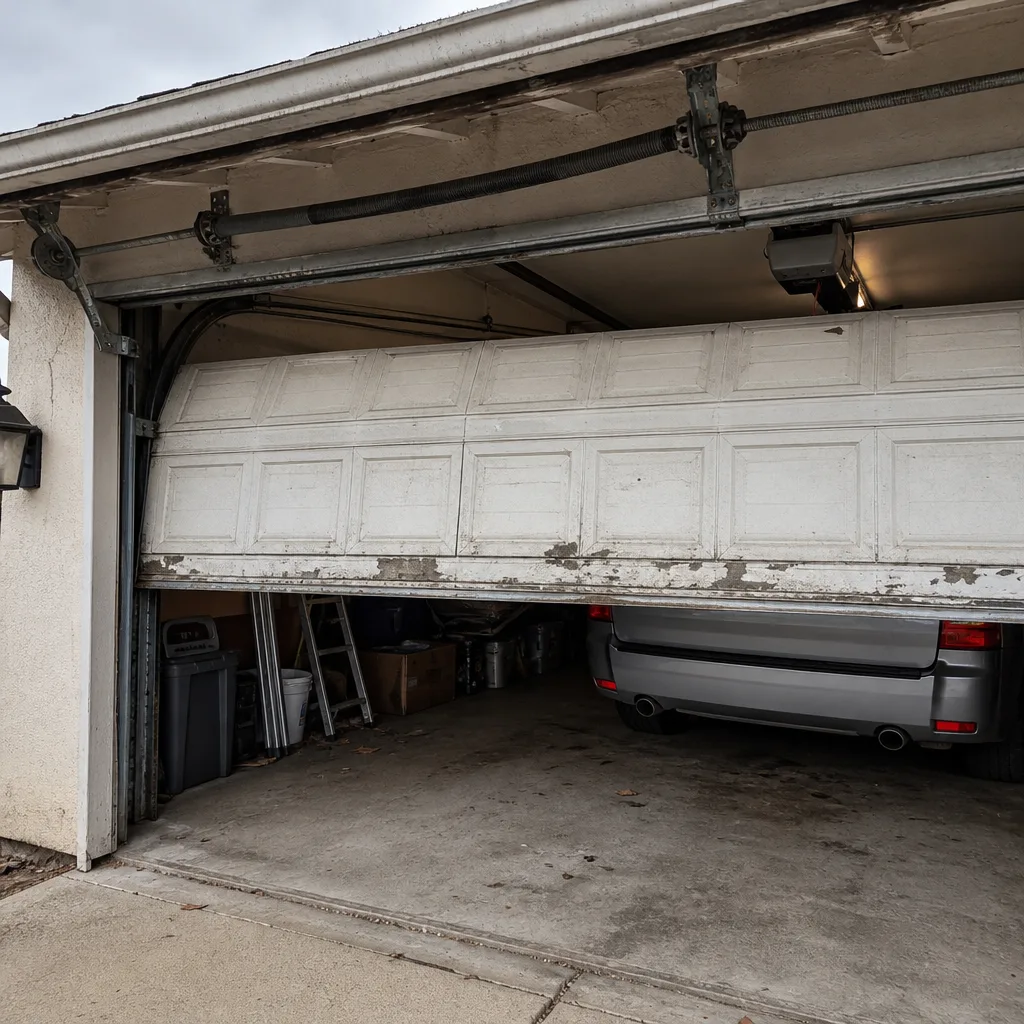
 Before
 After
 Before
 After
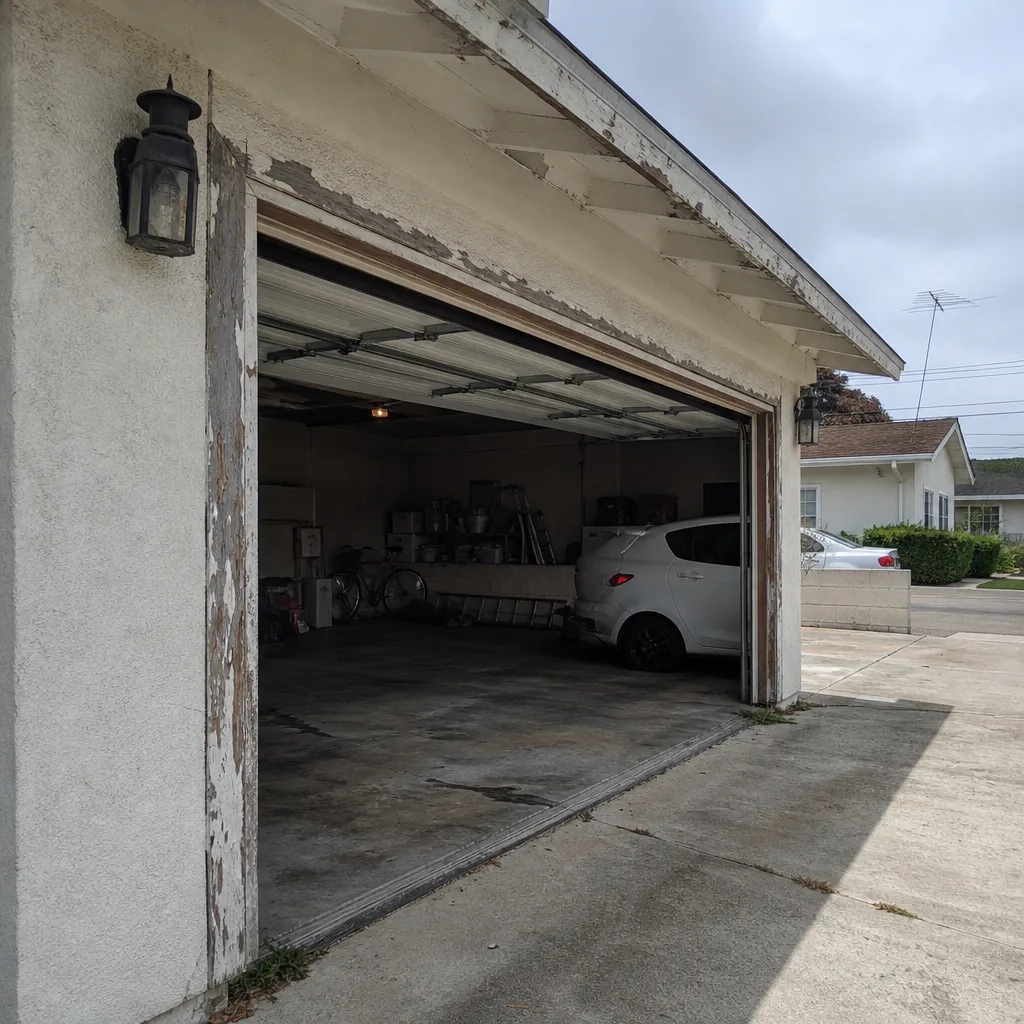 Before
 After